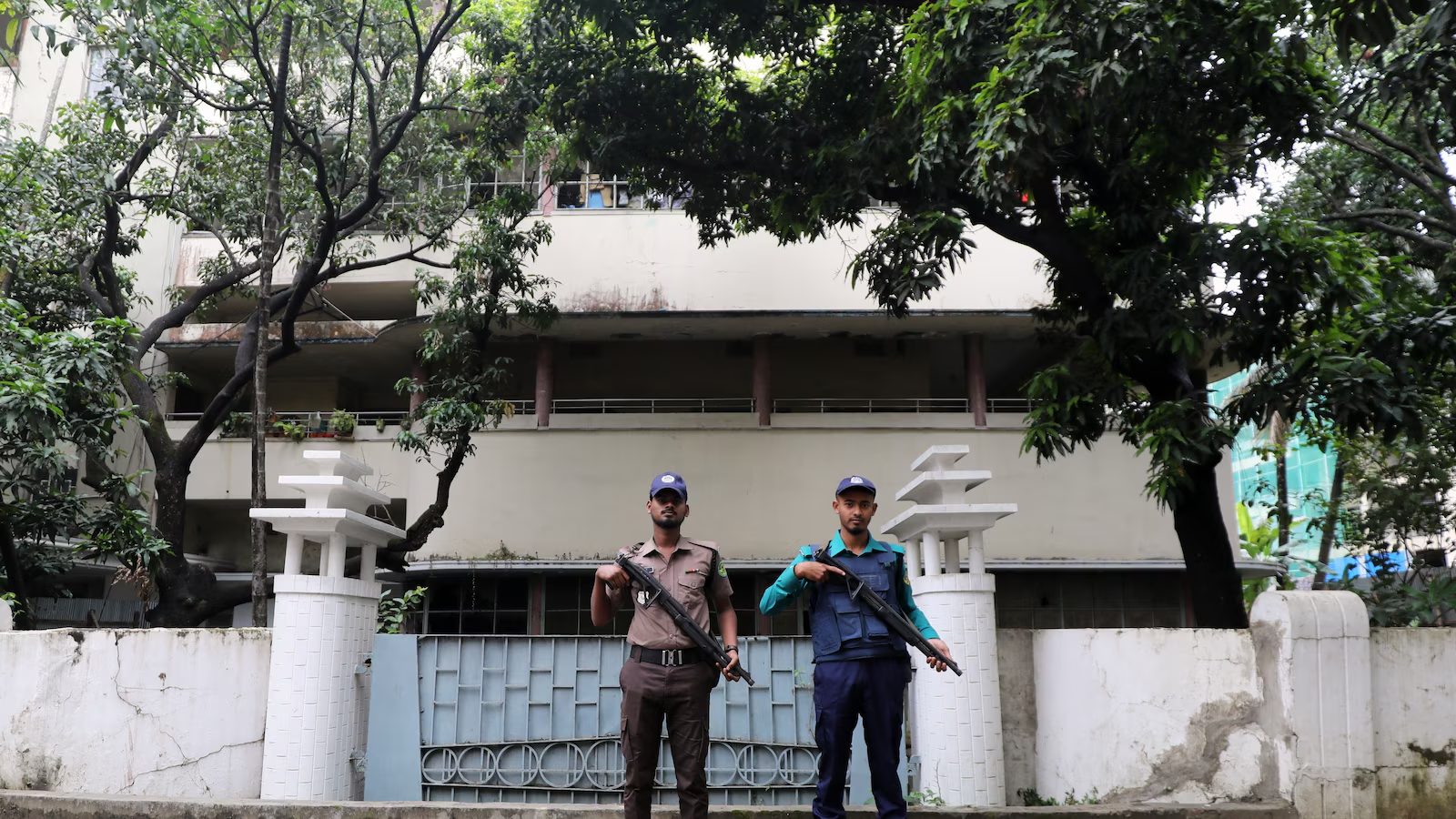
DHAKA, Bangladesh — A late-night fire at the ancestral home of a former Bangladesh interim leader and Nobel Peace Prize laureate appeared to have been intentionally set, police said.
The fire occurred as growing waves of violence and damage have followed a declaration by the ousted former prime minister, Sheikh Hasina, that she plans to return to the country soon from exile.
The fire occurred before midnight Wednesday at the home of Muhammad Yunus, who served as interim leader of the country for 18 months following a mass uprising that led to the ouster of Hasina, who was flown out of the country by the military on Aug. 5, 2024.
The fire in an abandoned, ground-floor room of Yunus’ house in Chattogram was spotted by a police patrol that immediately doused the flames, Police Inspector Mozammel Haque told local media Thursday. Police are investigating and additional details were not immediately available.
The possible arson comes during ongoing political tensions following an announcement by Hasina she intends to end her exile in India in December. In an interview with The Associated Press earlier this month, Hasina said even death cannot prevent her from returning to Bangladesh.
Hasina has requested a passport and national identity card to facilitate her return, but the ruling Bangladesh Nationalist Party led by Prime Minister Tarique Rahman insists she will not receive the documents and must be handed over by India under an extradition treaty.
Police and BNP leaders blamed Hasina’s supporters for attempting to create anarchy ahead of her intended return. Explosions of crude bombs, arson and roadblocks have taken place in the capital Dhaka and other locations throughout Bangladesh in recent weeks.
Yunus governed until February, when his interim administration handed over power to an elected government under Rahman. He was given the temporary leadership role following a student-led mass uprising that ended Hasina’s 15-year rule.
Hasina was sentenced to death on charges of crimes against humanity involving the deaths of hundreds of protesters in the uprising. Her political party, the Bangladesh Awami League, was banned by the Yunus administration.
The Yunus administration and Rahman’s government requested her extradition from India, which did not respond to the requests.
Rahman on Wednesday urged “democratic forces” to remain united to prevent Hasina’s party from returning to Bangladesh politics.
Protests by Hasina’s supporters and violence were reported in at least 22 districts nationwide in recent weeks. On Wednesday, at least two BNP supporters died in a clash with Hasina supporters in the southwestern district of Narail, police and media reports said.
Grameen Bank, a small-credit agency founded by Yunus that shared in the Nobel Prize award, also has come under attack. According to the bank, at least 72 branches in the country’s 40 districts were targeted by arson attacks and vandalism between Nov. 10 and Nov. 19.
At Hasina’s ancestral home in Gopalganj district, protesters have regularly blocked highways leading to the country’s longest bridge connecting Dhaka with southwestern and southern regions. Protesters recently torched a police station and repeatedly clashed with security officials. Hundreds of paramilitary border forces remained deployed in the district to maintain order.
Police in Dhaka on Tuesday arrested former Mayor Mohammad Sayeed Khokon, a Hasina supporter, and on Wednesday arrested former Hasina Cabinet minister and ally Nurul Islam Nahid and Joytika Joti, an actress.
On Thursday evening, the Dhaka Metropolitan Police in a statement said that they arrested 107 people, all involved with Hasina’s party and other associate bodies, in the capital city in the last 24 hours. Nahid and Joti were among them, it said.
Police said they arrested them for their alleged involvement with sabotage.
The country’s leading English-language newspaper, Daily Star, reported that the homes of former Hasina administration and party officials Dipu Moni and Sujit Roy Nandy were set on fire Wednesday.
About the Author