EU countries including Germany could accept an unlimited number of young Britons under a youth mobility scheme, according to sources.
Fresh details on how a scheme might work have emerged with EU leaders and the UK expected to settle on a quota of about 100,000 a year being allowed to work, travel or study in each others territories from 2028.
The UK has insisted on a quota of EU citizens entering the UK under the scheme to guard against mass migration, but some countries have said they will not follow suit on the other side of the Channel and would be open to taking unlimited numbers.
The quota is expected to be worked out on a country-by-country basis with smaller countries such as Malta and Luxembourg seeking a system that will not be based on a per-capita quota per EU member state.
The youth mobility scheme is expected to be sealed in principle as the EU-UK summit in Brussels on Friday.
In what looks like a win for Andy Burnham, however, several diplomats have said the tricky question of EU students paying the same fees as their UK counterparts if studying at a UK university under the scheme would be postponed for six months.
This is to allow linkage with the Made in Europe legislation that will not reach its final stages until possibly April next year in a vote in the European parliament. The legislation is designed to give priority to EU supply chains in the car and other industries.
By linking the two issues the UK can get assurances that the final detail of the deal on mobility cannot be signed off unless it has been included in the Made in Europe legislation.
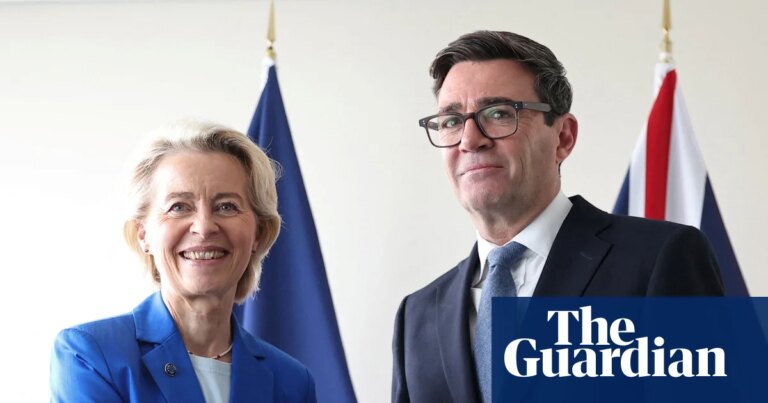
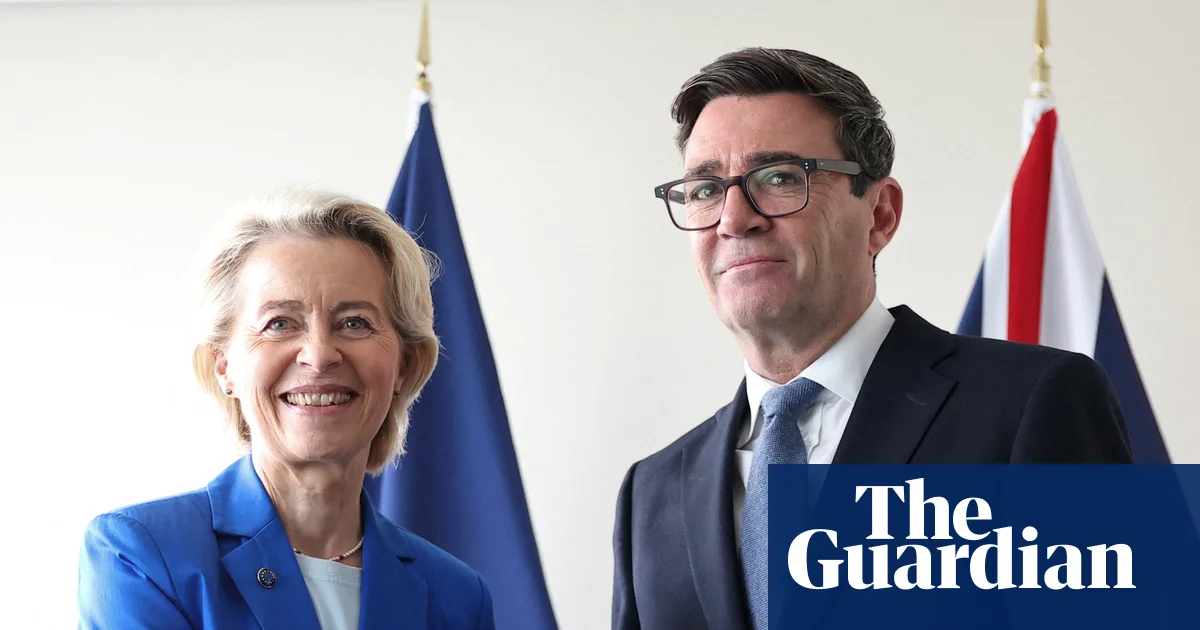
It is also understand that the majority of the 12-page draft joint statement has been agreed, with negotiations expected to continue to the wire and perhaps even during the summit between Burnham, the European Council leader, António Costa, and the European Commission president, Ursula von der Leyen, which starts at 10am on Friday.
The details came as Burnham has said there is “no rush” to decide on the UK’s longer term relationship with the EU, as he came under pressure from his own party to press the brakes on the pace of the rethink.
The prime minister said he would “take stock” of the wider relationship after Friday’s summit in Brussels at which he also hopes to secure agreements on food and farming and emissions trading.
In an interview with Sky News, Burnham admitted that he would now not set out the full options for a closer EU relationship until December – but denied he was “stepping back” from his previous commitments to pursue ties.
The prime minister had been expected to give a speech or deliver a statement setting out options for a closer relationship early next week, probably Monday, and to argue that it would be in the UK’s long-term interest.
While he may still address MPs, he is now likely to focus on the details of the deal secured at the summit, delaying his bigger plans to around the same time as his 10-year plan for the country, No 10 sources said, adding that the two were linked.
No 10 insiders told the Guardian that Burnham wants to “frame the conversation, not go straight to the endgame” before testing public opinion, with even some Remain-minded MPs acknowledging there is more work to be done.
These will include discussions with European counterparts to establish what the EU is willing to negotiate and whether it might be possible to get a better bespoke deal, or what the terms of rejoining the single market or customs union might be.
Since Burnham announced in September that he would look again at the UK’s membership of EU, he has reiterated that the existing deal is not good enough, and that he would set out plans for a longer-term relationship this autumn.
after newsletter promotion
In addition to the customs union or single market, these could include trading relationships along the lines that Norway, Switzerland or Canada have with the EU, reversing Brexit in its entirety, or no change at all.
But after revealing his personal preference would be to fully rejoin the bloc, Burnham has encountered some resistance, including from within the cabinet, with some MPs with Leave-voting seats anxious about reopening the debate.
Senior government figures say that Burnham wants a mandate to start negotiations with the EU in Labour’s next election manifesto, but that any subsequent referendum would be confirmatory after MPs had endorsed a deal.
In his interview, Burnham said: “All I’m going to do is look at what options might be available. And so that people can see the pros and cons, we’ll set those out in due course. There’s no rush to do that. The British public will be in charge of whatever comes next.
“We’ll see how [Friday’s summit] goes. And then we will consider whether there are options to further the relationship with the EU. I’ll set that out later this year alongside the 10-year plan.”
The prime minister denied that he was “jumping the gun” or “making any assumptions” about where the UK would end up – but pointed to polling which shows the public wants closer ties with the bloc.
Some Labour MPs, however, are concerned about the impact of freedom of movement in particular, as the debate around immigration in the UK has grown with the rise of Reform UK.
“I won’t get ahead of public opinion. I will listen to what the public feel is the right long term solution,” Burnham added.
While much of the deal expected to be agreed in Brussels on Friday is over the line, there are still tensions over the level of the cap on the youth mobility scheme cap, as well as over tuition fees.
Officials are also expected to discuss the agenda for the next round of the reset, which could include another attempt for the UK to join the EU’s €50bn (£40bn) safe defence fund, collaboration on law enforcement and borders, and mutual recognition of qualifications.
About the Author