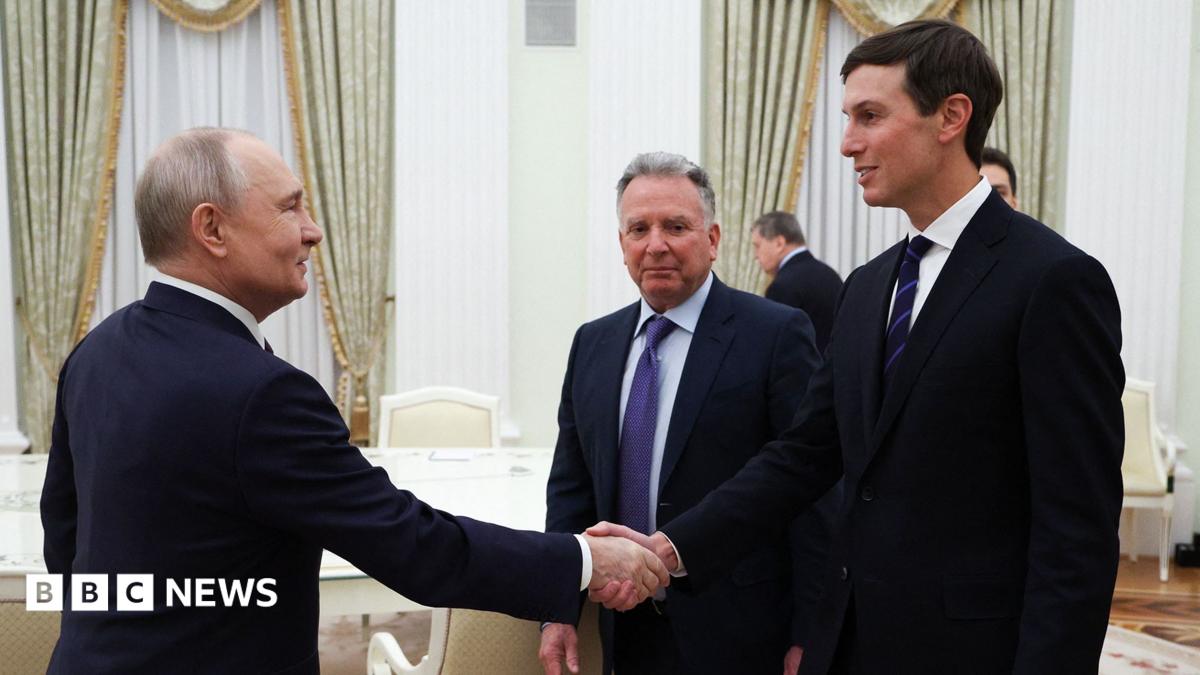
The separate in-person meetings with the Russian and Ukrainian presidents were only announced on Wednesday after two days of talks which were framed as centred around the postwar security architecture of Europe.
Nearly five years since Russia launched its full-scale invasion of Ukraine, Moscow shows no sign of backing down from its maximalist demands for sovereign Ukrainian territory and for Western countries to give up any future commitment to protecting Kyiv in case of further attacks.
On Thursday, Putin again repeated that the presence of foreign troops in Ukraine was “unacceptable” to Russia, and said Russia would like the Americans to engage with Europe “so that the Europeans can decide what they truly want: peace or war”.
During the first years of the war, Europeans cut communications with the Kremlin and refused to engage with Russia directly.
However, in recent times many have grown concerned about the current US administration’s commitment to European security and its softening towards the Kremlin, and have been pushing for a seat at the negotiating table.
The talks in Abu Dhabi were led by the Americans and only included Russia and Ukraine, but Kushner said he and Witkoff would ask Putin to “give his blessing” to invite European representatives in future discussions – particularly with regards to the future configuration of their continent’s security architecture.
Kushner also urged Europe to “identify one person to speak on their behalf” in the negotiations.
But the Russians have been opposed to the idea, citing Europe’s support for Kyiv as an obstacle.
Vladimir Medinsky, who headed the Russian delegation in Abu Dhabi, said he thought all parties had “moved closer to achieving peace” but that now “a lot depends on Ukraine, on the position of the United States, and on whether Europe comes to its senses”.
About the Author