Want to bookmark your favourite articles and stories to read or reference later? Start your Independent Membership today.
Already a member?
Log in
Widespread blackouts and water cuts hit Kyiv and its neighbouring districts on Wednesday following overnight strikes on key infrastructure.
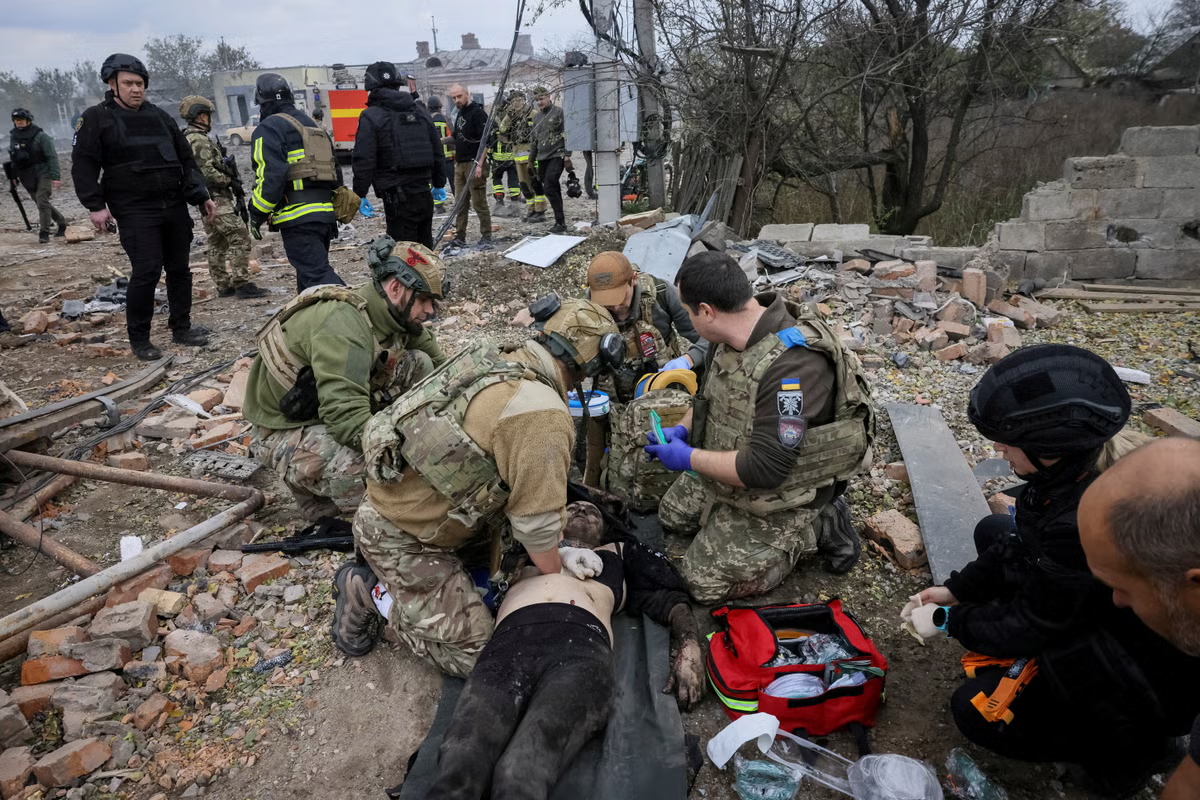
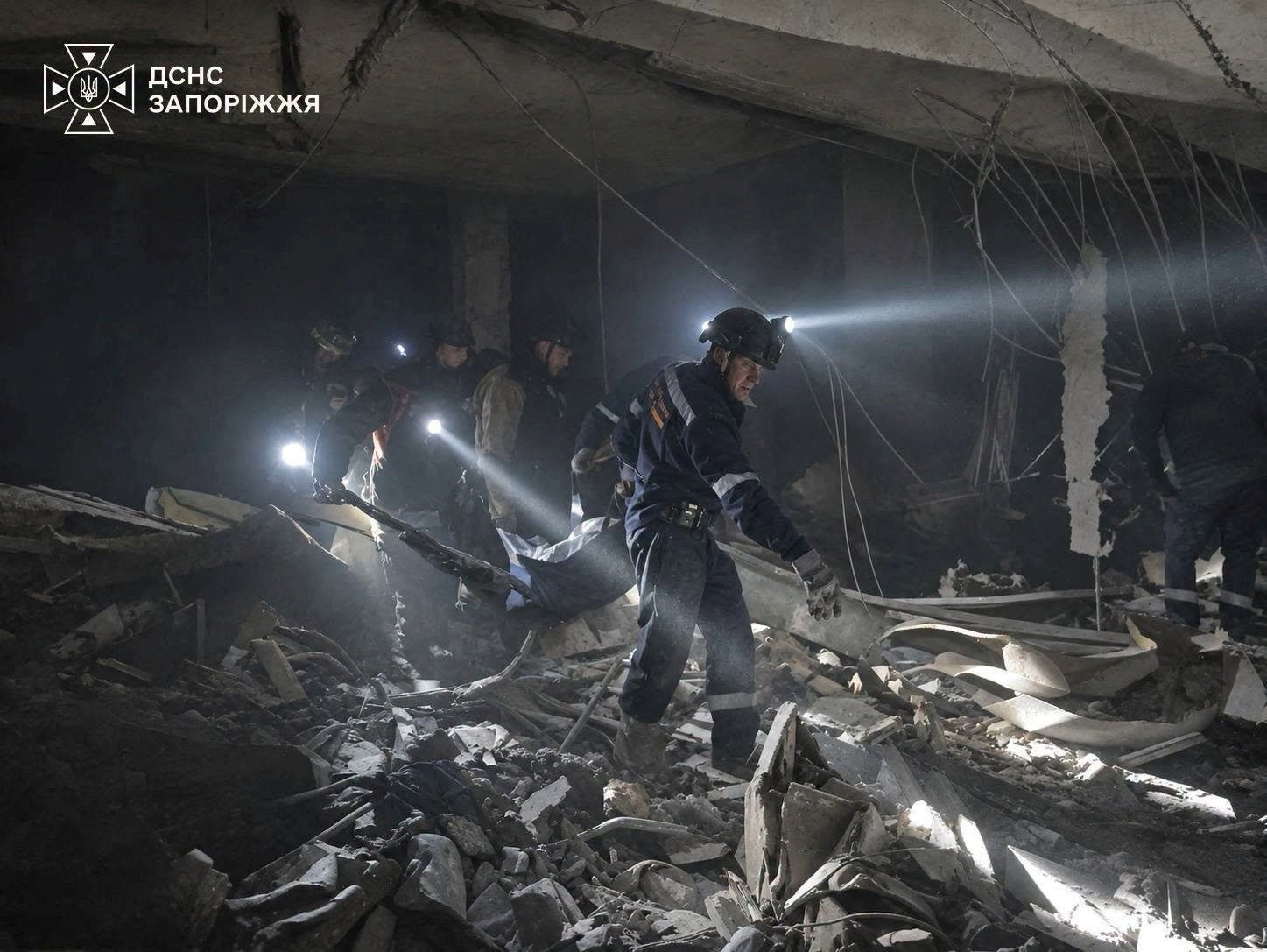
Meanwhile, search teams in southern Ukraine continued to clear debris three days after one of the deadliest attacks there in nearly five years of war.
The southern rescue efforts follow a barrage of Russian-guided bombs that struck a school and shelter in Komyshuvakha, a front-line village in the Zaporizhzhia region, on Monday. Officials have confirmed 37 deaths, with up to 38 people still feared trapped beneath the rubble.
Meanwhile, Moscow showed no sign of scaling back its aerial bombardment across the country.
In the Ukrainian capital, citizens were advised to use public drinking fountains, while emergency support centres were swiftly set up in severely affected districts, providing hot tea and electricity points for residents to charge devices.
On Tuesday, a large-scale Russian attack on power plants and substations across nine regions knocked out power in several areas in and around Kyiv. The state-owned electricity company Ukrenergo said Russia had struck energy facilities more than 20 times in 24 hours.
Officials from the United States, Germany, France, Britain, NATO and the European Union were to meet later on Wednesday at the European Commission’s headquarters in Brussels.
Their discussions are expected to focus on security arrangements for after the war ends, the massive reconstruction effort that will be required and also various “economic opportunities” that peace could bring.
The Brussels talks come ahead of a new round of US-brokered peace negotiations next week, more than four-and-a-half years after Russia’s all-out invasion of its neighbor.
The death toll from Monday’s strike on Komyshuvakha has risen to 37, said the acting head of the regional military administration, Mykhailo Semikin.
Earlier, he had warned that Russian drone attacks were hampering the search but that the operations would continue.
Ivan Fedorov, co-chair of the regional defense council, said on Wednesday that 12 bodies pulled from the rubble had been identified so far. Preliminary estimates suggested there may still be a further 38 people trapped under the rubble, he said.
It was unclear if anybody was still alive.
The National Police of Ukraine also gave the same somber figures. In a post on Telegram, police said visual identification of some of the bodies was not possible and that specialists were working with relatives of the deceased to collect DNA samples for analysis.
On Tuesday, Baptist pastor Vladyslav Makhovskyi had joined the search for survivors in the wreckage of the school and underground shelter where villagers from Komyshuvakha had sought safety.
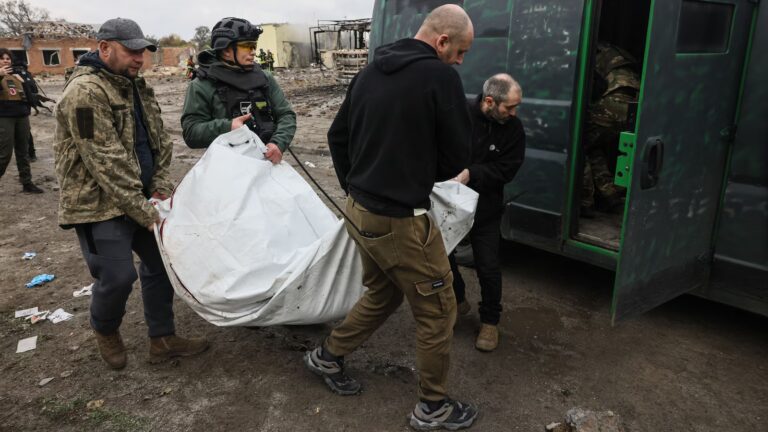
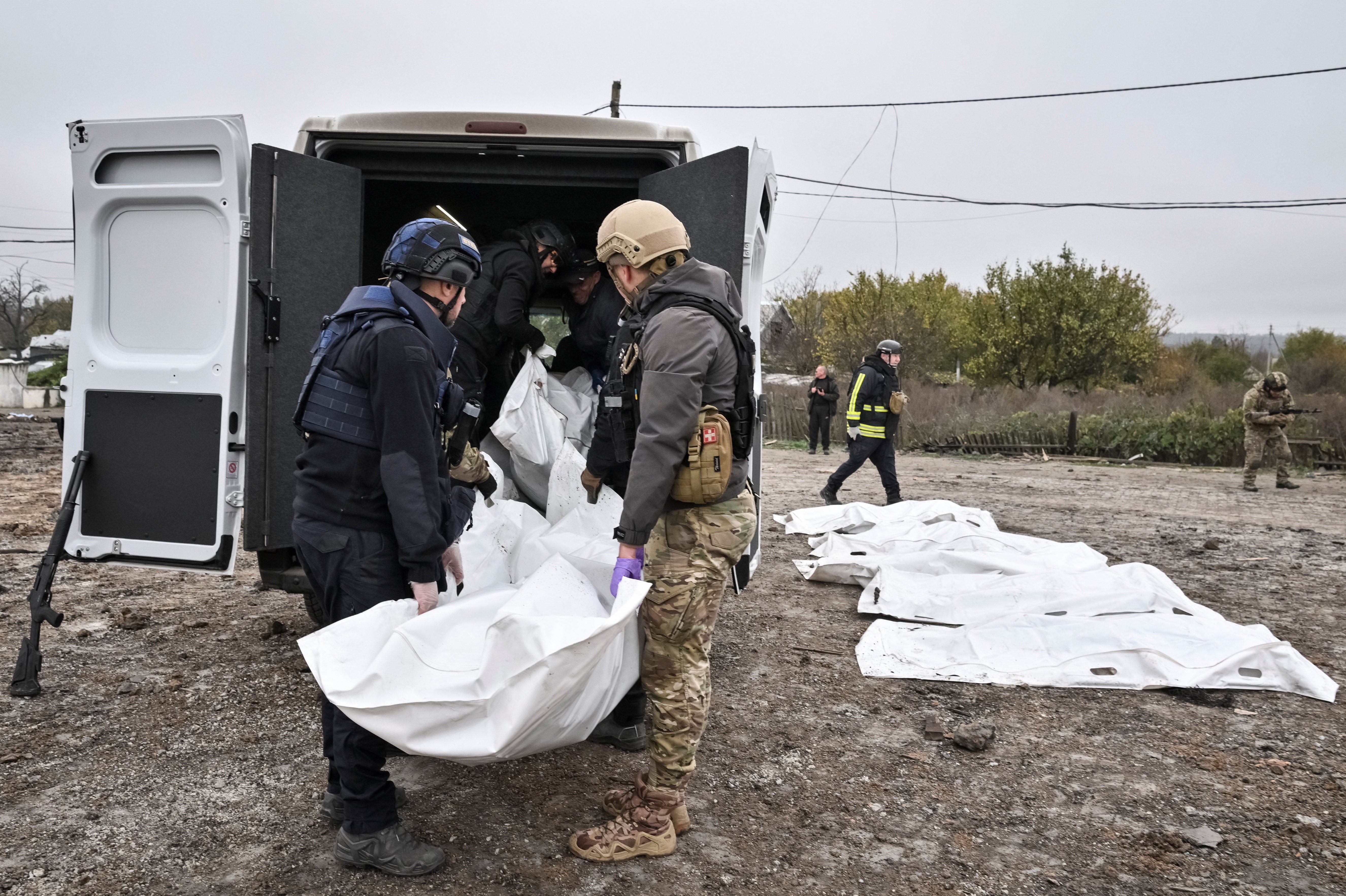
But as the day wore on, bodies wrapped in white plastic sheets were carried from the ruins and laid in rows as smoke drifted across the shattered landscape.
“When the bombs hit, people could no longer get out,” Mr Makhovskyi told The Associated Press. “I understand that many were killed immediately. Even if some were still alive, they probably couldn’t breathe.”

First lady Melania Trump honored for humanitarian support to Ukraine
Monday’s attack came after a six-day ceasefire had ended in the Russian-occupied city of Oleshky, more than 245 kilometers (150 miles) away to the southwest.
It was the most significant truce between Kyiv and Moscow since 2022, and allowed the evacuation of residents from the shattered remains of the city.
Ukrainian President Volodymyr Zelensky awarded first lady Melania Trump the Order of Princess Olga, 1st class — an honor awarded to women who have made an outstanding contribution to the Ukrainian state.
The US first lady was recognized for her “significant personal contribution to humanitarian support for Ukraine”, including support for human rights and charitable activities aimed at helping Ukrainian children, according to a post from the presidential website.
She was credited with brokering a successful six-day ceasefire to mount a humanitarian mission to help those stranded in the Russian-occupied city of Oleshky in Ukraine’s Kherson region.
About the Author