Al-Bureij, Gaza Strip – A Sack of Flour, an 11-minute documentary by the emerging filmmaker Mona Abu Qass, draws on her personal experience to examine Israel’s use of starvation against Palestinians in Gaza during Israel’s genocidal war on the enclave.
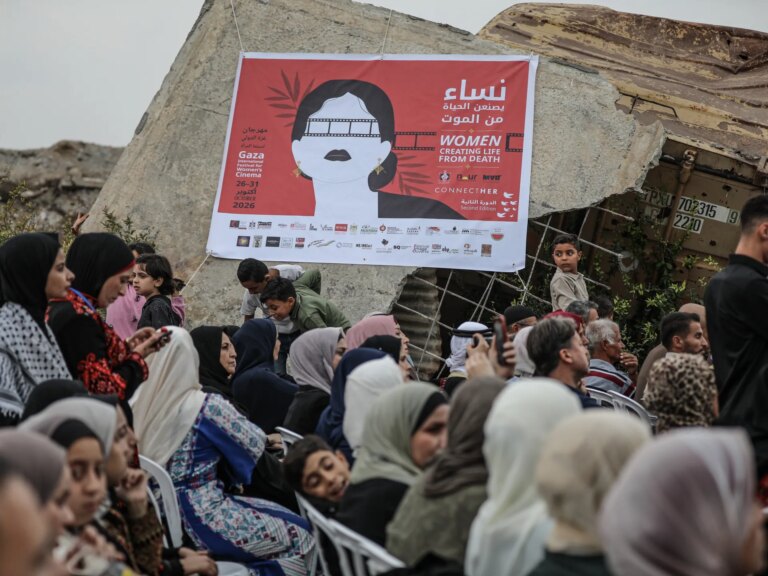
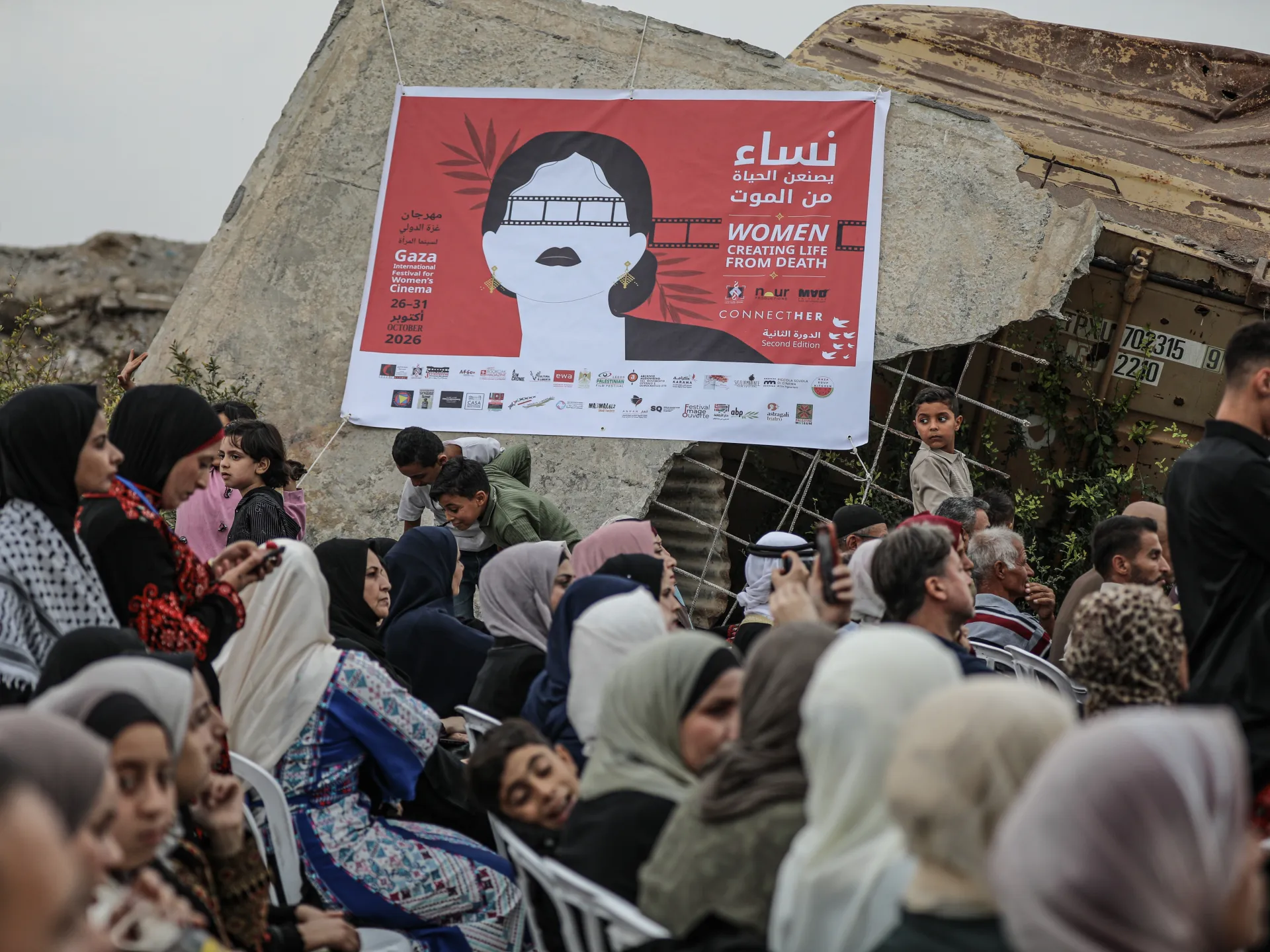
The film is one of five documentaries by Palestinian women screened Monday at the opening of the second Gaza International Women’s Film Festival, which also marked the official launch of the Gaza Cinema Academy.
Recommended Stories
list of 3 itemsend of list
The event took place at the site of the al-Nakheel Hall in al-Bureij, central Gaza, under the slogan “Women Creating Life from Death”. The hall is destroyed, like the majority of buildings in Gaza, after three years of Israel’s war, which has killed more than 74,000 Palestinians.
The film captures Palestinians’ struggle to find food in Gaza, the dangers at aid distribution points and the lives lost while trying to obtain flour.
Through Abu Qass’s own experiences, A Sack of Flour explores how the trauma of hunger continues to affect families even after food becomes available again.
Those experiences have renewed relevance as Israeli restrictions on goods entering Gaza and cuts to food assistance have caused shortages and fears of a return to famine.
“The idea for the film stems from a personal experience and a true story,” Abu Qass told Al Jazeera. “It documents daily life in Gaza, weighed down by bombardment, destruction, siege, hunger, and loss.”
“I want to capture details that reveal suffering and people’s determination to hold on to their life,” she added. “I seek to show reality as people experience it and help viewers understand what the war has done to their relationships, dreams, and hopes.”
Highlighting struggles of the disabled
Another film, Beyond Silence, by emerging filmmaker and journalist Raghda al-Buhaisi, explores wartime struggles in Gaza for people with disabilities through the story of a deaf artist who never learned to read, write or communicate through sign language. His art studio in southern Gaza’s Rafah was destroyed by Israel, and his parents and several family members were killed.
After being displaced to Deir el-Balah in central Gaza, another family took him in and set up a modest studio by the roadside. His paintings reflect loss and displacement, expressing what words cannot through colour and line.
“I want to highlight the additional challenges people with disabilities face during war, including displacement, family loss, and the destruction of livelihoods,” al-Buhaisi told Al Jazeera. “Art can cross barriers of language and silence, turning an individual experience of pain into a visual message that conveys Gaza’s suffering to the world.”
Alongside those films were three others by emerging Palestinian women filmmakers – Soso: The Lifeline, Remnants of Light, and Dandana. The films document life in Gaza and the suffering brought by war.
Soso: The Lifeline follows an orphaned child and his donkey, who help people survive in Gaza. Remnants of Light follows a filmmaker struggling with the loss of her family and home, while Dandana tells the story of a mother whose eight children were killed, and who turns to Palestinian songs with her surviving family to cope with her grief.
The five documentaries were produced through a filmmaking diploma programme that began in March and brought together 25 young Palestinian women.

Preserving Gaza’s stories
Festival director Ezzedine Shallah said the films draw on experiences women and girls lived through during the war, offering visual testimony to daily life and giving women space to tell their stories in their own voices.
“Though their subjects differ, the films turn individual pain into broader human stories, revealing war’s psychological and social scars,” he told Al Jazeera. “They preserve stories that might otherwise never reach the screen, transforming suffering into cinematic testimony and bringing Gaza’s stories to audiences beyond its borders.”
The festival, which runs until October 31, features 73 films from 24 countries and offers a broader platform for filmmakers from Gaza and beyond.
But even with events like the festival, filmmaking in Gaza comes with formidable challenges. The destruction of cultural institutions, scarce equipment, limited funding, power and internet outages, and the pressures of war and displacement have severely restricted opportunities for film production. Women filmmakers also struggle to access training, production opportunities and international festivals.
Filmmaker Rima Mahmoud, a co-founder of the festival, said that war and the Israeli siege on Gaza – which predates 2023 – have hindered young women’s filmmaking, pushing some to use simple methods, self-fund projects and document Gaza’s reality even with the difficulties.
“Despite limited resources, these films deserve international exposure,” Mahmoud said. “Their makers need technical and financial support, translation, and partnerships with festivals and platforms.”

Resisting attempts at erasure
Palestinian filmmaker Mai Masri, based in Lebanon and another co-founder of the festival, said the films help young women tell their own stories, resist erasure and preserve collective memory, while building skills and accessing work in Gaza or through digital platforms.
The academy has also developed a filmmaking diploma in cooperation with al-Quds Open University and accredited by the Palestinian Ministry of Education.
Masri said that the academy is also now trying to help directors reach international festivals.
“We are seeking agreements with distributors to screen these films in educational and cultural institutions outside Palestine, and through international platforms and festivals focused on women’s and human rights,” she said.
“This would bring the voices of Palestinian women to a global audience, shed light on their human experiences and artistic creativity, strengthen the presence of Palestinian cinema internationally, and open new horizons for young female directors to reach global screening platforms and film festivals,” Masri added.
About the Author