Want to bookmark your favourite articles and stories to read or reference later? Start your Independent Membership today.
Already a member?
Log in
The humanitarian system is being asked to do more with less. Conflicts last longer, displacement is increasingly protracted and climate shocks are compounding hunger, poverty and insecurity. Meanwhile, resources are under growing pressure. The consequences are not abstract: when budgets fall, humanitarian organisations face increasingly difficult decisions about which services can continue.
More funding is needed, and there is no partnership or innovation that can compensate for chronic underfunding. But simply asking donors to give more cannot be the only response. When resources are scarce, we also have a responsibility to ask a harder question: are we getting enough from the money, knowledge and relationships already available?
Too often, the answer is no. “Partnership” has become a familiar word in humanitarian and international development circles, but it has often meant one organisation provides funding, and another delivers a predetermined programme. Those relationships have financed essential work, but they can also encourage short-term thinking when humanitarian organisations need greater capacity to prevent problems, test new approaches, learn from evidence and change course when something is not working.
Child malnutrition demonstrates the problem. Treating a severely malnourished child is a life-saving intervention. But waiting until a child becomes dangerously ill is neither the best outcome for that child nor the most effective use of scarce resources. Prevention depends on understanding the causes surrounding malnutrition: what food a family can access, what parents know about feeding children, whether warning signs are recognised early and whether communities can reach appropriate nutrition services.
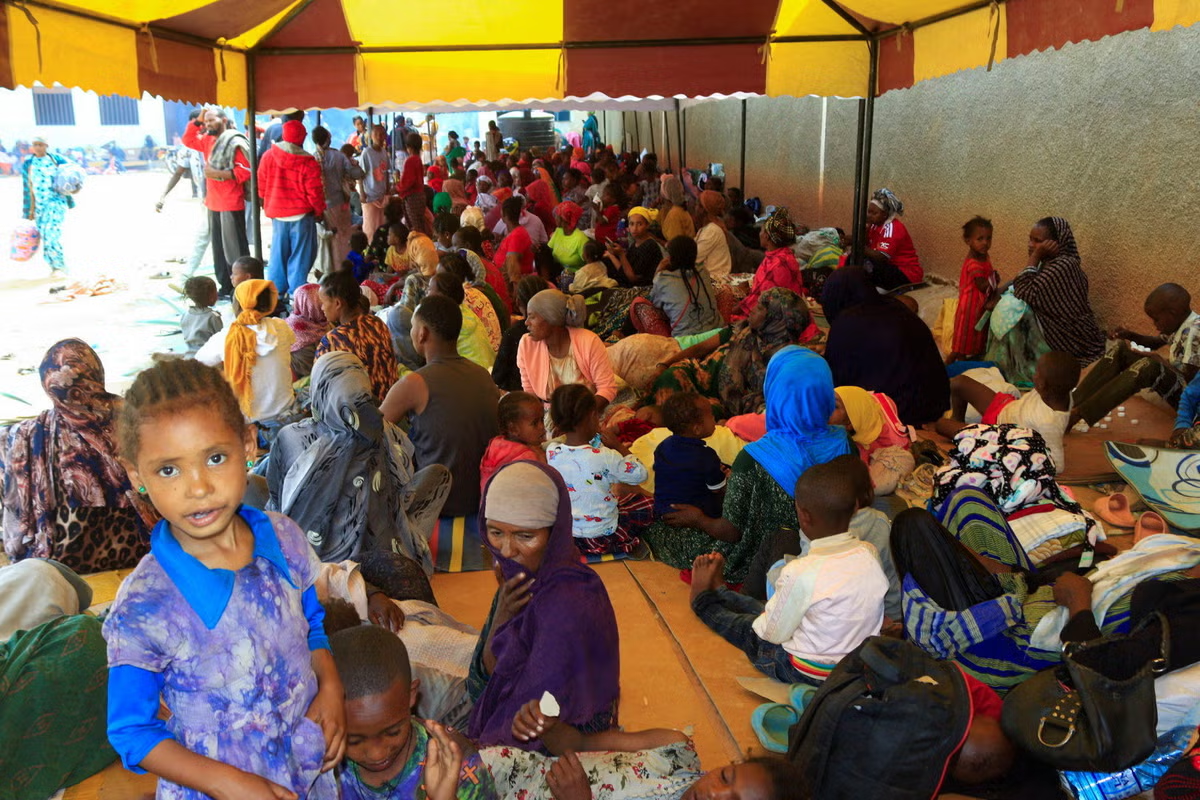
This is something we have learnt through the MOM Project, established by the UN Refugee Agency (UNHCR) and “la Caixa” Foundation to reduce child malnutrition among refugee and host communities in Ethiopia. Since 2017, the programme has treated severe acute malnutrition with prevention, early detection, community participation and new ways of monitoring children’s nutritional health. It has not remained fixed. Lessons from implementation have been incorporated as the programme has developed, allowing approaches to follow evidence and experience.
Some changes are deceptively simple. Mothers have been trained to recognise the signs of malnutrition, helping families identify problems before a child’s condition becomes critical. Groups for parents provide practical support on breastfeeding and feeding young children, while community workshops show caregivers how to prepare nutritious food. Families have received vouchers to buy fresh food and, in some communities, tools and seeds to grow it themselves. Nutrition centres combine prevention with treatment, while monitoring and digital tools provide better information about how children’s health is changing.
The significance of this approach is the shift from responding to malnutrition after it has become an emergency towards trying to prevent that emergency from happening. It also changes the role of the people humanitarian programmes are intended to support. Mothers become the people who detect the first signs that a child is at risk. Families given greater choice over the food they obtain make decisions about their own needs. Communities become part of the response not passive beneficiaries.
There are encouraging results. More than 127,000 people were supported through MOM in 2025, while severe acute malnutrition has fallen by 58 per cent since the project began. Those figures matter, but so does what sits behind them: an approach that has been given enough time to learn, change and combine treatment with prevention rather than repeatedly starting again.
This should prompt some challenging questions for the wider humanitarian sector. Short funding cycles help in an emergency that requires an immediate response, but they are less suited to problems that persist. If every funding agreement rewards the delivery of predetermined activities but leaves little room to adapt them, organisations can become very good at delivering what was originally promised without learning whether something else might work better. And if every new funding cycle effectively begins again, valuable knowledge can disappear.
This is where philanthropy and the private sector should expect more of themselves. Their contribution cannot be judged solely by the size of a cheque. They can provide the longer-term and more flexible support that allows an idea to be tested and improved and create space for approaches whose value may take time to demonstrate. That also requires accepting that genuine innovation carries the possibility of failure. A partnership that only allows organisations to report success is unlikely to learn. But when the space to innovate is coupled with long-term commitment, it can help change what is possible for refugees. Investments like these will be critical to enabling more refugees to move beyond aid dependence and towards lasting solutions. This is at the core of UNHCR’s 50 by 35 vision, which aims to half the number of refugees depending on humanitarian assistance in protracted situations by 2035.
Humanitarian organisations have responsibilities too. We need to better share evidence, including that which tells us an approach is not working as intended, and change course as a result. Accountability should mean demonstrating that money has been spent as promised, and learning from spending it. That is a higher standard than reporting activities, but in an era of shrinking resources it is increasingly necessary.
The same principle applies to the people affected by humanitarian crises. Too much international assistance has historically been designed around what institutions can provide rather than what communities say they need or can contribute themselves. Listening is not an optional courtesy at the beginning of a programme. It can change the programme itself. Experience across international cooperation increasingly shows that solutions are more likely to endure when the people affected are involved in identifying the problem and shaping the response.
None of this means that every humanitarian programme should look like MOM, or that long-term partnerships can replace emergency funding. When people are fleeing conflict or emergencies, rapid assistance saves lives and provides indispensable protection. Nor should the language of innovation become a convenient way of pretending humanitarian organisations can indefinitely absorb funding cuts simply by becoming more efficient.
But the pressure on the humanitarian system should make us more demanding about what happens after donations. A funder should ask how many people were reached, and what was learnt and what will change as a result. Humanitarian organisations should ask not only how to secure the next grant, but whether evidence from one programme can improve another. Both should ask whether communities have enough influence over decisions that directly affect their lives.
That requires a different understanding of partnership. The most valuable relationships will not necessarily be those that fund the greatest number of projects, but those that build knowledge: testing ideas, discarding what does not work, improving what does and finding ways to take successful approaches beyond the places where they began.
At a time when humanitarian resources are under strain, doing less of the same cannot be our only answer. We need approaches that make resources go further and create conditions for long term change, shifting from dependence to self-reliance.
We need adequate funding, but we also need to prevent problems before they become emergencies, learning honestly from evidence and giving affected communities a greater role in shaping solutions. The real measure of a partnership should therefore be not simply how much money it provides or how long it lasts, but whether what we learn from it allows us to protect more people tomorrow than we can today.
HRH Infanta Cristina is director of the international programmes and partnerships division at the ”la Caixa” Foundation and sixth in line to the Spanish throne
Antón Leis Garcia is assistant high commissioner for operations at the UN Refugee Agency (UNHCR)
This article has been produced as part of The Independent’s Rethinking Global Aid project
About the Author