Want to bookmark your favourite articles and stories to read or reference later? Start your Independent Membership today.
Already a member?
Log in
A Florida prisoner who admitted to killing his cellmate specifically to secure a death sentence was executed on Tuesday, nearly two decades after the fatal assault.
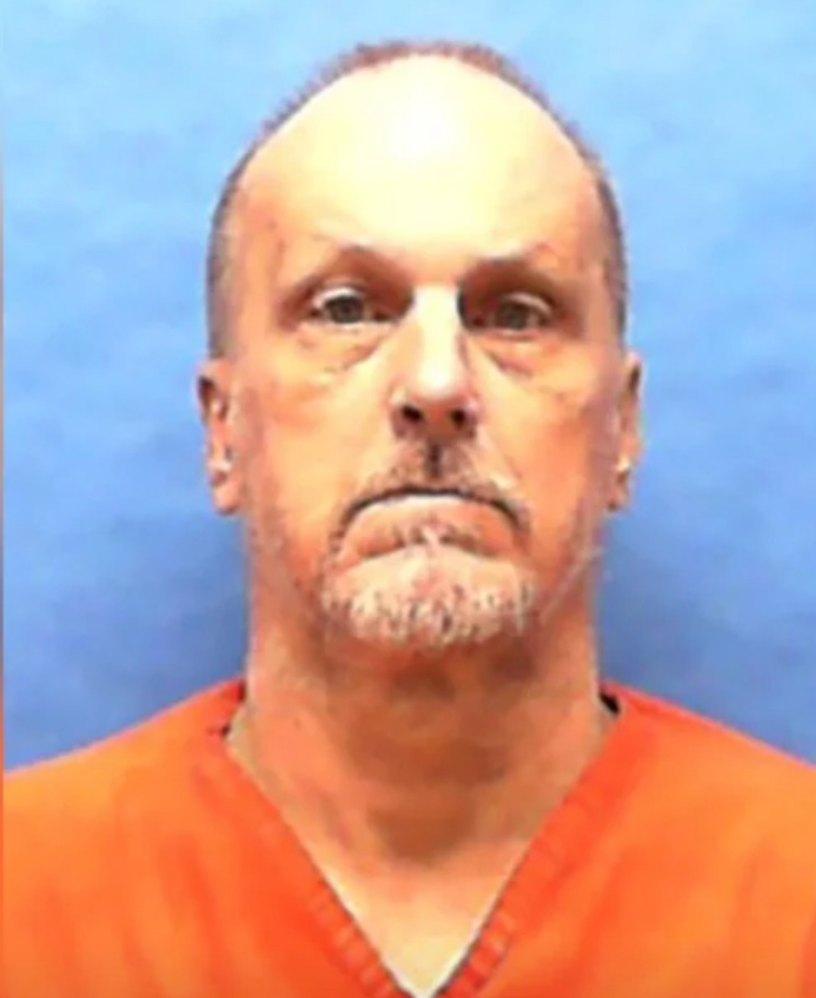
James Robertson, 63, was pronounced dead at 12:32 p.m. following a three-drug lethal injection at Florida State Prison near Starke. He had pleaded guilty to first-degree murder and waived all post-conviction appeals in the 2008 strangling of Frank Hart.
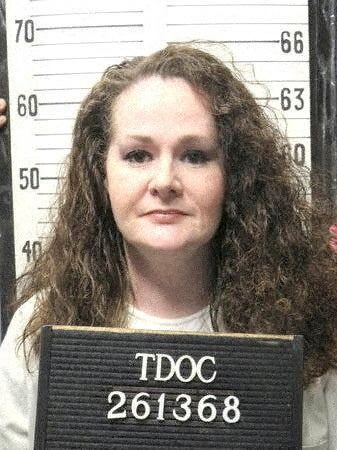
Robertson’s death comes during a period of heightened national attention on capital punishment across the United States. In Tennessee, death row inmate Christa Pike survived an execution attempt on Sept. 30, despite receiving two lethal doses of pentobarbital. And the Pentagon announced last week that the upcoming firing squad execution of Fort Hood shooter Nidal Malik Hasan will be broadcast via livestream.
Florida Department of Corrections spokesperson Jordan Kirkland defended the state’s protocol after being asked how Florida would avoid a botched execution like Pike’s.
“Florida has a sound lethal injection process and protocol,” Kirkland said, adding that he could not comment on Tennessee’s procedures. “We are very committed to carrying that out in a humane and dignified manner.”
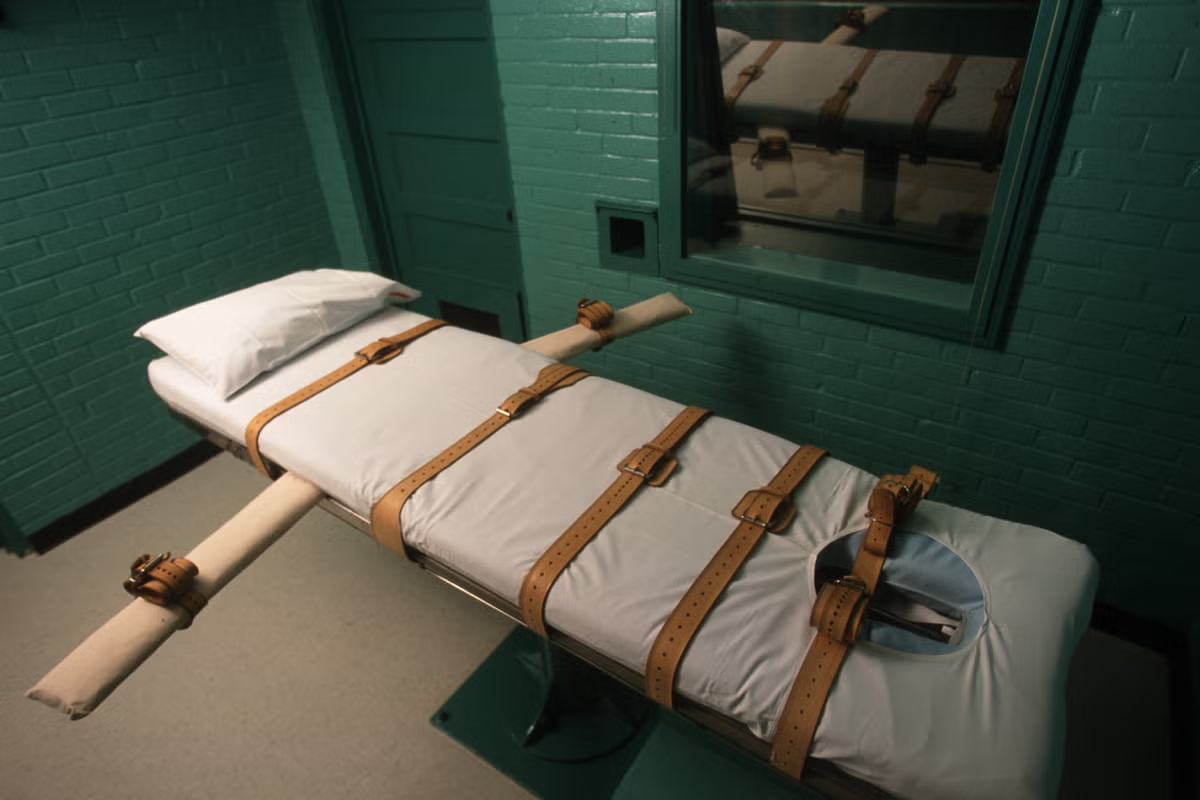
According to the Department of Corrections, Florida carries out executions using a three-drug cocktail comprising a sedative, a paralytic, and a drug that induces cardiac arrest.
Robertson was originally scheduled to be one of two inmates executed in Florida on Tuesday. However, Gov. Ron DeSantis withdrew the death warrant for William Lee Thompson last week. The Republican governor provided no official explanation for the rescission, though he had temporarily stayed Thompson’s execution last month to allow for a psychiatric evaluation.
State records indicate this is the first time DeSantis has withdrawn an active death warrant. The move does not alter Thompson’s underlying capital sentence; he remains on death row, and a new warrant could be signed in the future.
Court records show Robertson was incarcerated at Charlotte Correctional Institution, north of Fort Myers, in December 2008 when he fashioned a ligature from several socks and strangled Hart as he slept. Robertson informed investigators that the attack was unprovoked and executed intentionally so he would be sentenced to death rather than spend the rest of his life in prison.
Robertson was first imprisoned in 1980 at age 17 on convictions of burglary and assault. Subsequent convictions for prison escape, battery, and possession of weapons continually added time to his total sentence. Hart had been incarcerated in 2003 following a conviction for sexual battery.
After pleading guilty, Robertson waived his right to a penalty phase, during which a jury would recommend either life imprisonment or the death penalty. A judge sentenced him to death, after which Robertson relinquished all post-conviction legal challenges. He reaffirmed his position during a hearing earlier this month, telling a judge he understood his execution date was set and explicitly declined to submit final appeals to the Florida Supreme Court or the U.S. Supreme Court.
Capital punishment opponents argue that Robertson’s actions contradict claims that executions serve as a deterrent to violent crime. Maria DeLiberato, legal and policy director for Floridians for Alternatives to the Death Penalty, emphasized that Hart was entitled to safety while in custody, adding that “the existence of the death penalty may have caused the very violence it purportedly prevents.
In Thompson’s case, DeSantis represents the third Florida governor to issue a death warrant for the 74-year-old inmate. Governors Bob Graham and Bob Martinez both scheduled execution dates for him during the 1980s, though decades of legal challenges prevented the sentence from being carried out via the electric chair, the state’s method at the time. Thompson was convicted of first-degree murder, kidnapping, and sexual battery in the 1976 killing of 23-year-old Sally Ivester.
Thompson will remain on Florida’s death row, where a new warrant may be issued at a later date. His legal team has stated that he suffers from dementia and deteriorating health, arguing he should be transferred to an appropriate medical facility to receive required care.
Only one other inmate remains alive in Florida following an issued death warrant under DeSantis. James Dailey, 80, was scheduled for execution in late 2019 for the murder of a 14-year-old girl, but a federal judge issued a stay while attorneys challenged his conviction. Although that stay was ultimately lifted, DeSantis did not sign a replacement warrant. The state suspended all capital punishment during the COVID-19 pandemic before resuming executions in 2023.
DeSantis, who completes his term in January, oversaw 19 executions in 2025—the highest single-year total by any Florida governor since the death penalty was reinstated in 1976. Robertson marks the state’s 17th execution of 2026, with two additional executions currently scheduled, excluding Thompson.
DeSantis has offered limited public commentary regarding the unprecedented frequency of executions, though he has previously stated his intent is to deliver long-delayed closure to victims’ families.
William Reaves, 77, is scheduled to be executed on Oct. 20, followed by Jesse Guardado, 64, on Nov. 5. Reaves was convicted of the 1986 fatal shooting of a deputy officer, while Guardado was convicted of a 2004 robbery and murder committed to purchase drugs.
If Reaves and Guardado are executed as scheduled, Florida will equal its 2025 total with eight weeks remaining in 2026.
Nationwide, 47 individuals were executed in the U.S. in 2025. In addition to leading the country last year, Florida has carried out more than half of the 31 executions conducted across the U.S. so far this year. In July, Florida executed two prisoners on the same day, becoming the first state to do so in nearly a decade.
About the Author