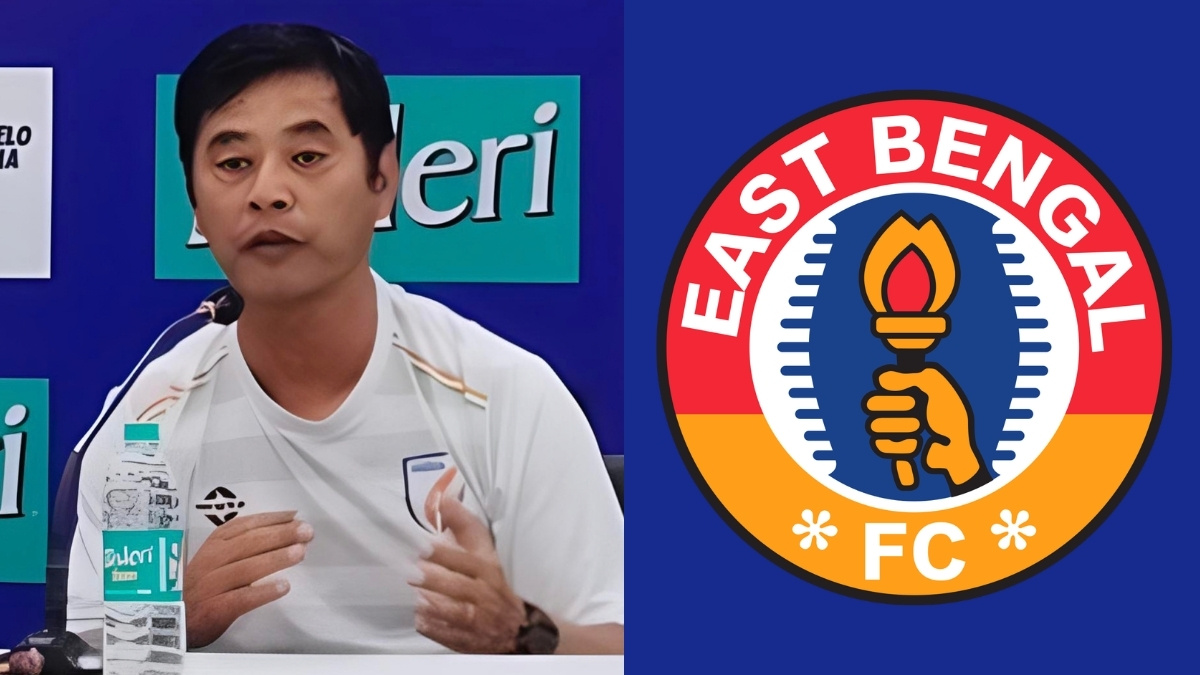
The dispute between India women’s head coach Crispin Chettri and East Bengal FC over player availability ahead of the Blue Tigresses’ two international friendlies against Russia has brought an old issue in Indian football back into focus – the difficult balance between club commitments and national-team preparation.
In the tussle between clubs and the national team, the women’s team is a new entrant, as East Bengal were alleged not to release their players for the Kolkata camp ahead of the friendly matches.
East Bengal vs India Women’s Team: What’s the Apple of Discord?
Chettri had entered the September 18 camp hoping to work with a wider group as India began preparations for the Russia fixtures and, more importantly, the longer-term objective of building a squad for the 2029 AFC Women’s Asian Cup.
However, East Bengal’s players were not available to him during the early part of the camp because of the club’s commitments in the AFC Women’s Champions League and Indian Women’s League. The situation became controversial because the two sides had different timelines in mind.
Chettri had told MyKhel earlier that the Kolkata club was reluctant to release their players, despite being the club with the most representatives in the national team. On the eve of the first match, Crispin made his decision clear regarding the issue. AIFF didn’t even announce a proper women’s squad before the match and at the pre-match press conference, Chettri revealed the Kolkata giants didn’t release any of their players.
“We are going to play with the squad we have. East Bengal are preparing for AFC and IWL, so they didn’t release any of their players as it’s not a FIFA window. I wanted the players in the National Camp, but these kinds of hiccups happen. I think every club must come together for the national team,” he said.
East Bengal, on the same day, released a statement, refuting the narrative. According to East Bengal’s subsequent clarification, the club had agreed to release nine players during the FIFA Women’s International Window, beginning October 5.
The players were Panthoi Chanu, Shilky Devi Hemam, Astam Oraon, Naorem Priyanka Devi, Soumya Guguloth, Thoibisana Chanu, Rimpa Haldar, Mamani Das and Sathi Debnath. East Bengal also said it regularly shared player performance and medical information with the AIFF and was prepared to cooperate with the national team during the official window.
For Chettri, however, the issue was not simply whether East Bengal would eventually release the players. It was when they would arrive.
India had already been training together since September 18, meaning the coach had spent more than two weeks developing combinations, tactical patterns and understanding among the available players. Bringing nine East Bengal players into the group only from October 5 would have left limited preparation time before the Russia matches.
That distinction is crucial. The dispute was therefore less about a straightforward refusal to release players and more about the timing of their availability.
Chettri had acknowledged before the Russia fixtures that East Bengal’s commitments had affected the availability of players he wanted for the extended camp. The coach ultimately opted to continue with the group that had trained together rather than make significant late changes.
The consequences were visible in the first Russia friendly on October 8. India fielded a youthful side and lost 0-4, with several young players getting an opportunity against the 27th-ranked European side. Six Indian players made their international debuts in the match.
East Bengal, meanwhile, pushed back against any suggestion that it had simply refused to cooperate. Its position was that the club had agreed to release the nine players once the FIFA window opened, which was a fair argument from their side.
The Disease Needs an Antidote
The tussle can only further strain the already depleted condition of Indian football. In men’s football, the club vs nation duel has been an ever-present enigma, and now it is concentrating in the women’s game as well. For East Bengal, whose next match is only on November 1, arguably could have been more receptive, while for the Indian national women’s team, the decision to leave out all East Bengal players was a drastic measure. The game requires sanctity and pragmatism, and for Indian football, which is already in dire straits, there is no place for ego, as it only further exposes the painful blisters.
Story first published: Friday, October 9, 2026, 15:49 [IST]
About the Author