Want to bookmark your favourite articles and stories to read or reference later? Start your Independent Membership today.
Already a member?
Log in
Amina Chauvinga* was chased away from home in the impoverished province of Nampula, northern Mozambique by her parents at the age of 15 after she fell pregnant with a 28-year-old man.
Stranded and out of choices, Amina moved in with the father of her unborn child, but that did not last. “The difficulty I had was that my parents could not support me as they actually sent me away from home so the only solution I could find at the time was to go after the man who got me pregnant and to live with him even though that was also difficult,” Amina says.
She hopes that her daughter, now two years old, is not affected by the crisis of teen pregnancies and early marriages that is heavily impacting Mozambique, where nearly half of all adolescent girls fall pregnant or are forced to marry before the age of 18.
According to United Nations Children’s Fund (UNICEF) data, Mozambique has consistently ranked among the top 10 countries with the highest rates of early marriages and teen pregnancies. Its neighbours in southern Africa are also heavily affected.
In Angola, northwest of Mozambique, 167 births out of 1,000 girls aged between 15 and 19 years fall pregnant. Neighbouring Zimbabwe, west of Mozambique, has a teenage pregnancy rate of 23 per cent for girls aged 15 to 19, according to data from the latest Demographic Health Survey.
For Mozambique though, the situation is compounded by “the failure of systems” that should be helping to broadly address teen pregnancies and early marriages, Raquel Castanheira, head of strategy and impact for GirlMove, which work with adolescent girls in the country, tells The Independent.
She adds that Mozambique’s high prevalence rate of teen pregnancies was mainly a consequence of far fewer girls being able to attend or complete basic education. Only about 41 per cent of young girls in Mozambique complete secondary school.
In Nampula, learning poverty – described as the share of children who cannot read and understand simple text by 10 – exceeds 80 per cent.
“When girls are not in school, they are vulnerable to early marriage, to pregnancy, to trajectories that are almost impossible to reverse. The school is a protective environment, a place of aspiration, and a space where girls can begin to dream, to aspire and see themselves differently,” says Castanheira.
A case of survival
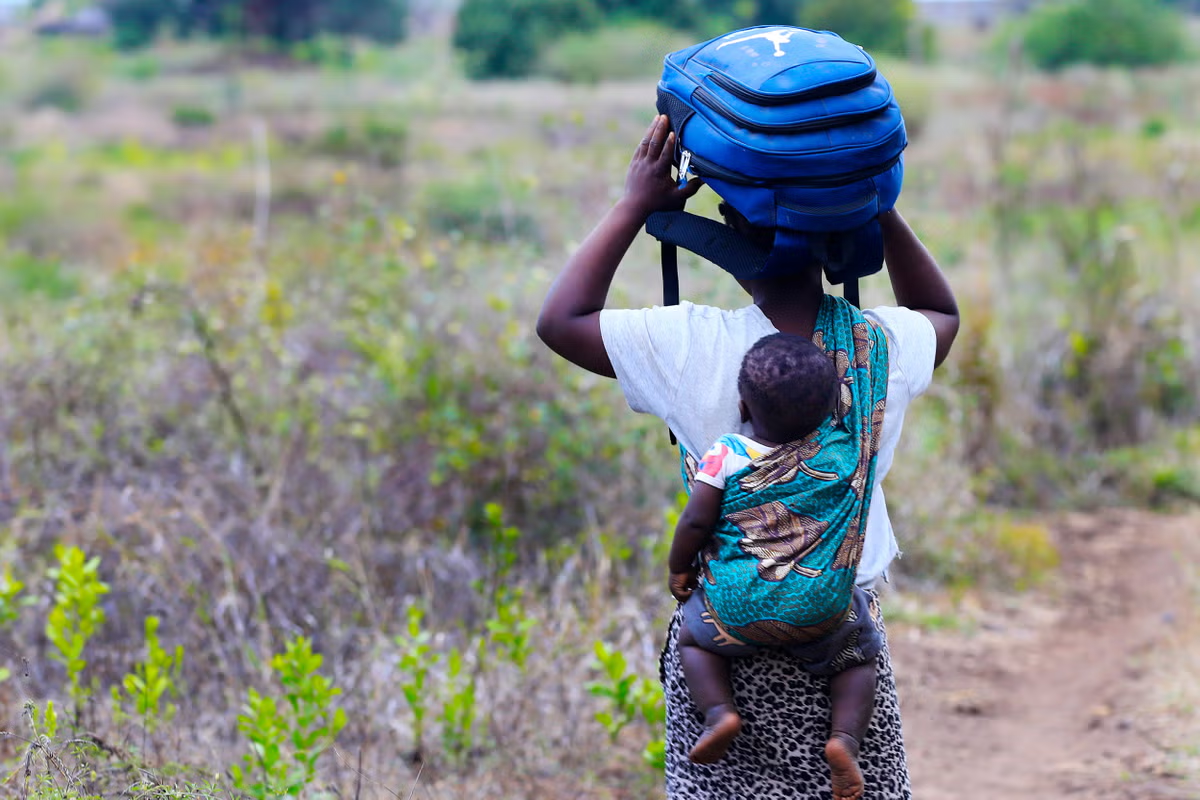
When Mary Louise Eagleton arrived in Mozambique as country rep for UNICEF in 2024, she was perplexed by the high number of young girls she would meet on the streets carrying babies on their backs.
She initially thought that the young girls were carrying their siblings or sisters’ babies, but soon realised that the babies the girls were carrying were theirs.
Climate change impacts such as cyclones and flooding which each year disrupt sources of livelihood for many households also push young girls into early marriages as they run out of options.
“For a lot of these young girls who are falling pregnant its really a matter of survival. These girls are forced into early sexual relationships to sustain themselves and their families and in the case of early marriages, the bride price can bring money into the household,” Eagleton says.
This is why UNICEF and other development organisations such as the United Nations Population Fund (UNFPA), World Health Organisation (WHO) and GirlMove are rolling out interventions to halve the number of girls who fall pregnant or get into marriages early.
One example is Unicef’s Girls in Action initiative, that seeks to keep vulnerable young girls in school and GirlMove’s peer-led and community rooted programs that empower young girls not to fall into early marriages and teen pregnancies. Meanwhile, in Niassa, northwest of Mozambique’s capital Maputo, UNFPA is undertaking a project to bring sexual reproductive health services to adolescent girls.
A lack of funding
However, some of the programs to reduce teen pregnancies and early marriages in Mozambique have been crippled by the withdrawal of development aid by the United States, UK and Sweden among others.
Last year, US President Donald Trump signed an executive order that essentially shuttered the activities of the United States Agency for International Development (USAID).

GirlMove’s programmes in this space were “directly affected by the USAID withdrawal,” Catanheira says – as the organisation received direct funding through PEPFAR, the US government’s programme designed to protect the most vulnerable populations from HIV and related risks, including adolescent girls.
“We lost 15 per cent of our total annual budget overnight. The funding ended abruptly, with no notice and with very limited transition planning for those on the ground,” said Catanheira.
In 2024, the US availed $586 million (£444m) for Mozambique under USAID but this was reduced to $54 million for all programmes this year.
In Zimbabwe, the withdrawal of donor funding has reduced the scale of interventions and removed some of the most effective, evidence-based programmes. These include the DREAMS project run by UNICEF. This programme addressed adolescent vulnerability and related consequences, such as teen pregnancies and early marriages.
This, says Tafadzwa Priscilla Sibanda, HIV/AIDS specialist for UNICEF Zimbabwe, has left a significant gap in sexual reproductive health and HIV prevention programming for adolescent girls and young women in the country.
This makes it “much more difficult to sustainably reduce teen pregnancies, early marriages and reduce HIV incidence in this population in Zimbabwe,” she explains.
Yet it’s not just the US which has withdrawn funding for international development and humanitarian programmes. Eagleton says there has been “a broader contraction in international aid from several traditional donor” countries, including those in Europe.
European countries are now prioritising more of their Overseas Development Aid (ODA) on budgets on defence. Consequently, there has been a 20 per cent contraction in development financing, with programs supporting children and adolescent girls in Mozambique the most affected.
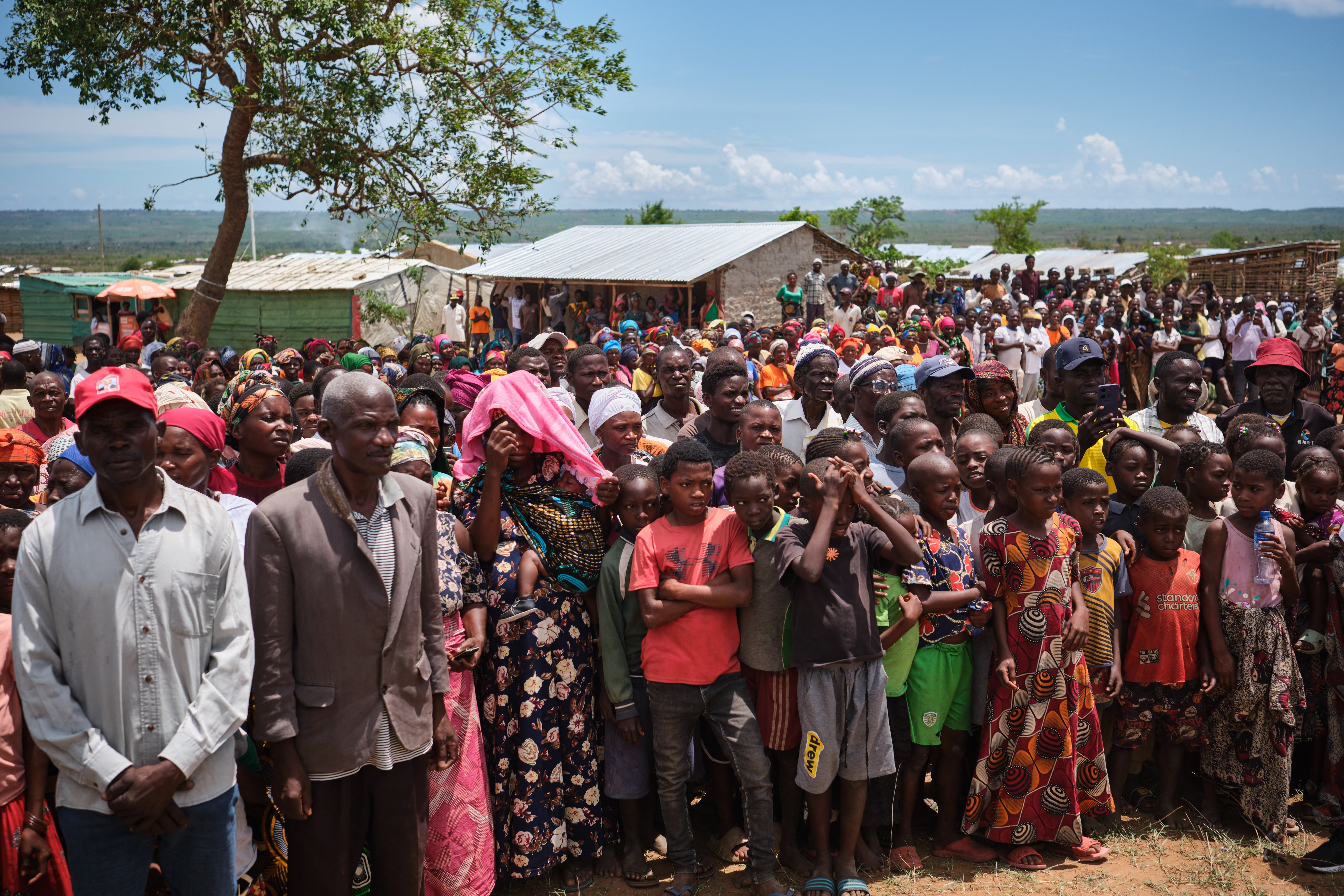
“So we’re really looking at how we can do more with less, how we can have more impactful, impactful programming, really focusing on the areas where children are most vulnerable,” says Eagleton. “We are finding that our programmes, especially on keeping girls in school, are having a positive impact on reducing child marriage and child pregnancy here in Mozambique”.
Rescued from her early marriage, Amina plays with her baby after class while balancing school homework.
Whereas she once felt isolated and distant from her family and community she now feels “more alive” and is “grateful” to development organisations that rescued her and are helping to keep her in school.
“My relationship with my child at this moment is very good, I no-longer have the regrets I used to have. Of course, sometimes the baby is rough and troublesome as a child but I manage to handle the situation knowing that she now has a brighter future,” Amina says.
*Names have been changed to protect identities
This article has been produced as part of The Independent’s Rethinking Global Aid project
About the Author