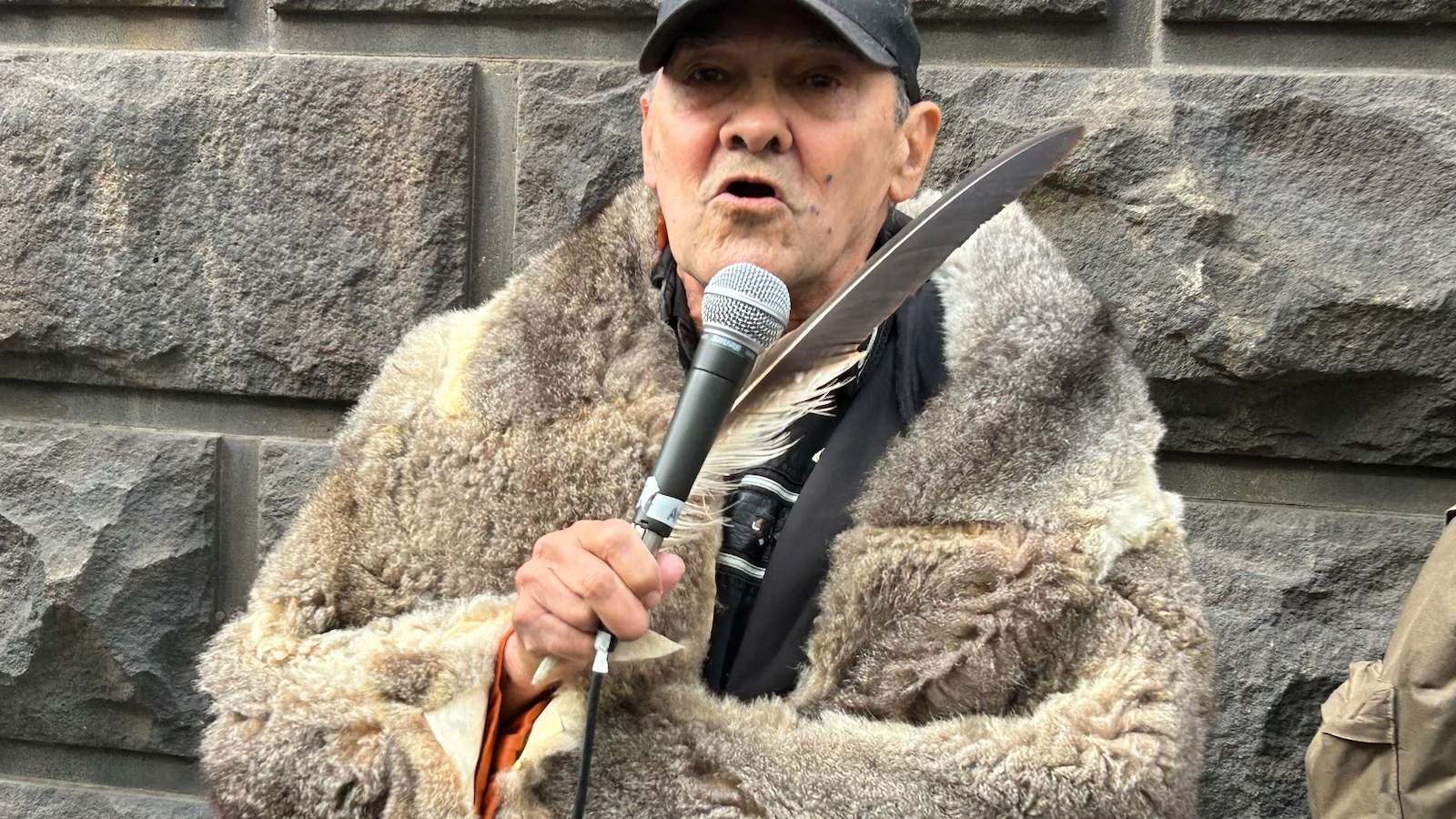
MELBOURNE, Australia — Three Australian appellate judges on Monday rejected an activist’s landmark bid to prosecute Britain’s King Charles III over the alleged genocide of Indigenous people.
The ruling by Victoria state’s Court of Appeal leaves Uncle Robbie Thorpe with one final domestic option: seeking permission to appeal to the High Court of Australia. The High Court accepts only about 10% of applications for leave to appeal.
Indigenous Australians use the titles ‘uncle’ and ‘aunt’ as marks of respect for community elders.
Thorpe, a 68-year-old elder of the Krautatungalung people, said Monday that he did not expect to receive a fair hearing in Australia. After exhausting his options in Australian courts, he said he would take his allegations against the monarch to the International Criminal Court in the Netherlands.
“The International Criminal Court will expose Australia for what it really is — a lying, racist, illegal occupation committing genocide,” Thorpe said.
Monday’s ruling was Thorpe’s third legal defeat since he began trying in 2023 to launch a private prosecution against the monarch in Melbourne Magistrates’ Court.
His case alleges that the king, who is also Australia’s head of state, along with the Australian government and its institutions, is perpetuating genocide by maintaining systems that disadvantage Indigenous people across numerous socioeconomic measures.
Indigenous Australians make up about 4% of the population. They die younger, experience worse health outcomes and are more likely to be imprisoned or unemployed than other Australians, according to official statistics.
The British monarch is immune from all criminal and civil liability in the United Kingdom. This provides an immunity that is even broader than that of a U.S. president because it extends to personal acts that are outside official power, Sydney University constitutional lawyer Anne Twomey said.
The king’s common law immunity in Britain has likely been inherited by Australia, a former British colony that continues to recognize Britain’s monarch as its own head of state. Twomey said she is unaware of the monarch’s common law immunity ever being tested in Australia.
The British and Australian parliaments could legislate to alter a monarch’s immunity. But a British monarch is also the head of state of several countries including Canada and New Zealand. The monarch is entitled to sovereign immunity under customary international law and according to Australian statutes including the Foreign States Immunities Act 1985 and the Diplomatic Privileges and Immunities Act 1967.
The International Criminal Court does not recognize head of state immunity and has the jurisdiction to prosecute on a charge of genocide.
But an individual such as Thorpe does not have the option to launch a private prosecution in the ICC as he has attempted in a low-level Australian court.
The U.N. Security Council can refer a prosecution, but Britain would veto such a move against King Charles, Australian National University international lawyer Don Rothwell said.
The most common path is for an individual to make the ICC’s Office of the Prosecutor aware of evidence, as happened in cases against Russian President Vladimir Putin and Israeli Prime Minister Benjamin Netanyahu.
“An individual cannot commence a prosecution. If they’ve exhausted all of their options under Australian law, the best that they can do is seek to provide evidence that they believe constitutes the crime of genocide. It’s then up to the International Criminal Court to determine whether they would seek to prosecute,” Rothwell said.
About the Author