
Want to bookmark your favourite articles and stories to read or reference later? Start your Independent Membership today.
Already a member?
Log in
A Russian woman has died after being mauled by a bear in her garden, making her the seventh person to be killed by the animals in her Siberian region this month, according to state investigators.
The attack comes amid a wider series of deadly encounters across Russia that experts attribute to climate change and human carelessness.
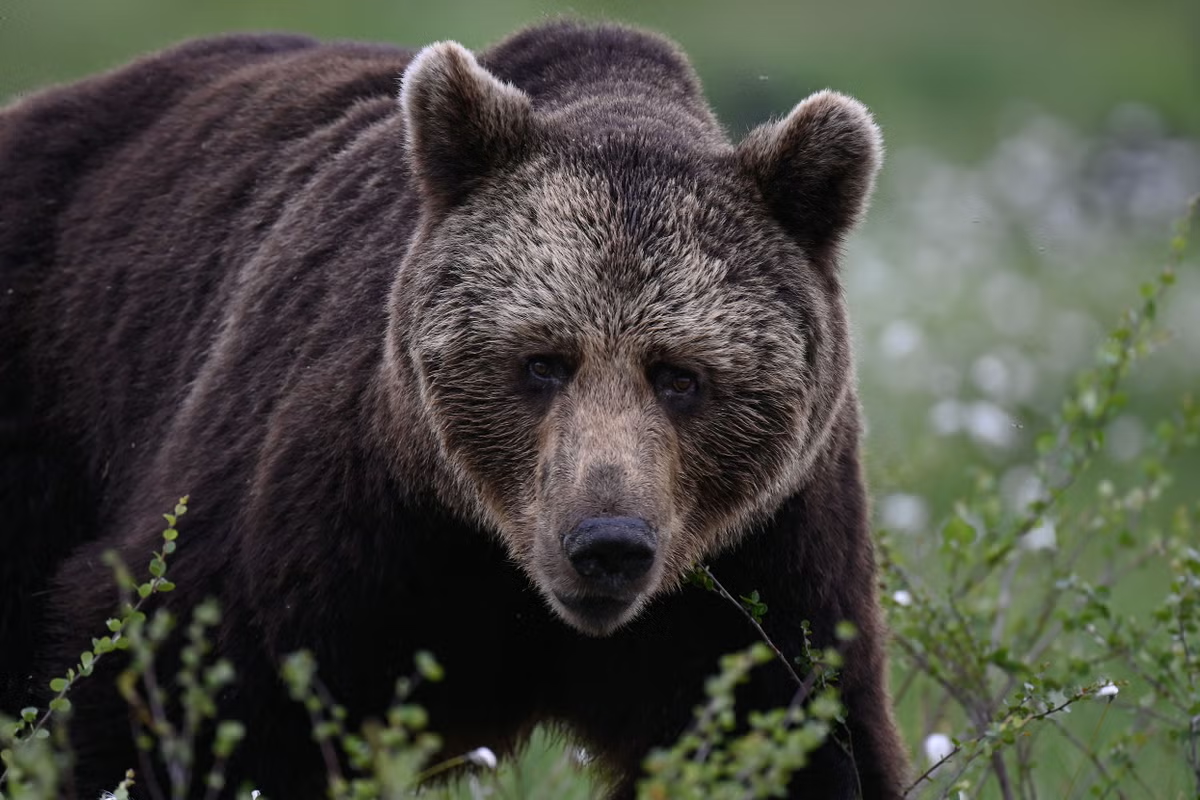
Video footage released by officials in the Krasnoyarsk region of Siberia, located approximately 3,000 km (1,864 miles) east of Moscow, showed team members walking through woodland to inspect the body of the brown bear responsible for the mauling.
State news agency TASS reported that the 51-year-old woman was killed in the village of Voznesenka after discovering the animal attempting to gain entry to an outdoor pen where she kept domestic livestock.
“The bear lunged at the woman. The predator was shot dead by a neighbour of the deceased,” TASS reported.
Experts quoted in Russian media explained that brown bears – which have launched attacks in at least 11 regions across Russia this year, causing at least 20 deaths – have been compelled to search further for food because an unseasonably early and dry spring left a shortage of wild berries in September.

Human activity has also contributed to the problem, with people leaving food waste exposed outdoors where it attracts bears and ignoring safety protocols, according to experts. Authorities in at least one region have also been accused of failing to keep bear numbers under control.
Milder and shorter winters, among other factors, have led to Russia’s bear population more than doubling since 1990, when it stood at 130,000.
Environment ministry figures show that Krasnoyarsk accounts for nearly 27,000 of the 308,000 brown bears nationwide. On Wednesday, investigators in the region launched a criminal case into the local environment ministry, accusing officials of negligence that resulted in the deaths of six people — a figure that reached seven following the attack on the woman in her garden — in September alone.
State bodies had a legal responsibility to track bear populations and intervene immediately if human lives were endangered, investigators said.
“Despite numerous warnings of danger, officials from the ministry and other authorised officials failed to take measures to regulate the predator population and prevent their appearance in areas inhabited by people,” investigators said in a statement.
“Monitoring data show that the brown bear population in the Krasnoyarsk region has increased 2.5-fold, reaching over 26,000 animals. Residents… have submitted more than 120 reports of brown bears entering the boundaries of settlements in more than 15 districts of the region, as well as in the cities of Krasnoyarsk, Zheleznogorsk and Zelenogorsk,” they said.
Investigators warned residents to stay clear of woodland and to delay plans to go mushroom and berry picking, a widely popular Russian pastime.
“If you encounter a large predator, you have virtually no chance of survival,” the statement said.
Other fatalities in the Krasnoyarsk region this month include a 39-year-old male logger and two women who were gathering mushrooms.
In Siberia’s Irkutsk region, an elderly male mushroom picker was killed by a bear this month, alongside two men gathering wild plants in woodland.

During one of the most high-profile incidents this year, a bear attacked two tourists in their tent in the Altai region in August. It dragged a 29-year-old female camper from the tent, killed her, and buried her body in the forest.
In the Siberian region of Tuva, ice hockey coach Alexander Kuzmenko — father of NHL player Andrei Kuzmenko — died this week after being attacked by a bear during a fishing trip.
The environment ministry has attempted to downplay the surge in fatal attacks.
“In recent years, around 20 to 30 cases of bear attacks have been recorded annually,” it told the RBC news outlet.
“The only abnormal spike was in 2014, when there were 166 cases. The thing is, nowadays everyone has a smartphone, and information spreads quickly via the internet and social media, which creates the impression that the problem is widespread.”
About the Author