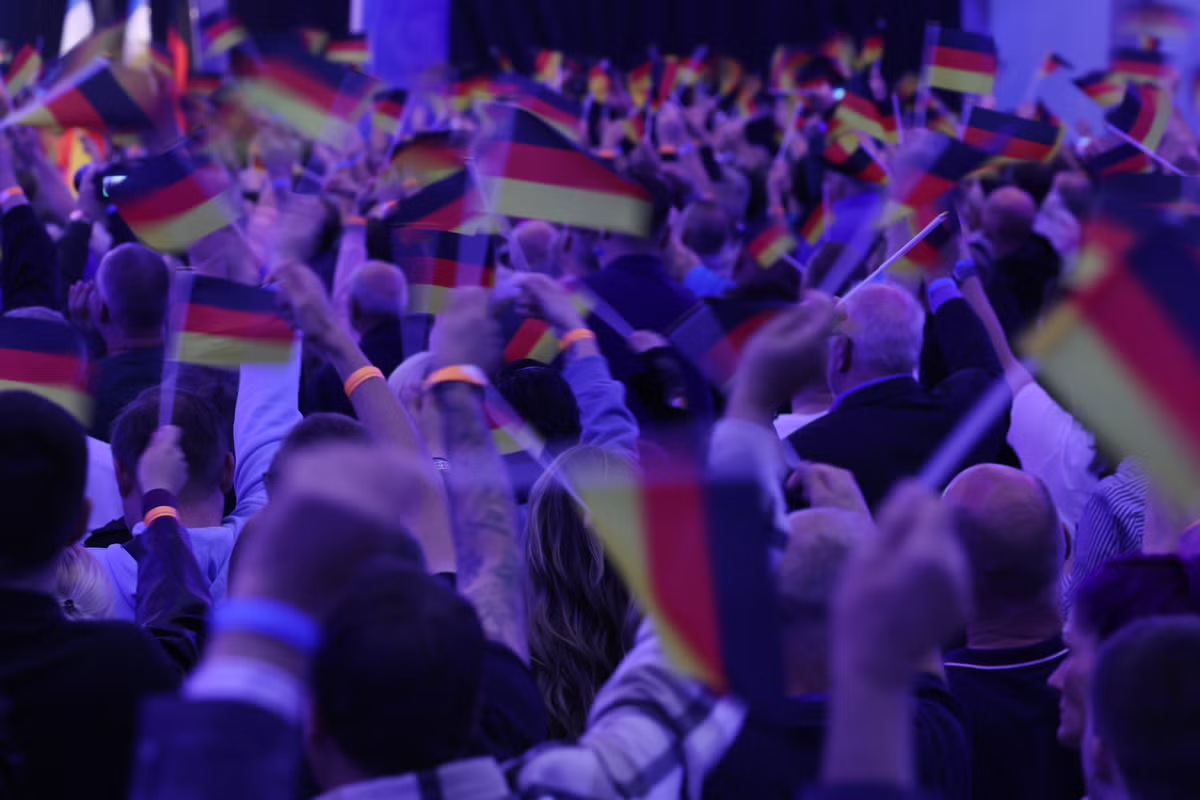
Germany is facing a far-right surge as the Alternativ fur Deutschland (AfD) gains momentum across the country. Berlin, one of the world’s most liberal cities, could be next when voters go the polls on Sunday.
After success in the state elections in Saxony-Anhalt, the party has set its sights on the capital, as it continues its efforts to modify its brand after being classified by German intelligence as a right-wing extremist organisation.
Strong polling places the AfD just 3.4 per cent behind The Left party and 2.5 per cent behind chancellor Friedrich Merz’s centre-right CDU, according to an average published by dawum.de. It’s a dramatic change from three years ago, when the AfD sat 19.1 per cent behind the leaders in Berlin’s state election.
An AfD victory in Berlin would turn a political shock after the Saxony-Anhalt result into a country-wide earthquake, marking the second far-right state election success since the Second World War – and the second in two weeks.
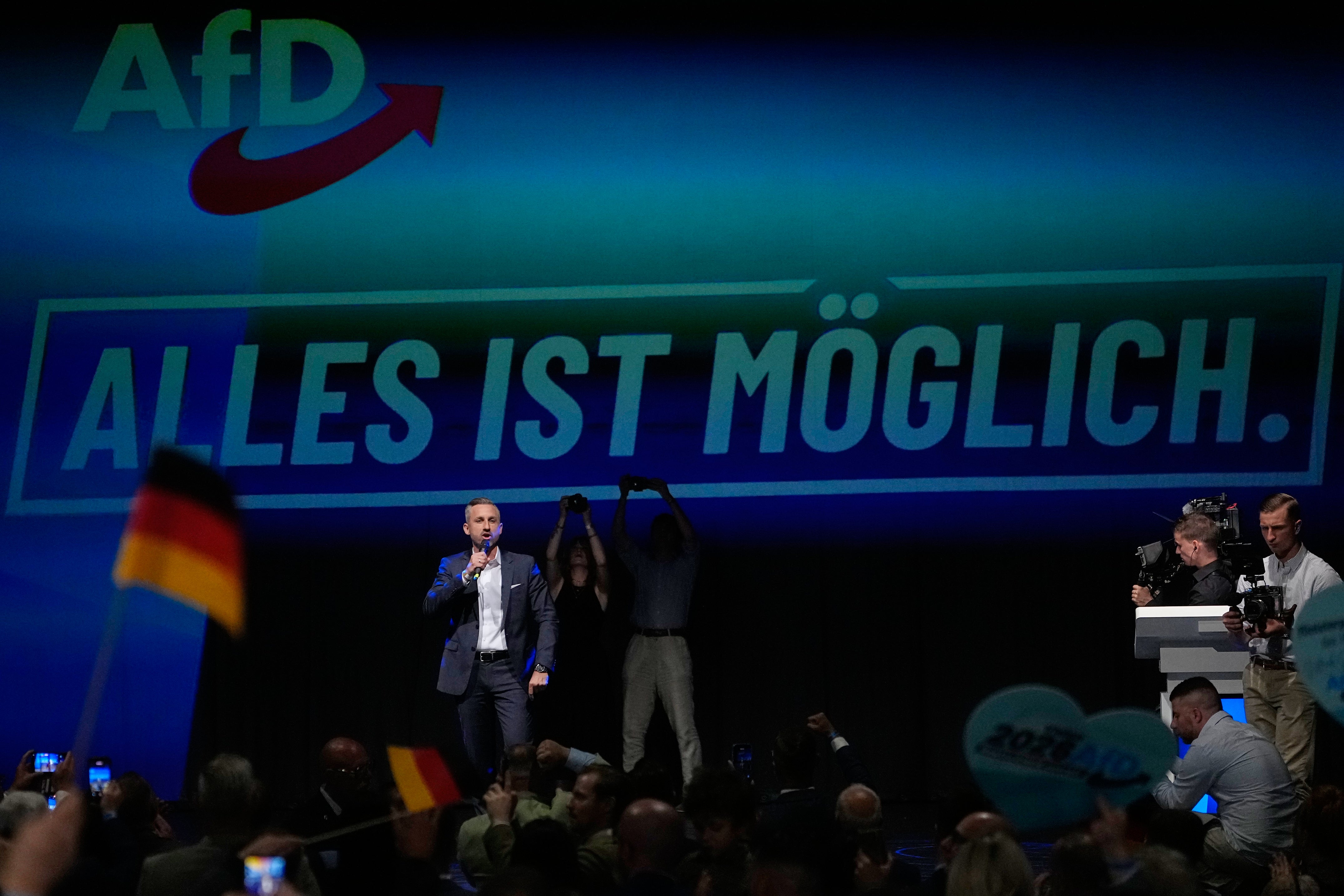
“The way the AfD is campaigning looks less toxic, less dirty, less smelly, and that matters,” says Grégoire Roos, director of the Europe and Russia and Eurasia Programmes at Chatham House, who has tracked the AfD’s rise for more than a decade.
“The profile of its leaders, the way they’re campaigning, plus the growing concern with where the city is going, makes up a fertile enough ground for the AfD to secure, if not a victory, at least some form of strategic win – in what has traditionally been seen as a safe space,” he says.
The AfD may look to emulate the gameplan of Ulrich Siegmund, Saxony-Anhalt’s successful leader, which saw the party transform its image from a movement of protest against the mainstream parties to one with more confidence in its own radical agenda.
Read more: German minorities defy far-right AfD’s culture of fear after election win
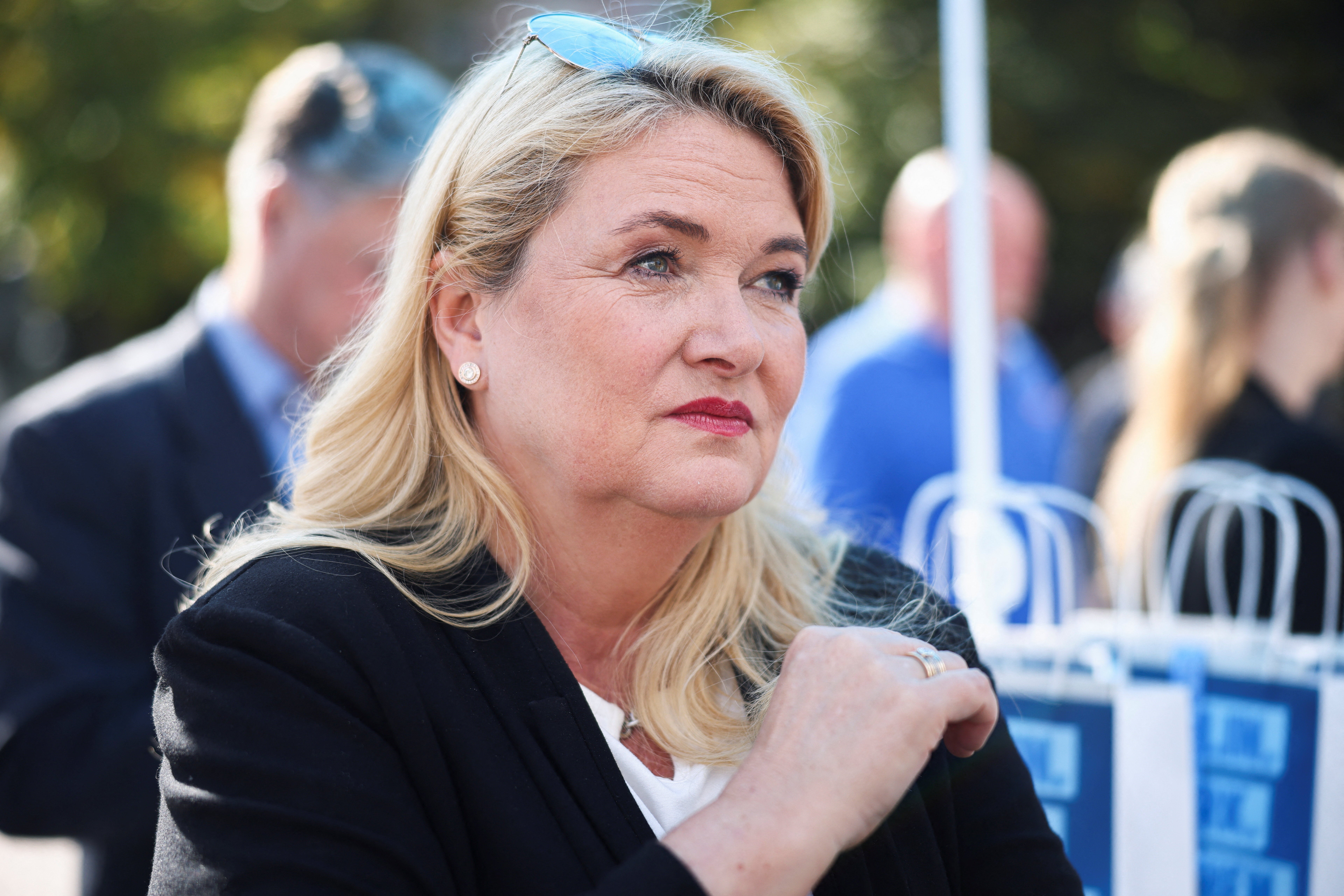
At face value, the nature of the AfD’s programme is largely unchanged in Berlin. Migration is, as usual, a major pillar of its campaign, including explicit demands for “remigration”, a new buzzword for the far-right.
Housing policy has been emphasised, with AfD advocating for preferential treatment for native-born citizens in Germany. Programmes related to anti-discrimination, diversity and gender equality are forcefully opposed.
But the party appears to recognise the need for a wider appeal. Kristen Brinker, the AfD’s leader in Berlin, has a softer public perception than some of the AfD’s better-known national leaders.
Its local programme in the capital has been centred as much around the big city problems – housing, rent, education – as around German national identity.
“Marginalised parties have understood that to conquer part of the urban electorate, there’s a kind of moral caution,” says Mr Roos. “You need to behave a certain way. There’s a type of behaviour you should avoid, and [the AfD] have somehow successfully done it. They’ve passed the first screening in a way.”
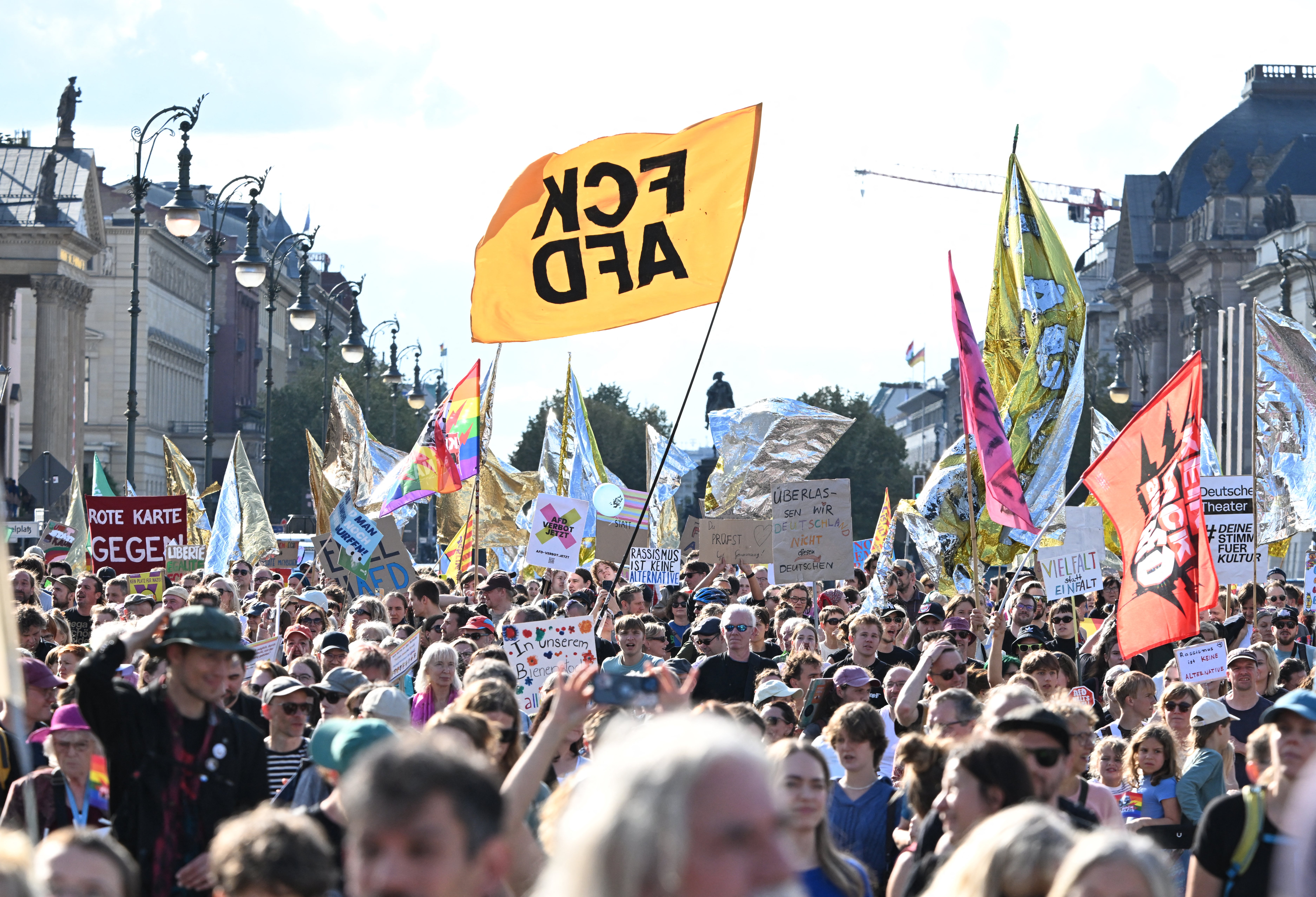
The impact has been clear. The AfD has shot up to third in the polls and looks set to almost double its 2023 vote share to around 18 per cent.
The Left are topping the polls at 21 per cent with the centre-right CDU second at 20.1 per cent, while the centre-left SPD, for decades Berlin’s largest party, could plummet down to 12.2 per cent.
The AfD has been siphoning voters from four key quarters of the German electorate, Mr Roos says, a trend it will look to replicate in Berlin.
CDU voters dismayed by the direction of both party and country have flocked rightwards, in part due to a sense of betrayal over Merz’s circumvention of the debt brake, a legal fiscal rule limiting how much structural debt a government can build up annually. For hardcore party members, this was nothing short of a cardinal sin.
A similar trend has been seen before, such as in the mid-2010s, when former chancellor Angela Merkel allowed around one million refugees into Germany.
Siegmund himself was a former CDU member, as were several of the AfD’s most prominent founders. In Saxony-Anhalt, the swing from 2021 was clear: the AfD gained 23 points as the CDU lost 19.9, while other parties remained within a few percentage points of their result five years ago.
Young, undecided voters form another vital portion of AfD support. In Saxony-Anhalt, the AfD won over 170,000 voters who were undecided before the election, after their campaign managed to “appeal to a younger fringe of the electorate by reaching out to them through means of social media”, says Mr Roos.
Other elements include a fringe of voters who are socially right-wing and economically left-wing, along with neo-Nazi voters, many of whom have been loyal to the party since its inception.
Berlin, however, is different to Saxony-Anhalt. Its CDU electorate is not as right wing as in other states, and the so-called ‘firewall’ – the unwritten agreement in which opposition parties work together to keep the far right out of power – is likely to “stand strong”, Mr Roos says.
Young people in Berlin are also more likely to veer towards the left of the spectrum than in some other areas.
A symbolical under-16s election in Berlin last week, in which 40,000 children participated last week, was dominated by the Left (32.8 per cent) and the Greens (20.9 per cent), with the AfD at just 5.8 per cent. Organisers emphasised that it was voluntary and does not perfectly represent all young people in Berlin, but the gap is nonetheless stark.
But neither is Berlin comparable with some of Germany’s wealthier cities, such as Frankfurt and Munich, where support for the AfD is weak.
For 40 years, the capital was split between West Germany and the GDR, the historical communist state between 1949 and 1990.
“It’s not a very wealthy city,” Mr Roos adds. “It’s a relatively poor city. The east was part of the GDR [communist East Germany], where the AfD remains very popular. So there’s also a pattern that makes it consistent with the logic.”
It is a pattern shared across Europe, he adds, where even in the cities, the desire for radical political change has seen many turn hard-right, exemplified by Reform in the UK.
“Even amongst the globalised urban electorate, there is a fatigue of what politics has become,” Mr Roos says.
As a result, he adds, there is “an increasingly clear openness to throw a bomb in the system”.
About the Author