One Nation’s latest immigration policy would “smash the Australian economy” and force hospitals and aged care facilities to close, Labor has warned, while the university sector has urged against a “race to the bottom” on cutting overseas arrivals.
One Nation said on Monday it would cut the number of temporary migrants in Australia by more than 750,000 over three years, targeting international students and family members of skilled migrants.
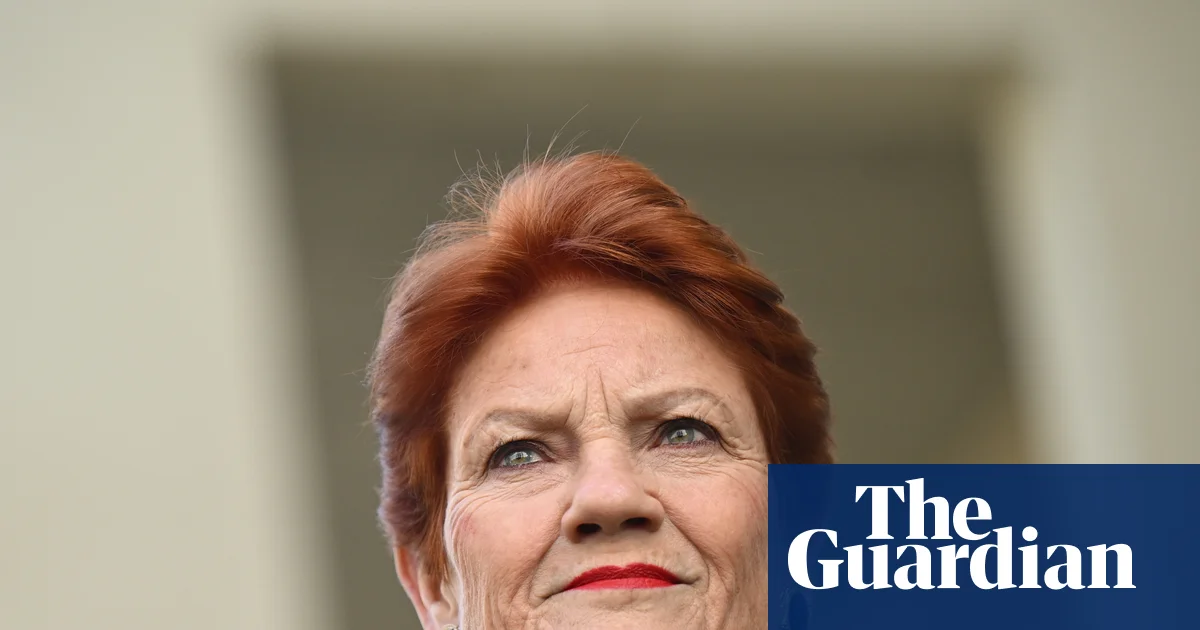
The One Nation leader, Pauline Hanson, claimed the new policy would “reset” Australia’s immigration system and help ease pressure on housing and public services.
Temporary visa numbers would be returned to 2017 levels, under what Hanson says would represent a net-negative arrivals rate for the first three years. That would mean the net overseas migration (Nom) total would be 130,000 under the One Nation plan.
The home affairs minister, Tony Burke, said a halt on immigration “would smash the Australian economy” and warned regional communities would be the first to suffer.
“Hospitals and aged care facilities would be forced to close,” he said.
“There’d be a chronic shortage of backpackers to work in hospitality and tourism, or to help farmers pick their crops.
“The construction sector would grind to a halt. Regional universities would have to radically shrink or go broke.”
Burke said Hanson should be honest and upfront with Australians about the effect of the new policy.
Luke Sheehy, the chief executive of peak body Universities Australia, said the plan would do lasting damage. He said One Nation was joining Labor and the Coalition in a “race to the bottom” with plans to dramatically cut student visas.
“You can’t take skills, jobs and billions of dollars of economic activity out of the country and pretend there will be no consequences,” he said.
“International education is one of Australia’s biggest exports. It supports jobs across the economy, helps build the skilled workforce we desperately need and strengthens our relationships around the world.
“It also helps keep our universities going.”
Immigration debate
Hanson’s announcement comes as Labor and the Coalition consider new cuts to overseas arrivals, in an increasingly charged contest before the next federal election. Hanson will hope her plan plays well in the lead-up to the Victorian state election, due in November.
“I know Australians are doing it tough,” Hanson said. “Families are competing with hundreds of people for rental accommodation. Patients are stuck in ambulances because there are not enough hospital beds. Young Australians are being locked out of home ownership while wages and infrastructure fail to keep up.”
The target is to reduce student visa numbers, including visas for accompanying family members, to 350,000 over three years. According to education department data, about 680,000 international students studied in Australia between January to May this year.
A single student graduate program visa will be created, with numbers capped at 20,000 new visas per year. One Nation’s target is to reduce graduate visa numbers from 270,000 to 40,000.
The policy could also drive division within One Nation, with the lower house MP David Farley previously expressing concern that big cuts to immigration could deny his electorate of Farrer the workers needed to care for elderly people and work on farms.
Hanson said One Nation would give “illegal migrants” three months to leave, with those who departed voluntarily allowed to apply for visas in the future.
“Those who remain unlawfully after this period will be subject to immigration enforcement and a lifetime ban from re-entering Australia,” she said.
The Pacific labour mobility scheme for agriculture would remain in place under One Nation’s plan but temporary skilled migrants would lose the ability to apply for visas for family members.
after newsletter promotion
“We will take back control of who comes here and how many we accept, train more Australians, restore living standards and put the safety and security of Australians first.”
The prime minister, Anthony Albanese, and the opposition leader, Angus Taylor, have held talks on Labor’s delayed migration package. It is expected to further drive down net overseas migration.
But Labor has struggled to finalise the plan and delayed its announcement by more than a month.
Australian businesses ‘at risk’
One Nation’s policy was widely criticised by business groups.
Business Council of Australia boss, Bran Black, warned One Nation that migrants were needed for growth in the economy.
“The starting point for any conversation with respect to migration cannot simply have the objective of cutting numbers, it has to be: how do we go about delivering the growth that ultimately locks in and secures our way of life?” he said.
Australian Chamber of Commerce and Industry chief executive, Andrew McKellar, said the business community would not support damaging cuts.
“Many Australian businesses would be put at risk by major cuts to the migration program. Pubs, cafes, hotels and accommodation providers desperately need chefs.
“Aged care homes and hospitals are short of staff already. Farmers and resources sector businesses continue to face persistent workforce shortages. Housing projects are being held up, while others remain unviable because of lack of workforce and skills shortages.”
National Farmers’ Federation boss, Hamish McIntyre, warned food prices could rise due to worker shortages.
“One in seven employees on our farms across regional Australia now are working holidaymakers or backpackers,” he told Channel Nine.
“We need these people now.
“It’ll prohibit us from planting some of these crops. We rely on these people. We won’t be able to take the risks to spend all the money, we spend up front obviously to produce these crops, so we’re not going to take a risk if we can’t harvest them.”
Taylor dismissed the policy as “absolute nonsense”.
“I’m interested to know the details of One Nation’s plan. I don’t know what their non-numbers were. A few days ago, their immigration numbers were 130,000. Now it’s something different. Well, what is it, each year over the next three or four years?
“What are those numbers? They’re not in their releases. They need to explain it.”
About the Author