The US treasury moved to cut the cost of borrowing on Wednesday only to be swiftly rebuffed by the bond market.
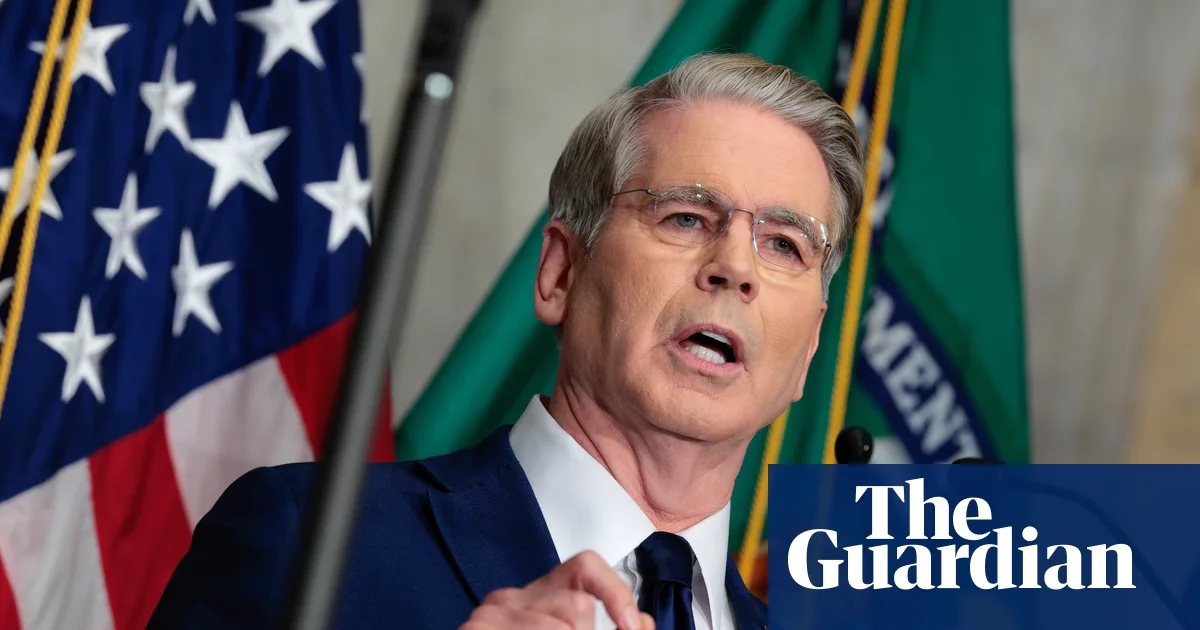
Scott Bessent, the treasury secretary, announced the US would buy back $6bn worth of government debt – treasuries – in an effort to alleviate a selloff in the US bond market that has put pressure on interest rates.
But the size of the deal failed to appease bond buyers and the yield on 10-year treasuries rose to a three-year high.
Rising inflation and uncertainty from the war in Iran have spooked investors from US bonds, what has historically been known to be one of the safest investment vehicles. Treasury yields have been rising, with the yield for the 30-year treasury bond hitting about 5.2% – the highest yield since the 2008 financial crisis.
In an attempt to alleviate the bond market, Bessent on 19 August announced the treasury would at least double its typical buyback operation. The move is meant to stabilize the market: fewer bonds on the market should mean that yields go down.
But in the weeks since the announcement, treasury yields have continued to rise. Even after Bessent announced the operation would target $6bn worth of government bonds, yields on Wednesday continued to rise.
In August, US government debt for the first time in the country’s history reached $40tn – double the amount of debt from just 10 years ago.
Higher yields could ultimately mean higher interest rates on loans, including mortgages, student debt and car loans, as these loans are often tied to the bond market.
The move puts more pressure on the US Federal Reserve to deal with inflation, which has been pushed up by the war in Iran. The annualized inflation rate hit a three-year high in May before going down to 3.4% in July – 0.7% higher than the same time last year – largely because of higher energy prices.
Donald Trump on Wednesday warned that oil prices were unlikely to come down before the midterm. Though Iran “can’t hold out any longer”, its leaders are “desperate to try and affect the election”, he said.
“Right after the election, oil prices are going to be tumbling downward,” Trump predicted.
Brent crude, the international benchmark for oil prices, rose past $100 for the first time since July on Wednesday as conflict in the Middle East continued to escalate.
The Fed could raise interest rates to mitigate higher prices, at the risk of upsetting the White House. Last week, Trump said the Fed “must get smart” and lower interest rates. “A STRONG COUNTRY MEANS A LOWER INTEREST RATE,” he wrote on social media.
The pressure puts the Fed chair, Kevin Warsh, who stepped into the role in May, in a bind: manage inflation or face the president’s wrath.
In a closely watched speech at the Fed’s Jackson Hole symposium in August, Warsh affirmed that it was “the Fed’s job to deliver stable prices”, but held off on whether the the central bank would raise rates any time soon.
About the Author