
A sudden and seismic row, allegations of “ethnic cleansing” against Jewish militia from the British government and a counterattack from Israel in shuttering the British mission to Palestinians have followed the UK’s decision to impose sanctions on Israel’s project to build illegal Jewish colonies on the occupied West Bank.
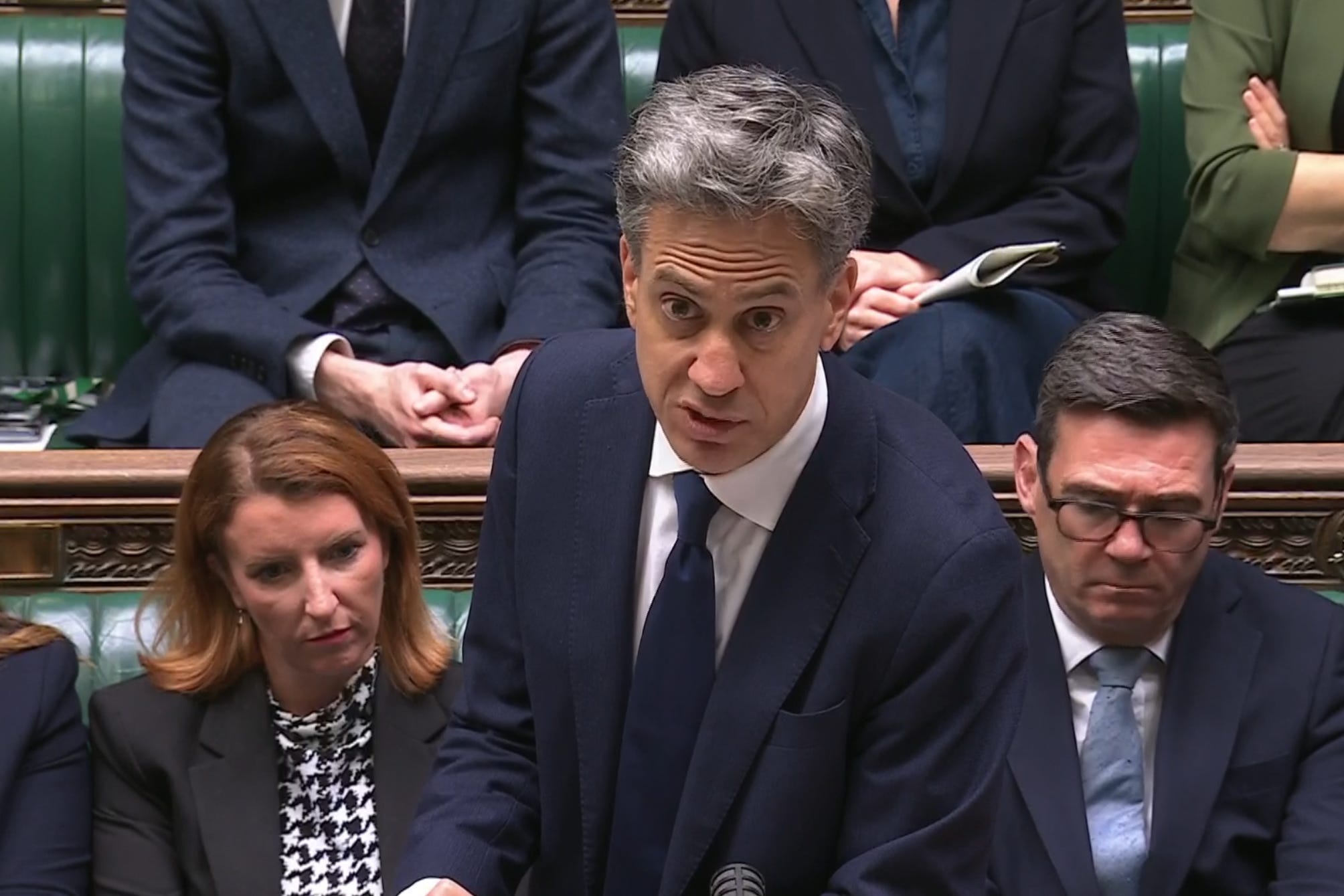
In announcing the trade sanctions, foreign secretary Ed Miliband said: “The British government agrees that there is ethnic cleansing of Palestinians in areas of the West Bank – perpetrated by settler terrorists.
“All too often the Israeli government has turned a blind eye to this, and worse, members of it have made statements and taken actions to support the forced displacement of Palestinians.”
“Ethnic cleansing” and “forced displacement” are often seen as acts of genocide. In the context of Miliband’s language, sanctions against settlers seem disproportionately low and leave the State of Israel off the hook. But the effects of the new British legislation will be felt far more widely.
Britain’s 20th-century history with Israel and the Palestinians has held a special grip on both communities at least since 1917 – the year when a Zionist dream was made real, on paper.
The so-called Balfour Declaration, a letter sent by then foreign secretary James Balfour to Lord Rothschild, has been seen by the Arab world as the original betrayal, a colonial project that has saddled the region with misery.
For the many in the Jewish diaspora, it was the moment that an imperial government which was running Palestine made a “promise” to bring a Jewish State into being.

Not so much the midwife as the IVF clinic for the conception of what is now Israel, Britain’s role was special then. And so its sanctions against Israeli settlements on Palestinian land captured by Israel in 1967 have a potency beyond their economic power.
The last Conservative government introduced legislation, in line with demands from Israel, that essentially argued that calling for Boycotts, Disinvestment or Sanctions (BDS) against Israel was anti-Semitic and should be banned. The bill was shelved by Sir Keir Starmer, but his government still maintained a policy of rejecting all and any BDS.
That has now changed. The argument that economic sanctions of any kind against the Jewish State was an atavistic attack on all Jews has been a central part of Israel’s external policies for years. It is a terrible argument that has been blown apart by the UK’s new legislation.
But it is nearly impossible to impose a trade ban on the Jewish colonies of the West Bank when the goods they export are identified as being products of Israel. They’ll never say “produced in Palestine” because Israel says there is, and has never been, such a place.
So an importer, or a consumer, keen to comply with new legislation intended to stop the building of “E1” – a gigantic extension of Jerusalem that would bisect the West Bank and destroy territorial integrity for the Palestinians – may decide to boycott all Israeli products to avoid failure to comply with sanctions against settlements.
This is the kind of creeping pressure that Israel is allergic to. And sets the UK on a collision course with the government of Benjamin Netanyahu and the White House. The latter has sanctioned jurists with the International Criminal Court for its indictment of Israel’s prime minister and then defence minister, Yoav Gallant, for alleged war crimes and crimes against humanity.
Their actions in Gaza, where around 70,000 people were killed, of whom more than 45,000 were women and children, in response to the October 7 massacre, have shocked liberal Jewish groups around the world who have campaigned for a “two state solution” of secure nations for Israelis and Palestinians for years.
On the West Bank, which Netanyahu wants to annex without its 2.5 million Palestinian population, Jewish militia have been forcing non-Jews from their homes in a violent campaign overseen by Israel’s security forces.
Ed Miliband, the foreign secretary, was visibly shocked after getting a recent briefing on Gaza. He said in response that “we have to act and to act more decisively” as the settlement sanctions were approaching.
Mike Huckabee, the Christian fundamentalist End Time enthusiast and US ambassador to Israel, snapped back on X with: “The Brits have lost it. The Jew hate of their government knows no boundaries and knows no facts”. Miliband is Jewish.

Balfour wrote in 1917: “His Majesty’s Government view with favour the establishment in Palestine of a national home for the Jewish people, and will use their best endeavours to facilitate the achievement of this object, it being clearly understood that nothing shall be done which may prejudice the civil and religious rights of existing non-Jewish communities in Palestine, or the rights and political status enjoyed by Jews in any other country.”
The UK government is now, in a limited way, trying to make good on that original commitment to a national home for the Jews that does not prejudice the civil and religious rights of “existing non-Jewish communities”.
Israel’s government is committed to an apartheid structure, land grabs, and has the death penalty that applies only to ethnic non-Jews. It was not always like that and Britain’s sanctions may steer it back towards a less doomed direction.
About the Author