The dream of owning a home outright, without a thirty-year mortgage hanging over your head, feels almost impossible in most of North America, Western Europe, or Australia. Yet in several corners of the world, that dream is still very much alive. From crumbling stone cottages in Sicily to sunlit apartments in the Caucasus, there are places where fifty thousand dollars can still buy real, livable property.
These bargains rarely come without trade-offs. Many require renovation, patience, or a willingness to live somewhere off the usual expat radar. Still, for buyers who do their homework, these six countries prove that affordable homeownership abroad isn’t just a fantasy sold on social media.
1. Bulgaria
1. Bulgaria (By Vassia Atanassova – Spiritia, CC BY-SA 3.0)
Bulgaria has long been Europe’s quiet secret for cheap property, and even after adopting the euro in January 2026, that reputation largely holds outside the capital. While Sofia has seen prices climb sharply, with average residential prices reaching about EUR 2,500 (USD 2,926) per square meter in Sofia in February 2026, up 18% year-on-year[1], rural and northwestern regions tell a very different story. In fact, a realistic entry-level budget in the country today sits at about €35,000 to €50,000, or roughly US$41,000 to US$58,000[2], which typically buys a livable village house.
Advertisement
Advertisement
What does that money actually get you? At this price point, buyers can generally expect an older village house with electricity, water, road access, basic kitchen and bathroom, though likely needing roof, heating, wiring or insulation work[2]. Towns like Ruse, Pleven, and Stara Zagora remain especially affordable, and villages near Plovdiv or Veliko Tarnovo often have houses with gardens that easily fall under that mark[3]. Bulgaria’s EU membership, straightforward property laws for foreigners, and genuinely low cost of living make it one of the most accessible entry points into European homeownership.
2. Romania
Romania continues to rank among the least expensive places to buy a home within the European Union. According to recent European housing data, the cheapest housing in Europe can be found in Bosnia and Herzegovina at €1,315 per square meter, then in Greece at €1,463 and Romania at €1,504[4], placing it firmly among the continent’s most budget-friendly markets. That per-square-meter pricing means modest apartments in secondary cities can land comfortably under the fifty-thousand-dollar mark.
Beyond the capital Bucharest, where prices have climbed in recent years, smaller provincial cities remain remarkably affordable. As one property guide notes, Romania remains one of Europe’s most affordable housing markets, with smaller apartments in secondary cities and provincial capitals often listed well below Western European prices[5]. Towns like Alba Iulia offer historic charm, EU legal protections, and a genuinely low cost of living, making Romania a practical option for buyers who want stability without the price tag that comes with it elsewhere in Europe.
3. Italy
Italy’s famous one-euro home scheme has become something of a global phenomenon, and it is still very much alive heading into 2026, even if the landscape has grown more complicated. As one 2026 guide puts it, you can still find one euro houses in Italy in 2026, but the picture is more nuanced than it was a few years ago, since some villages have completed their first rounds while others reopen the scheme periodically[6]. Sicily remains the undisputed center of the movement, with towns such as Mussomeli, Sambuca, Gangi and Castiglione di Sicilia[6] becoming almost synonymous with the concept, while Sardinian villages like Ollolai, Nulvi and Bonnanaro[6] offer a quieter, inland alternative to the island’s beach resorts.
Advertisement
Advertisement
The catch, and it’s an important one, is that these are rarely turnkey homes. Programs typically involve a symbolic €1 purchase price, though some municipalities charge €1,000 to €5,000 in administrative costs, alongside a refundable deposit bond of €5,000 to €10,000 and a renovation deadline of roughly 36 months[7]. More than seventy towns nationwide have now joined the initiative, and buyers are overwhelmingly international, as one guide describes: more than 70 Italian towns have launched 1 Euro House schemes, with buyers overwhelmingly foreign, including Americans, French and Germans, and Japanese fascinated by small-town life[8]. Even accounting for renovation costs, many of these projects still land well under fifty thousand dollars all in.
4. Georgia (the Country)
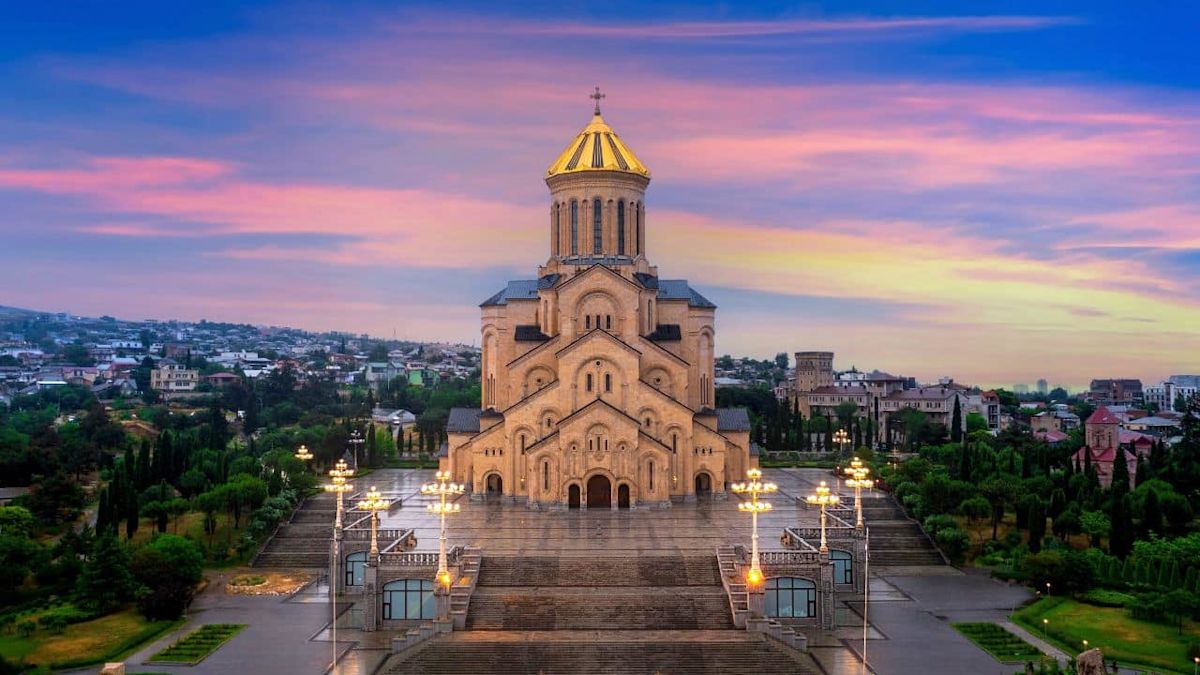
Sitting at the crossroads of Europe and Asia, Georgia has quietly become one of the most foreigner-friendly and affordable property markets anywhere. There is no restriction on foreign ownership, and the tax environment is remarkably light, since all residential property in Georgia is available to foreign buyers on a freehold basis, with a 0% transfer or registration tax on buying or selling[9]. Prices remain low by international standards, with entry-level property in Tbilisi and Batumi running between $650 and $1,400 per square meter[9], well below comparable cities in Western Europe or the Gulf.
For buyers targeting studio or one-bedroom apartments, that pricing translates into genuinely affordable homes. Recent market data shows the average studio in Tbilisi costing around $55,000, while smaller studios in districts like Isani or Didi Digomi can be found for closer to $45,000 to $52,000[10]. Add in the fact that households earning under GEL 40,000 annually are exempt from property tax altogether[11], and it’s easy to see why Georgia has drawn growing numbers of digital nomads and retirees looking for genuine value.
5. Portugal
Portugal’s reputation as a pricey Western European darling mostly applies to Lisbon and the Algarve coastline. Move away from those hotspots, though, and the picture changes considerably. In the country’s interior and northern regions, rural properties or renovation projects can be found for as little as $40,000 to $50,000[12], a fraction of what similar square footage would cost near the coast.
Advertisement
Advertisement
Even islands often associated with tourism offer surprising value. Property specialists note that the autonomous islands of Madeira and the Azores also provide properties matching a sub-fifty-thousand-dollar budget, with a range of property types and price ranges available[5]. As with most bargain properties in Europe, buyers should expect older housing stock, since most properties under €50,000 in Portugal are older homes, often needing structural repairs, new plumbing and electrics, insulation, and cosmetic upgrades[5]. Portugal’s lack of ownership restrictions for foreigners, paired with its overall quality of life, keeps it high on the list despite rising prices closer to the coast.
6. Thailand
Thailand offers a different flavor of affordability, one built around tropical living rather than European history. Outside the busiest resort zones, home prices drop considerably, and even in some well-known destinations, deals remain available. As one overview puts it, even in more popular locations like Chiang Mai or Hua Hin, houses can be found for under $50,000 USD, since Thailand’s property market caters to a wide range of budgets[4].
The trade-off in Thailand isn’t necessarily condition, it’s legal structure. Foreigners generally cannot own land outright, so most affordable purchases come in the form of condominium units rather than standalone houses. Regional market comparisons note that Thailand’s typical entry point for foreign buyers falls in the $60,000 to $150,000 range, with condo ownership capped under a 49% foreign quota rule[13], meaning the true sub-$50,000 opportunities tend to cluster in smaller condo units or in less touristy provincial towns away from Bangkok and the islands.
Taken together, these six countries make one thing clear: cheap homeownership abroad hasn’t vanished, it has just moved to places most buyers overlook. Rural Bulgaria, provincial Romania, the depopulating villages of Italy, the freehold-friendly streets of Tbilisi, inland Portugal, and Thailand’s quieter towns all offer a version of the same promise, a real roof over your head for less than the price of a new car back home. None of these are risk-free purchases. Renovation costs, legal quirks, and remote locations are part of the package almost everywhere on this list. Still, for buyers willing to do their due diligence and manage their expectations, the fifty-thousand-dollar home is far from a myth. It’s simply waiting in places the mainstream market hasn’t caught up to yet.
About the Author