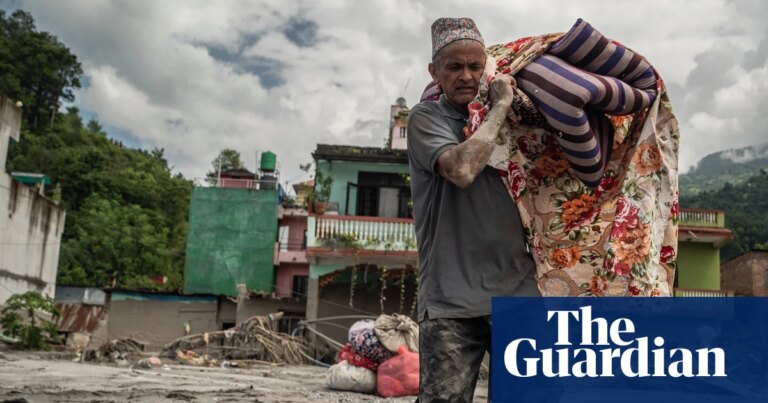
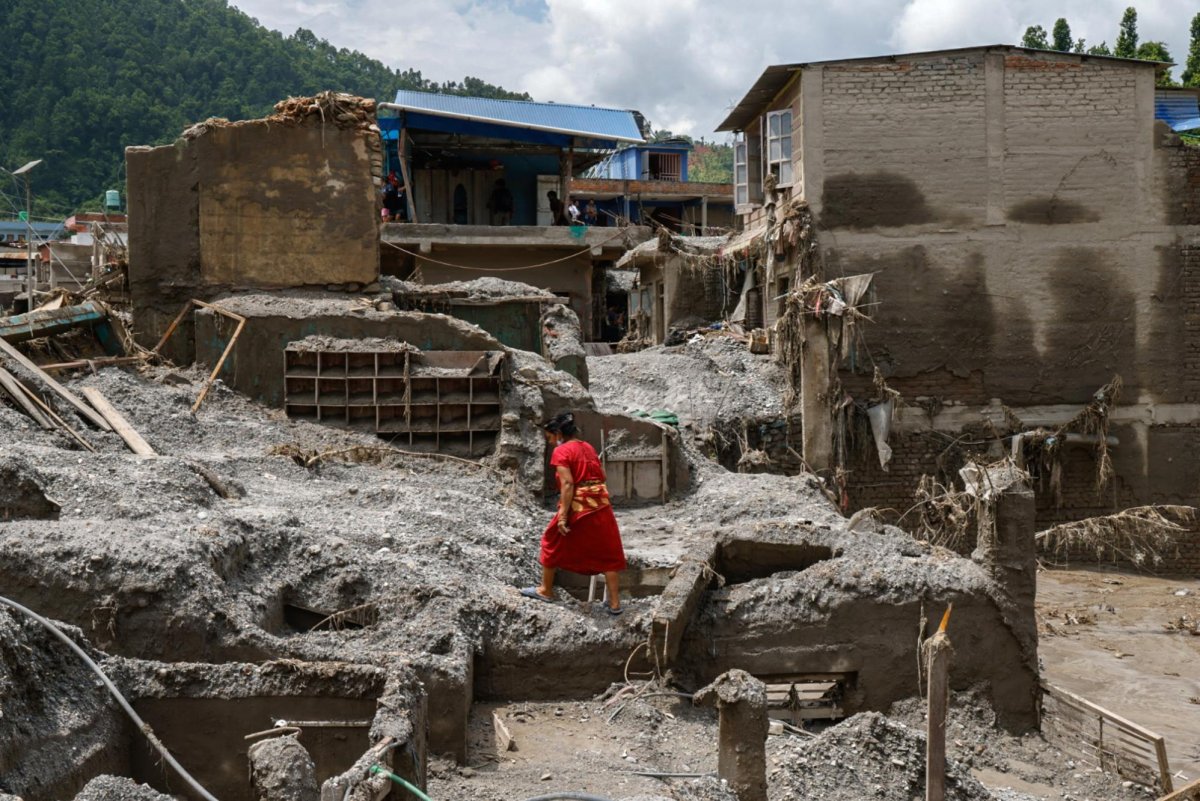
A resident tries to salvage belongings among damaged homes following flash floods along the banks of Trishuli River, in Dhading district, Nepal, on Sunday. Photo by Narendra Shrestha/EPA
Aug. 30 (UPI) — The death toll from last week’s flash floods in Nepal rose to nearly 800 Sunday as rescuers raced to gain access to tunnels where hydroelectric workers were feared trapped.
The Nepali Energy Ministry said rescuers brought in heavy machinery to create access to one of the tunnels. The government said more than 100 workers may be alive inside the tunnels, The Guardian reported.
“Drilling of four holes has been completed … preparations are now underway to enter the tunnel directly … and proceed with search and rescue operations,” the ministry said.
Home Minister Sudan Gurung said Saturday that workers had breached the tunnel and had pumped air in through a hole. The prime minister’s office said a team of 90 people — members of the armed forces, police and trained rescuers with dogs — were deployed to the site at Trishuli-3A hydropower site.
The BBC reported the workers created a hole large enough for people to descend into the tunnel, but they received no response from any possible survivors.
The missing workers are among more than 3,000 people missing after the deluge caused by a collapsing glacier Wednesday. The overall death toll as of Sunday was 797.
The U.S. State Department said an estimated 85 Americans were among the missing. Department spokesman Tommy Pigott said nine people were evacuated and there have been no official American deaths reported.
“The remoteness of this location makes getting reliable information difficult,” he said in an appearance on ABC’s This Week on Sunday. “But our dedication remains, our commitment remains.”
The BBC reported that hundreds of foreign nationals were missing Sunday, including 320 from India, nearly 100 from China, 62 from Ukraine, 51 from Malaysia, 41 from Australia, 33 from Britain and 30 from Canada. Citizens of South Korea, South Africa, Portugal, the Netherlands and New Zealand also were reported missing.
Also Sunday, Nepali officials began burying the hundreds of dead in graves in Devghat forest. Some of the remains were unable to be identified.
“We were left with no other option and had to take this step,” said Ganesh Arya, chief district officer of Baratpur. “Our concern was the risk to public health posed by the rapid decomposition of the bodies.”
About the Author