DHADING, Nepal — Authorities in Nepal are warning of possible fresh flooding on Sunday and urged residents in flood-affected districts to remain on high alert after water levels rose in the Bhotekoshi River.
Flood warning notices were sent to people’s phones throughout Sunday morning, as rescue crews worked to clear a major highway connecting Kathmandu to one of the areas worst-hit by Wednesday’s catasrophic floods.
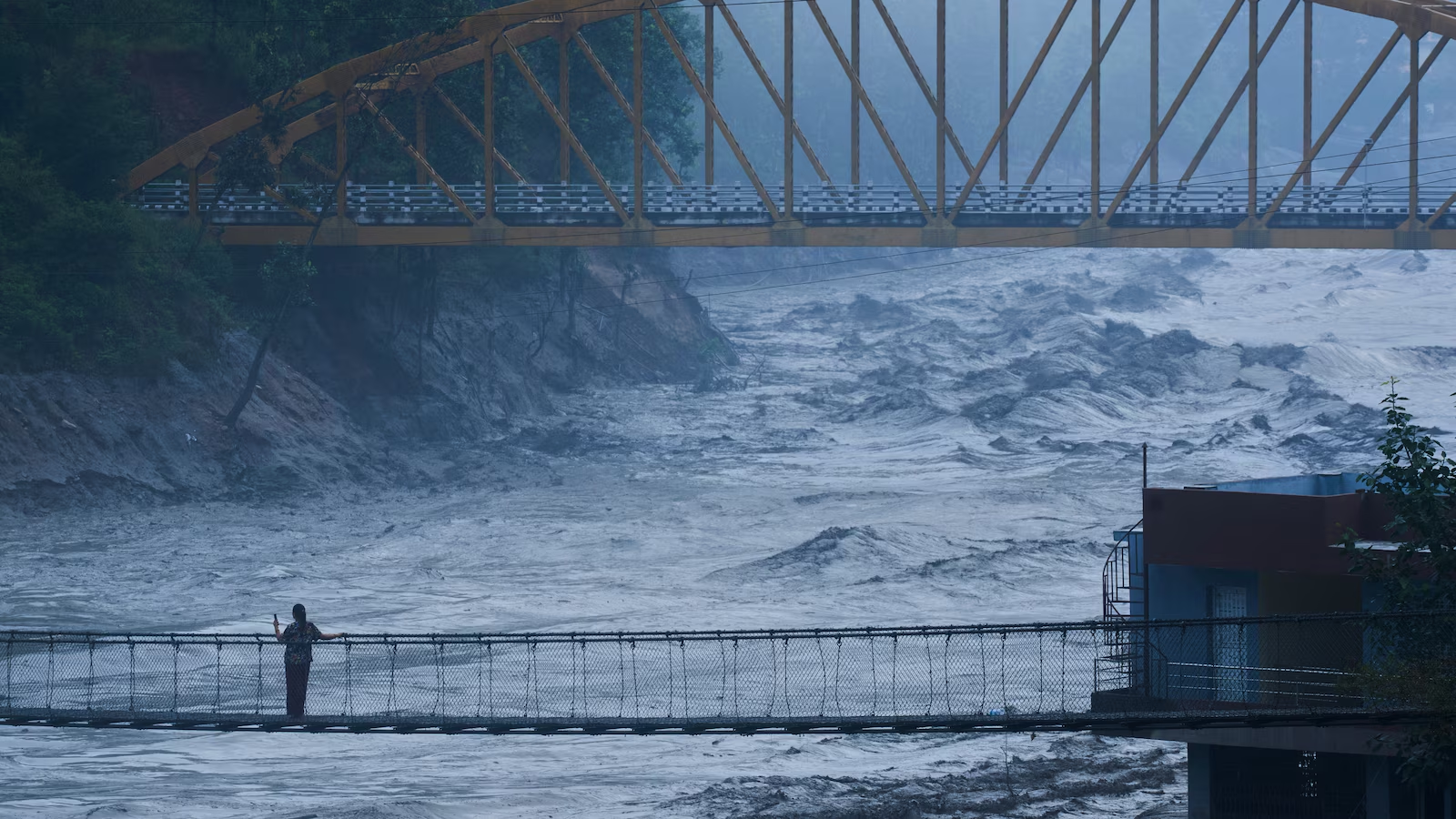
In the town of Galchhi, a group of residents sought higher ground on a nearby bridge and watched as the river roared by. People pointed to enormous rocks that had been washed downriver during the earlier floods, as others standing on a suspension bridge over the water were warned off with whistles.
Along the river entire homes, vehicles and farm tractors could be seen jutting from the thick grey-brown sediment that has enveloped entire villages in the worst-hit flood areas. Rice terraces along riverside had experienced landslides, dropping parts of their field into the river.
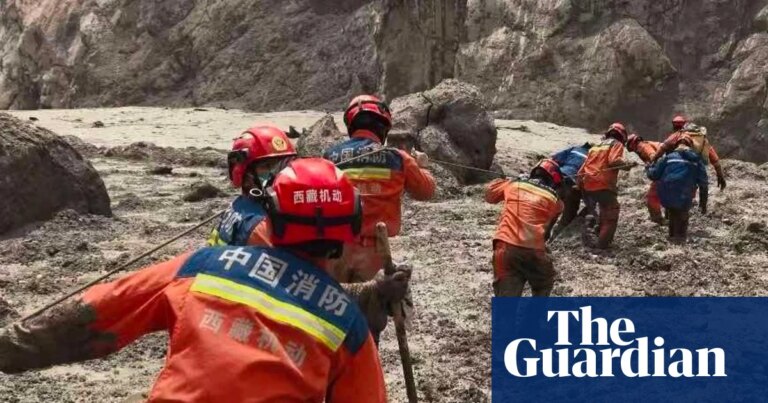
The combined toll in Nepal and Tibet rose to 750 dead and over 3,000 people missing after the latest updates on Sunday. Nepal’s disaster agency said the death toll had climbed to 734 with 2,498 people missing, while Chinese authorities reported 16 deaths and 546 missing, including over a hundred Nepalis and people from over a dozen countries.
The latest warnings came after Chinese authorities informed their Nepalese counterparts of increased water flow upstream, Dharam Raj Uprety, chief executive of Nepal’s National Disaster Risk Reduction and Management Authority, told the Associated Press.
But residents of the flood-hit villages said they were struggling to make sense of near-constant alarms they’ve received since the initial floods.
“Sometimes they say a flood is coming, then we have to run again to higher ground, even at night. There is also rain,” said local resident Govind Shreshta. “It’s really difficult for me. I have a 72-year-old father and 70-year-old mom. I must carry them and I am exhausted. It’s going on like this for those who are still alive.”
Large concrete and smaller suspension bridges were destroyed, leaving communities on the other side of the river less easy access.
“Those that are there are now stuck there. Those who are here are stuck here. It’s going to be very difficult,” said Sattan Singh Tamang, 47, who was working near a bridge when Wednesday’s the floods came.
Homes and businesses left intact after the flooding were still without electricity on Sunday, as twisted power line poles and wires lay tangled in the mud.
Prithivi Highway is crucial supply route for food, fuel and other goods entering Kathmandu from other parts of the country. While most of the highway is operational, other parts still face repair challenges.
___
AP writers Aijaz Hussain in New Delhi and Shristi Kafle in Kathmandu, Nepal, contributed to this report.
___
The Associated Press’ climate and environmental coverage receives financial support from multiple private foundations. AP is solely responsible for all content. Find AP’s standards for working with philanthropies, a list of supporters and funded coverage areas at AP.org.
About the Author