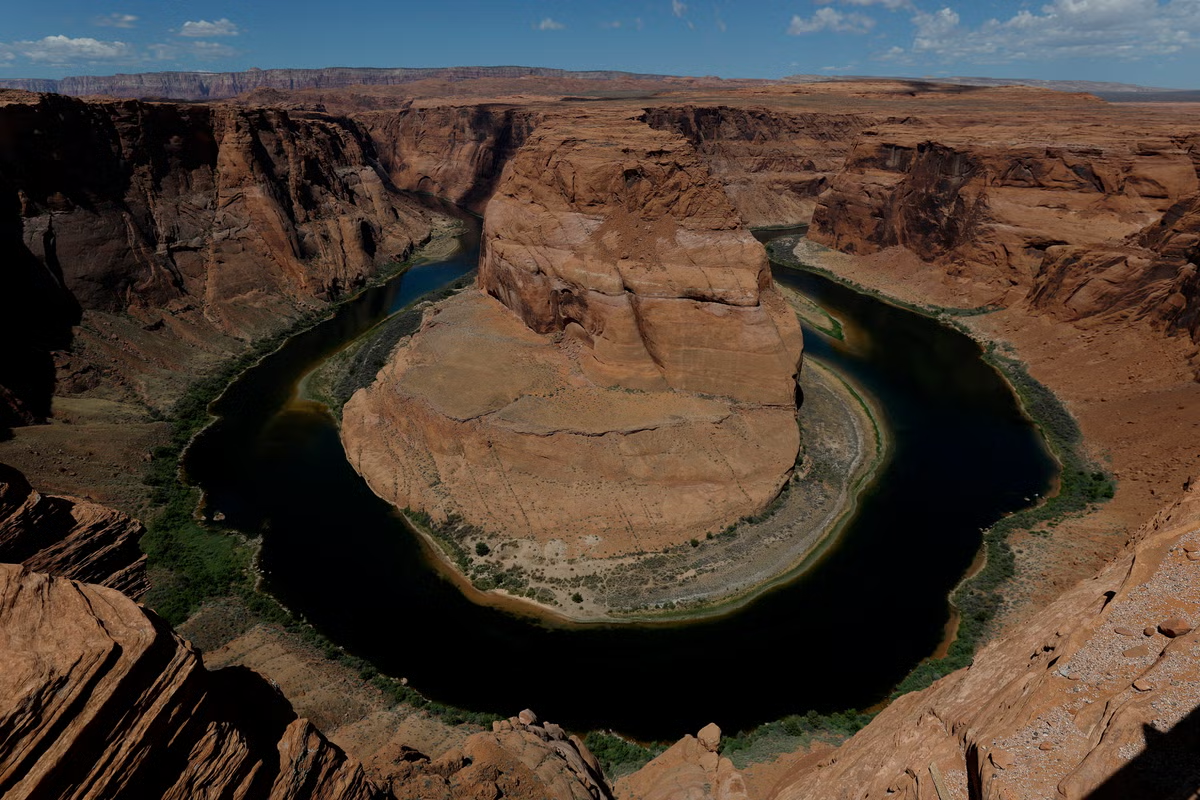
Water levels at Lake Powell, the second-largest reservoir in the United States, have dropped to a record low, heightening anxiety over the Colorado River system crisis.
The troubling milestone at Lake Powell comes a week after Lake Mead, the river’s other main reservoir, hit its own historic low.
Falling water levels threaten the Colorado River Basin, a vital resource for wildlife, hydroelectric power, and over 40 million people across seven U.S. states.
The record lows come as the federal government and reliant states — California, Arizona, Nevada, New Mexico, Utah, Wyoming and Colorado — struggle to agree on a long-term strategy for the shrinking resource.
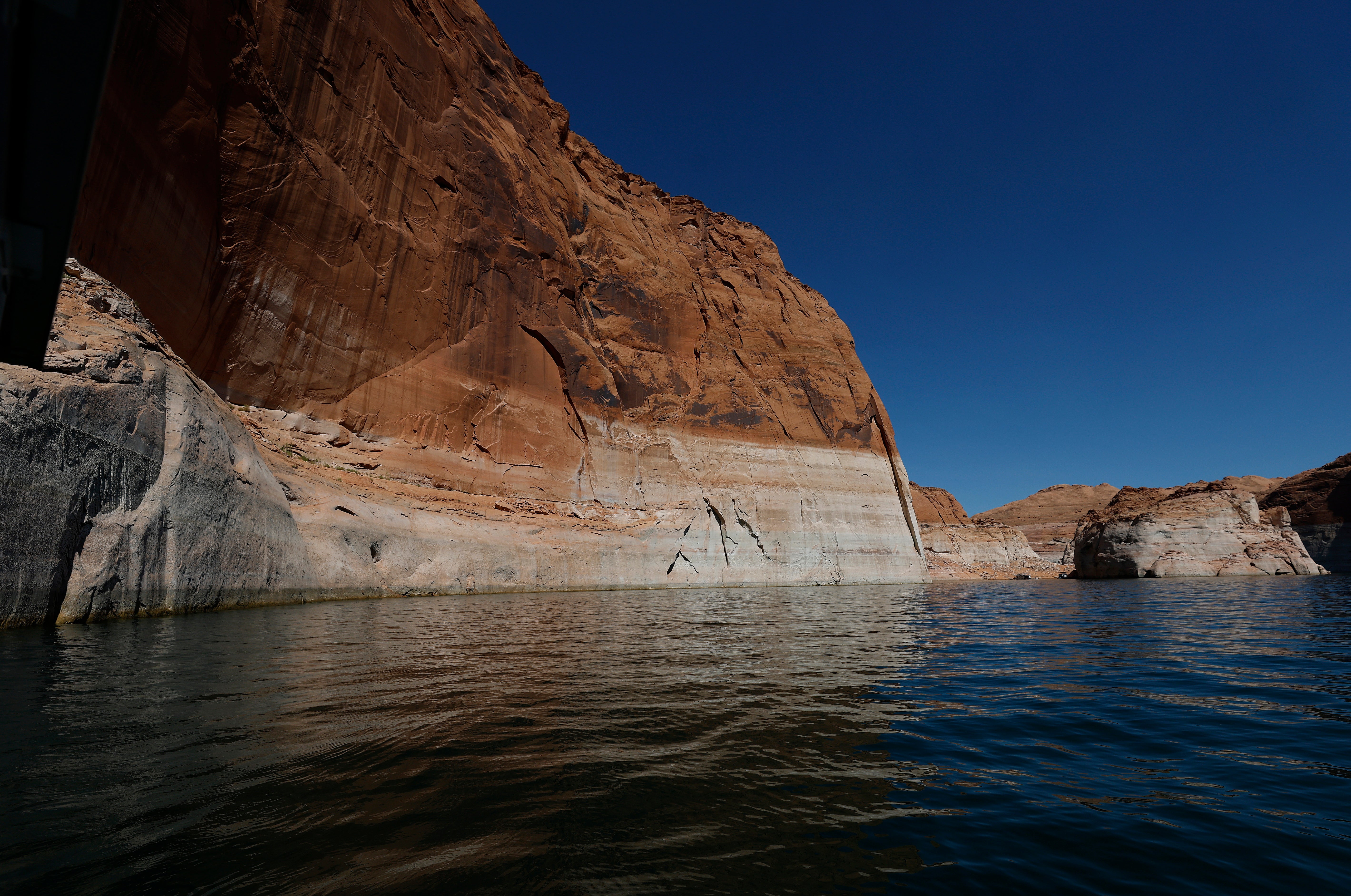
Persistent overconsumption, a record-dry winter, and climbing temperatures have steadily drained both Powell and Mead.
Lake Powell’s surface elevation dropped to 3,519.91 feet (1072.9 metres) on Saturday, falling slightly below a record set in April 2023, according to U.S. Bureau of Reclamation data. The lake is down more than 20 feet (6.10 metres) since the start of the year.
The reservoir is now about 30 feet (9.1 metres) above the level where turbines would cease generating electricity. Federal officials warned in April that a “major intervention” is required to prevent reaching that limit by the year’s end.
USBR proposed a 10-year scheme in July involving substantial potential supply cuts for Arizona, California and Nevada.
The crisis has brewed for years, leaving both reservoirs at nearly seven-decade lows, with data suggesting further drops.
Combined storage was last this diminished in May 1957 during construction of the Glen Canyon Dam, which holds back Powell, a paper by academics and former water officials noted. Powell began filling in 1963.
Depletion has also disrupted Lake Powell’s huge tourism industry. Marinas have adapted by relocating to deeper waters, while boat ramps have closed, moved, or been built anew.
Last week, federal officials announced Thursday they will not release cool water from one of the Colorado River’s primary reservoirs this year, a decision that prioritizes struggling hydropower production over the protection of a threatened native fish downstream.
The move highlights the escalating conflict between environmental conservation and energy demands as the river’s resources diminish.
The Bureau of Reclamation informed various groups via email that water from Glen Canyon Dam in northern Arizona would not be released “due to significant hydropower generation concerns under already strained system conditions.”
About the Author