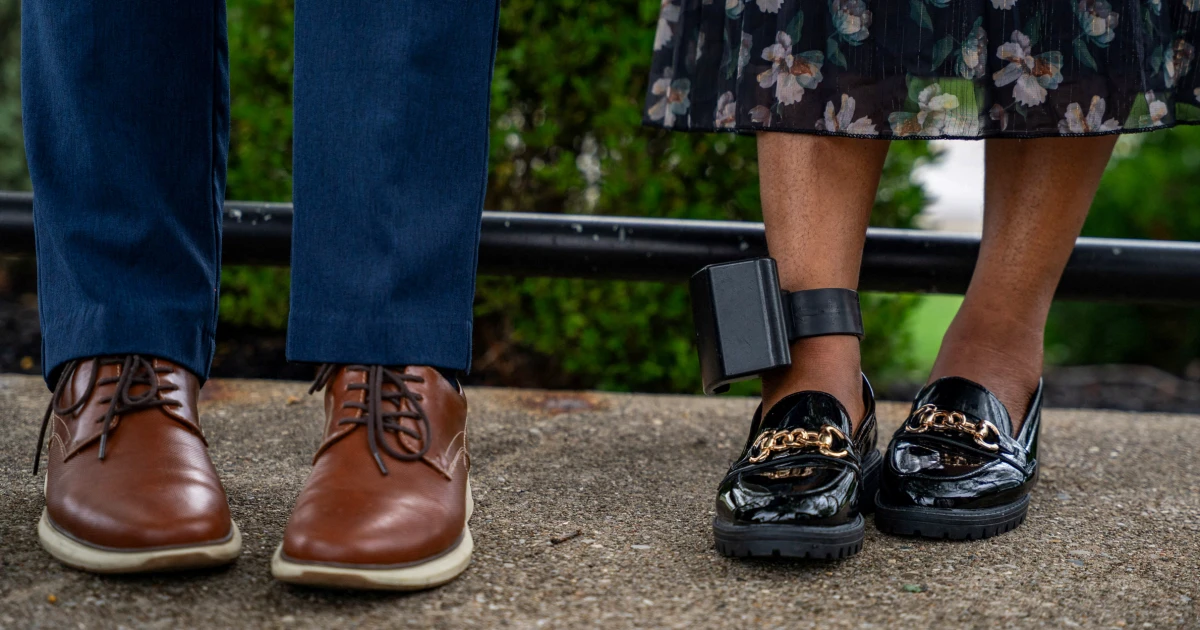
Haitians living in Ohio who’ve lost their protected status are increasingly getting ankle monitors instead of being detained by immigration officers, attorneys say.
ICE has been alerting Haitians to appear in person at check-ins, where they are given ankle monitors to track their whereabouts until an immigration judge can decide whether they may have a legitimate reason to remain in the country, such as an asylum claim, according to the lawyers.
The decision is often made over a lack of detention space for more than 300,000 Haitians who lost Temporary Protected Status after a Supreme Court decision in June, a senior Department of Homeland Security official said.
“We were really worried that this was going to be a mass enforcement, mass detention operation,” said Katie Kersh, an immigration attorney who represents Haitian clients as part of her work at the Ohio-based law firm Advocates for Basic Legal Equality.
Instead, Kersh said, several of her clients recently received ICE letters mandating the in-person check-ins. “And so we went,” she said. People were arrested but not detained for the long term. “They all have these ankle monitors and they’re not allowed to travel outside of a 75-mile radius from their home.”
DHS declined to comment on the ankle monitors. “DHS does not discuss ongoing or future operations,” a spokesperson said in an emailed statement.
“What we would say now is it’s closing time, which means you don’t have to go home, but you can’t stay here.”
It is the latest policy shift since DHS Secretary Markwayne Mullin took over in March that could draw President Donald Trump’s ire. Last month, Mullin ran afoul of President Donald Trump when he announced a halt on vehicle pursuits by ICE after fatal shootings.
The ankle monitors and other trackers allow immigrants to continue to live in the U.S. while their cases play out. The program was bolstered under the Biden administration but Trump’s immigration policy architect, Stephen Miller, prefers holding immigrants in detention.
A senior administration official and DHS official told NBC News recently there was growing tension between the White House and Mullin, this administration’s second Homeland Security secretary, though the president does not appear to be preparing to oust him.
Temporary Protected Status is a humanitarian program created by Congress that allows people from countries ravaged by war, natural disasters or other extreme circumstances to come and live and work in the United States temporarily.
In June, the Supreme Court allowed the Trump administration to end the protections for more than 300,000 Haitians who came to the country following the 2010 earthquake, and the more than 50,000 Syrians who came when the civil war broke out in their country in 2015. Previous administrations and lower courts had determined the conditions in both of those countries were still too dire to end protections against deportations there.
The order has sowed confusion among business owners who employ Haitians, and employees who have been unsure when or how they should show up to work.
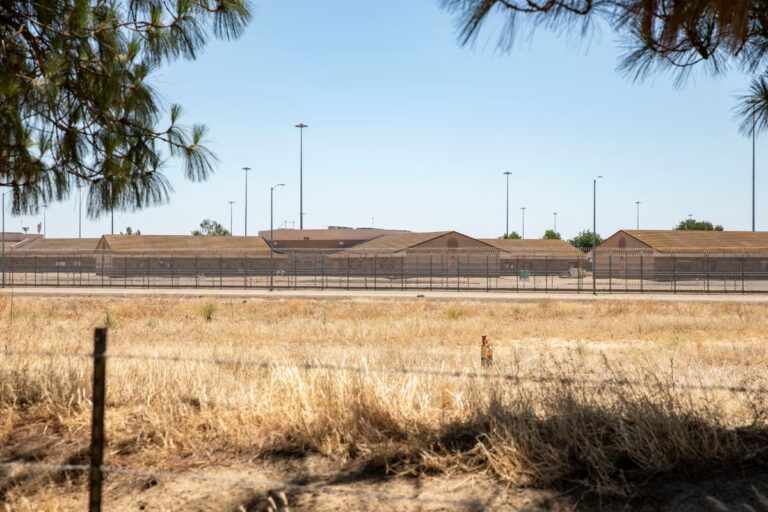
The senior DHS official said it would be impossible to hold the more than 300,000 Haitians in the U.S. who lost their protected status in ICE detention. ICE currently is holding about 65,000 immigrants in detention facilities across the country, until a judge can hear their case. NBC has reported ICE is working to open new detention facilities.
Last month, Mullin instructed ICE officers to pause vehicle stops following two fatal shootings of men in vehicles, but the policy was quickly overturned by Trump. Mullin had not run the pause by the White House, NBC News reported, citing a senior administration official.
Trump has repeatedly focused on Haitian immigrants in the United States.
On the campaign trail in 2024, Trump and his running mate, Vice President JD Vance lent credence to false rumors that began on social media that a Haitian immigrant in Springfield, Ohio, had eaten a cat.
“In Springfield, the people that came in, they’re eating the dogs … they’re eating the cats,” Trump said in a September 2024 debate with then-Vice President Kamala Harris.
The Facebook post that sparked the rumor was later debunked, but Trump’s rhetoric fired up immigration hard-liners who supported him in the election.
About the Author