Carlos Cuesta-Rodriguez has been put to death by the state of Oklahoma, in the first of three executions scheduled for Thursday in a rare triple procedure that underlines the renewed appetite in the US for state killings.
Cuesta-Rodriguez, 70, was pronounced dead at 10:13am at the Oklahoma State Penitentiary in McAlester. He was sentenced to death for murdering his common-law wife Olimpia Fisher in 2003. He had unsuccessfully appealed for mercy, saying he was remorseful and had struggled all his life from mental illness.
Later on Thursday, Darrell Hines is scheduled to be put to death by the state of Tennessee. Hines, 66, was sentenced to death for the 1985 murder of Catherine Jean Jackson Jenkins, a motel maid and mother of four. His lawyers had tried to postpone his execution on grounds that Tennessee’s previous effort to kill a prisoner, Tony Carruthers, in May had failed after a gruesome and prolonged search for a vein.
The third scheduled execution in Alabama is of Jeremy Williams, 42, who raped and murdered a five-year-old girl in Georgia in 2021. The prisoner pleaded guilty to killing Kamarie Holland and has declined to appeal, bringing on his execution at a much faster pace than most death row occupants.
Should all three executions go ahead on Thursday – in Oklahoma, Tennessee and Alabama – it will be the first time in more than 15 years that there have been three judicial killings in the US on a single day. The one-day surge in death chamber activity was a scheduling coincidence, but it is also a sign of renewed energy among death penalty states.
Last year 47 executions were carried out in the US, a dramatic increase on the previous year’s 25. Much of the increase was generated by one state alone, Florida, which conducted 19 killings under its Republican governor Ron DeSantis.
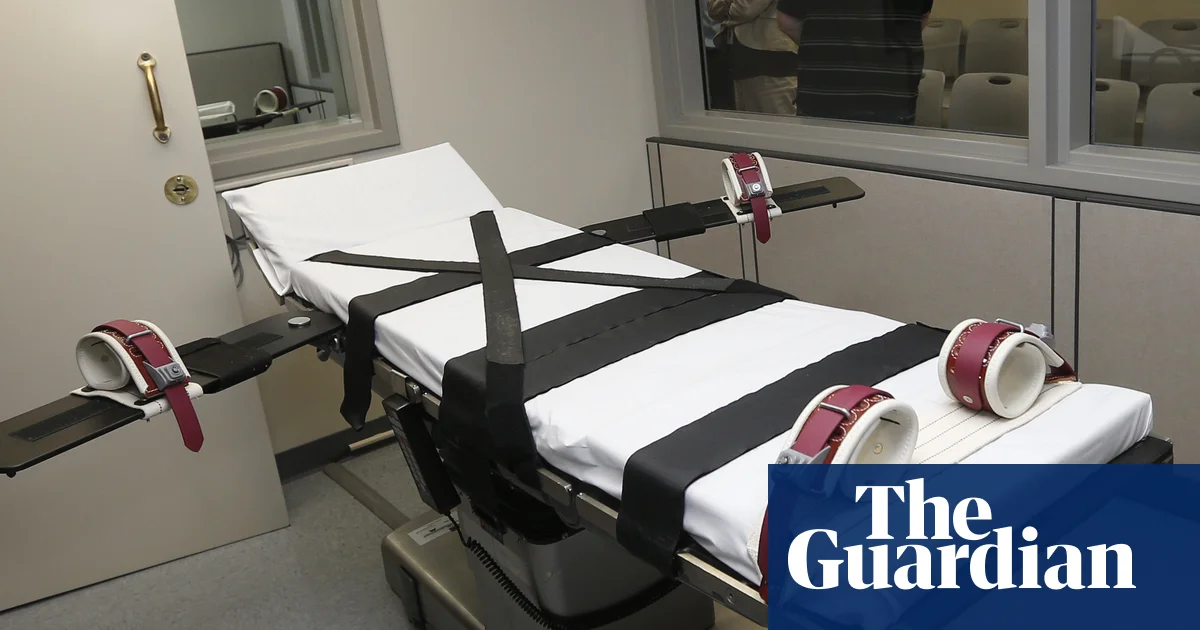
All three scheduled executions were due to take place by lethal injection, the procedure that has been the norm in the US since the early 1980s. Alabama had largely switched to a new experimental method, nitrogen gas, but that was halted by a federal judge in June on grounds that it was unconstitutional.
About the Author