Gianni Infantino’s presidency was meant to mark a new era for FIFA after the corruption scandals that engulfed Sepp Blatter’s tenure. Instead, the Swiss administrator has spent much of the past decade battling criticism over governance, political relationships and, most recently, a proposal to privatise the FIFA World Cup.
The latest controversy-Infantino’s plan to sell a stake in FIFA’s commercial rights through a new entity, FIFA Forward Enterprise (FFE)-has triggered unprecedented opposition from UEFA and Concacaf, with Europe’s governing body threatening to boycott FIFA competitions if the proposal moves forward. The backlash has once again placed Infantino’s leadership under intense scrutiny.
2016: Ethics investigations cast an early shadow
Infantino took office in February 2016 promising to restore trust in FIFA after years of corruption allegations under the previous administration.
Within months, however, he faced scrutiny from FIFA’s Ethics Committee over his use of private jet travel. Although he was cleared, further questions emerged after his name appeared in the Panama Papers and over undisclosed meetings with then-Swiss Attorney General Michael Lauber during investigations into football corruption.
FIFA’s Ethics Committee eventually cleared Infantino of wrongdoing in 2020, but the episodes raised early concerns over transparency under the new administration.
2018: Russia World Cup praise draws criticism
Infantino described the 2018 FIFA World Cup in Russia as the “best World Cup ever” despite widespread criticism surrounding the host nation over human rights concerns and geopolitical tensions.
His close relationship with Russian President Vladimir Putin also came under scrutiny after he accepted Russia’s Order of Friendship in 2019 and repeatedly praised the country’s hosting of the tournament.
The criticism intensified following Russia’s full-scale invasion of Ukraine in 2022.
2022: Qatar World Cup controversy dominates tournament
The build-up to the Qatar World Cup proved one of the defining moments of Infantino’s presidency.
Ahead of the tournament, he defended Qatar against criticism over migrant worker conditions and human rights, accusing Western nations of hypocrisy during a widely discussed press conference.
His remarks, including comparisons between his own experiences and those of migrant workers and marginalised communities, attracted significant criticism from human rights groups and football stakeholders.
2024: Saudi Arabia’s 2034 World Cup bid questioned
Infantino again faced criticism after Saudi Arabia was confirmed as host of the 2034 FIFA World Cup.
Critics questioned FIFA’s bidding process after Infantino publicly congratulated Saudi Arabia before the formal vote had taken place. Human rights organisations also raised concerns over Saudi Arabia’s selection, while FIFA’s commercial partnership with state-owned energy company Aramco added to the scrutiny.
2025: FIFA Peace Prize sparks backlash
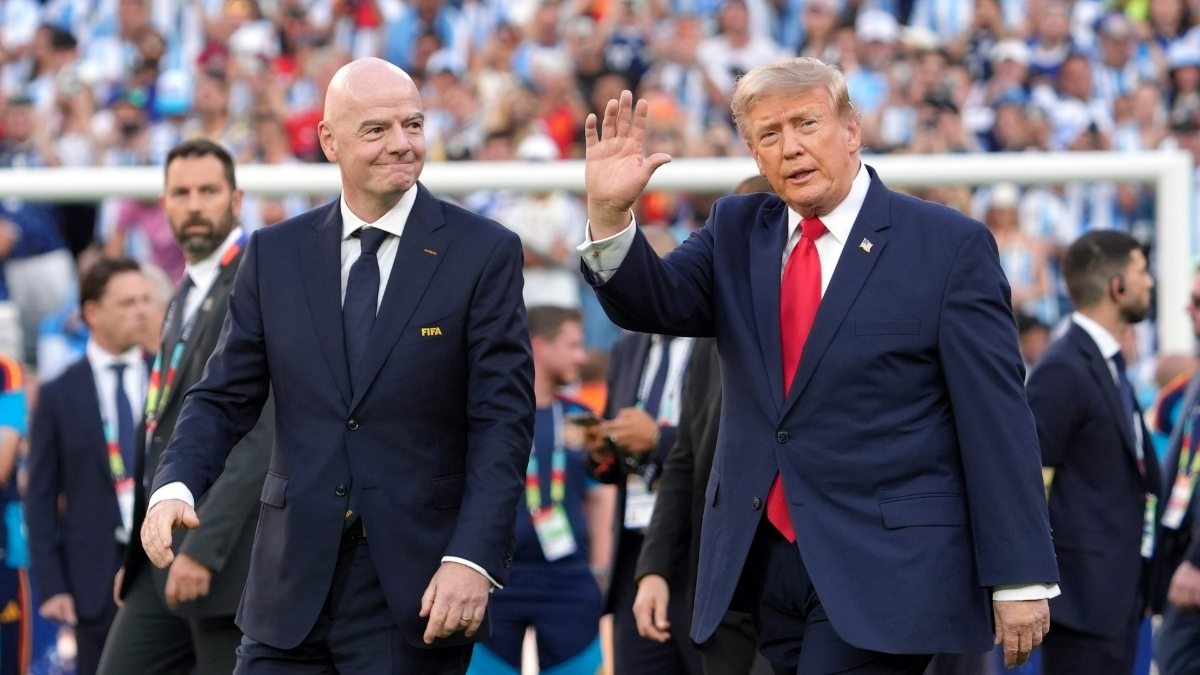
In December 2025, Infantino presented the inaugural FIFA Peace Prize to then-US President Donald Trump.
The decision attracted criticism from governance experts and human rights organisations, who argued it blurred FIFA’s long-standing commitment to political neutrality.
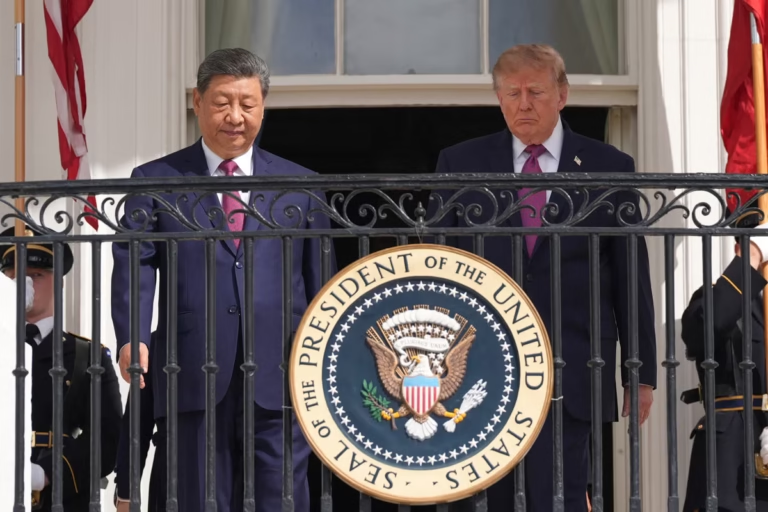
The controversy intensified amid Infantino’s increasingly visible relationship with Trump, including visits to Mar-a-Lago and FIFA’s decision to establish an office in Trump Tower in New York.
2026: World Cup controversies pile up
The 2026 FIFA World Cup brought a series of fresh controversies.
Criticism ranged from high ticket prices and environmental concerns surrounding FIFA’s travel arrangements to accusations of political interference during the tournament.
Infantino also faced backlash after dismissing concerns over Somali referee Omar Artan’s deportation from the United States, while several officiating decisions during the tournament became the subject of intense debate among fans, politicians and football officials.
The tournament itself generated record revenues for FIFA but also renewed questions about governance and the direction of world football.
FIFA’s World Cup investment proposal triggers unprecedented revolt
The biggest challenge of Infantino’s presidency arrived after the World Cup, when FIFA unveiled plans to create FIFA Forward Enterprise (FFE), a commercial entity designed to manage World Cup and tournament rights.
The proposal would allow FIFA to sell around a 20% stake in its commercial operations to private investors.
UEFA and Concacaf strongly opposed the plan, arguing that the World Cup should remain under football’s control rather than become a commercial investment vehicle. UEFA warned its member associations could boycott FIFA competitions if the proposal proceeds, describing the move as incompatible with the long-term interests of the sport.
Infantino has defended the proposal, insisting it remains subject to approval by FIFA’s member associations and Council. Reports have also suggested member associations have been offered increased financial distributions if the proposal is approved, a claim that has further fuelled criticism from opponents.
Why Infantino’s future has become uncertain
The investment proposal represents the most significant challenge of Infantino’s decade in charge of FIFA because it extends beyond governance debates into questions about ownership of football’s biggest competition.
Supporters argue additional investment could generate greater revenues for member associations. Critics, however, believe selling a stake in the World Cup would fundamentally alter the tournament’s status as a competition owned collectively by world football.
With growing opposition from leading confederations and FIFA’s member associations expected to decide on the proposal in the coming months, the outcome could shape not only Infantino’s presidency but also the future commercial direction of the World Cup.
About the Author