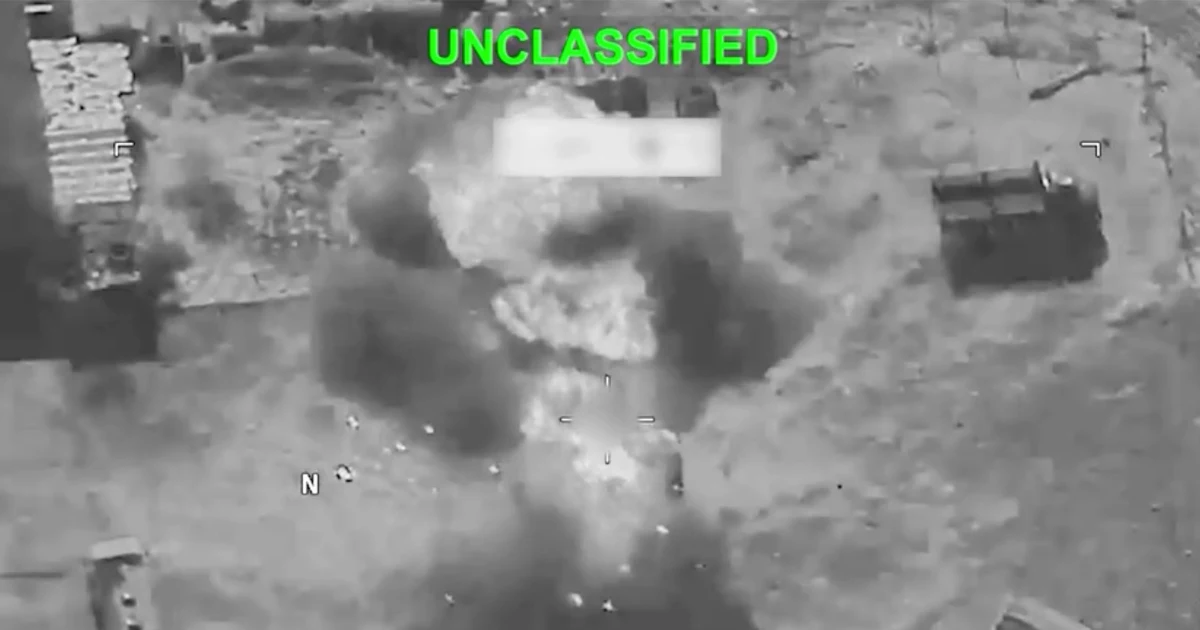
Hours later U.S. Central Command, or CENTCOM, said in a post on X it had completed a “heavy wave of strikes against Iran” in response to what it had previously described as an “attempted surprise attack” on American forces.
CENTCOM said dozens of targets belonging to the Revolutionary Guard Corps were struck over two hours, including “military command centers, missile and drone facilities, coastal surveillance and defense sites, and maritime capabilities.”
Strikes were reported in cities across Iran. A toddler was among three people killed on the island of Qeshm, in the Strait of Hormuz, the state-owned IRIB news agency reported.
The key waterway has become the focal point of the conflict and the main sticking point in peace talks.
Some 20% of the world’s oil passed through the key trade route prior to the war, but shipping through Hormuz and along the Bab el-Mandeb Strait in the Red Sea has been slowed by attacks as the U.S. struggles to break Tehran’s stranglehold.
Mediators, and Trump, had expressed some optimism about diplomatic efforts after the interim deal between the two sides collapsed into weeks of tit-for-tat strikes.
But the new flare-up saw oil prices surge again, with the international benchmark Brent crude oil hovering around $90 a barrel early Thursday.
According to MarineTraffic data analyzed by NBC News, a Qatar-managed liquid natural gas (LNG) tanker was able to travel from the Persian Gulf into the Gulf of Oman overnight, transiting the Strait of Hormuz through lanes managed by Iran.
The Al Areesh appeared to be the first LNG tanker linked to Qatar to go through the Strait since a tanker was struck by a missile at the beginning of July. Semiofficial Fars news agency said the tanker made the journey with Iran’s permission.
Meanwhile, four additional ships were traveling through the Iranian route on Thursday, including two Emirati-managed asphalt tankers and another LNG tanker. About 59 tankers or cargo ships passed through Bab el-Mandeb in the past roughly 24 hours.
About the Author