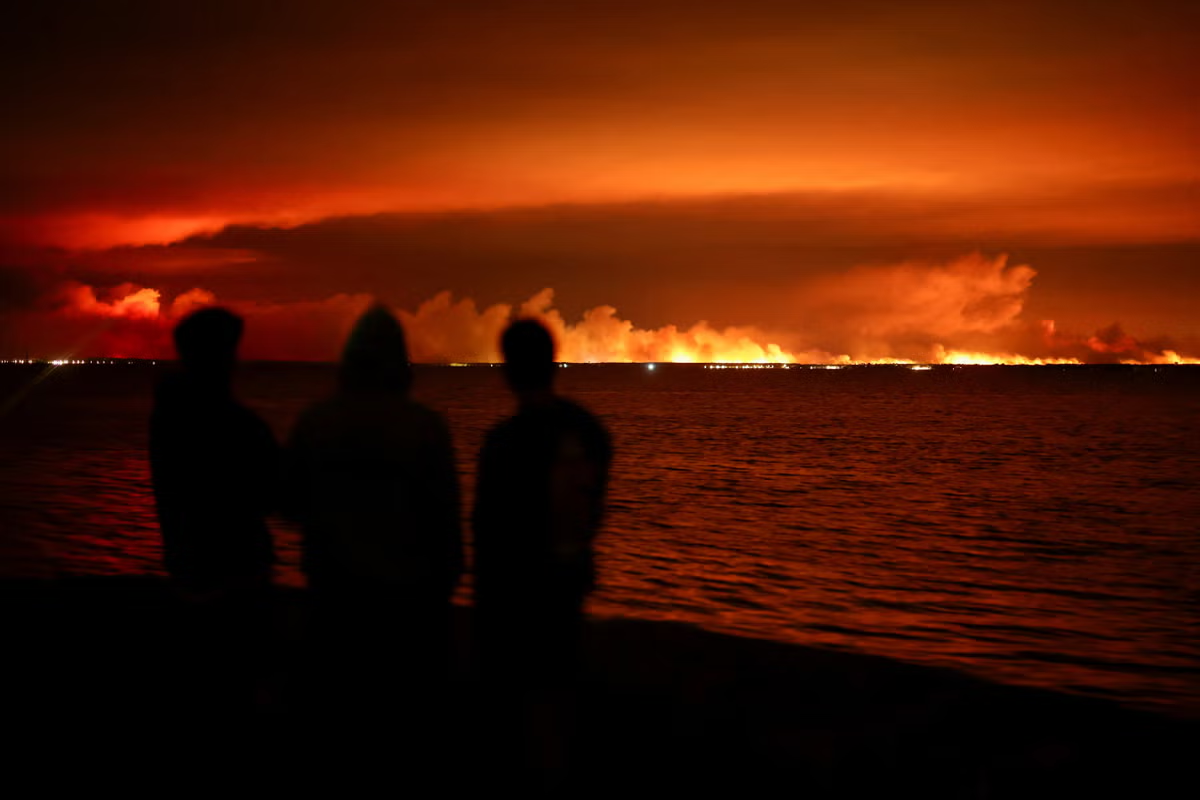
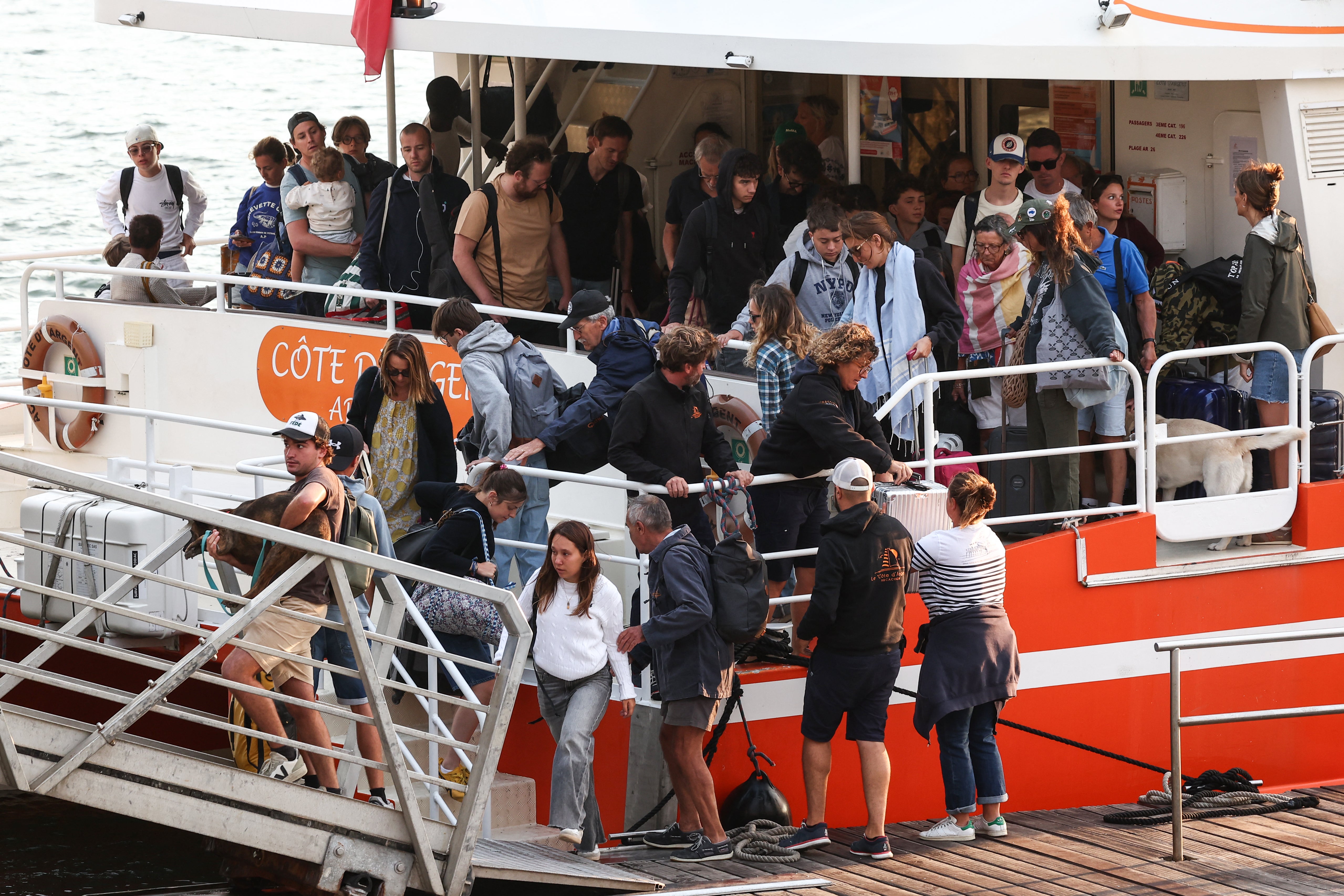
Authorities in France have evacuated the Cap Ferret peninsula, a tourism hotspot on the Atlantic Coast, sending boats to remove people from an area threatened by a major wildfire.
The order for a total evacuation of the area, which is home to many valuable properties and is currently full of tourists enjoying their summer vacations in camp sites and rental homes, underlined the severity of the fire.
French President Emmanuel Macron said he had requested help from the European Union as the country’s battle against wildfires intensifies.
“France has requested the activation of the European Union’s civil protection mechanism. We will soon be able to count on reinforcements from two Croatian Canadair aircraft, two Portuguese Air Tractor planes, as well as two heavy Black Hawk helicopters from the Czech Republic and Slovakia,” wrote Macron on X on Friday.
Mapped: Cap Ferret peninsula
Sophie Brocas, the prefect for the Nouvelle Aquitaine region, said on Friday that evacuees from the Cap Ferret peninsula could leave from piers in four villages in the area between 7 a.m. and 10 a.m. local time (0500 GMT and 0800 GMT). All those still present in those villages must leave either on the boats or by the only road linking the area with the mainland, she added. The fire has already devastated 8,700 hectares and is still raging.
Across Europe, three heatwaves in succession this season have intensified drought, strained water supplies and left vegetation tinder-dry, helping wildfires scorch more land already this year than the annual average of the past two decades. The heat has also been blamed for thousands of deaths.
France has been particularly hard hit, with the intense heat pressuring its capacity to handle the situation. “Our security forces are engaged in a genuine battle against the wildfires,” Interior Minister Laurent Nunez said on Thursday evening. “The nation stands with you.”
The pressure on fire departments in southwestern France has been increased by another wildfire that began on Thursday afternoon near Biscarosse, just 40 kilometers (25 miles) south of Cap Ferret. That fire, which is still not under control, has devastated 2,500 hectares, the prefect for the Landes area, Gilles Clavreul, said in a statement. “Winds are blowing, and the situation remains highly dynamic and unfavourable,” he said.
More than 23,000 people were evacuated from the Biscarosse district, mainly in campsites and homes and a children’s summer camp and a residential care home for the elderly were also evacuated. He asked farmers to contribute with water tanks.
Spain’s government also declared a national emergency Friday after wildfires forced the evacuation of some 10,000 people in the central region of Madrid.

The national emergency in Spain means that the nation’s interior ministry, which controls police and security forces, has taken charge of overseeing the firefighting efforts by Spain’s regions as they struggle to battle multiple blazes that are being fanned by a heatwave.
The regional government of Madrid, which spans a wide area around the capital city, said 10,000 people had been evacuated from different villages as multiple fires raged out of control late on Thursday.
Spain has seen an estimated 1,300 square kilometers (500 square miles) already burned this year, over four times the amount of terrain that was burned through the first half of 2025.This year’s fires include Spain’s second-largest ever fire that consumed some 320 square kilometers (120 square miles) in recent days in the province of Guadalajara north of Madrid. Thirteen people were also killed in a fire in southern Spain earlier this month, the deadliest fire in recent memory for Spain.S
panish Prime Minister Pedro Sánchez on Wednesday called for a pact between political parties to fight climate change that he said is key to adapting to a more fire-prone climate.Temperatures are expected to top 39 degrees Celsius (102 Fahrenheit) in parts of southeastern Spain, including a high of 44 C (111 F).
About the Author