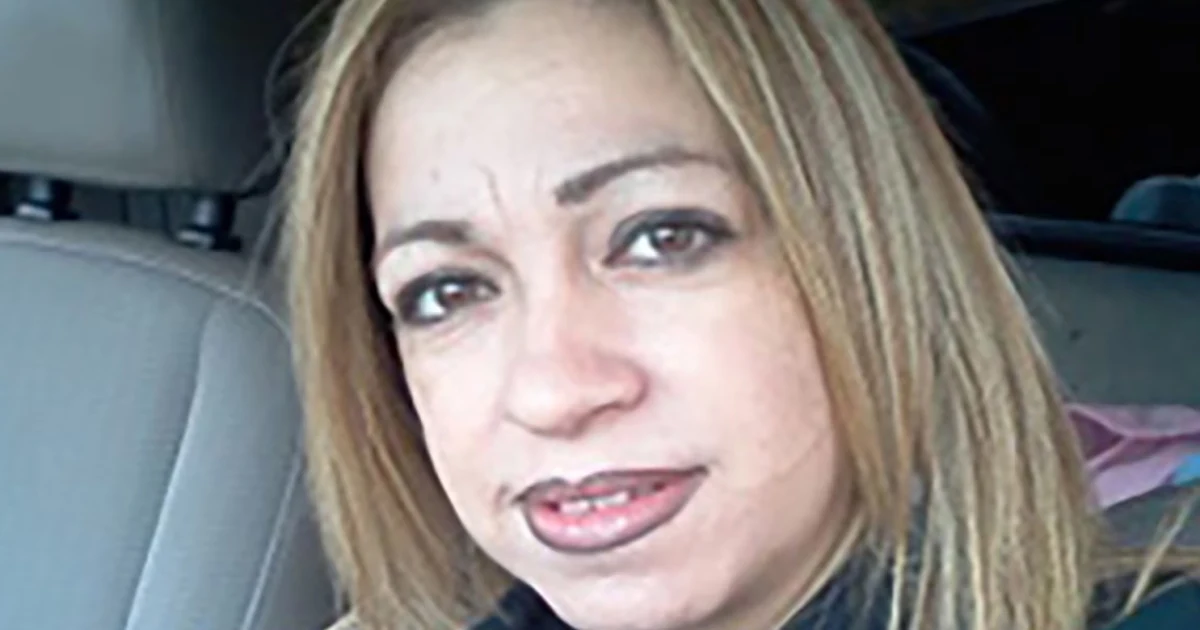
For 14 years, the brutal killing of Irasema Chavez, who was stabbed more than 100 times in her Texas apartment in 2012, has remained a mystery.
Subscribe to read this story ad-free
Get unlimited access to ad-free articles and exclusive content.

After years of investigation and holding onto hope, authorities identified the suspect as Mayra Velasquez, 42, a friend of Chavez’s, the Arlington Police Department and FBI announced in a news conference Wednesday.
Velasquez was arrested Thursday on a warrant charging her with capital murder. A motive in the stabbing remains unclear, police said.
Authorities said a suspect was identified through investigative genetic genealogy, a process that uses unidentified crime scene DNA, genealogical research and historical records to identify unknown DNA.
Chavez, 32, was found in her apartment, unresponsive and covered in blood, on Jan. 20, 2012.
She was declared dead at the scene, police said. The Tarrant County Medical Examiner’s Office determined she had been stabbed more than 100 times, police said.

Missing from her apartment was a TV, which investigators believed was taken by the suspect.
At the scene investigators collected a droplet of fresh blood on the bedroom television stand. That sample was sent to a crime lab for DNA analysis and determined it didn’t belong Chavez, but to an unknown Hispanic female.
The DNA profile was uploaded into the FBI’s Combined DNA Index System, a national database to compare DNA profiles in criminal investigations, but there was no match.
In November 2024, the Arlington Police Department’s Homicide, Unit met with the FBI Dallas Field Office about using investigative genetic genealogy to crack the case.
In April 2026, the FBI’s investigative genetic genealogy team identified a potential suspect — Velasquez.
“Ms. Velasquez was at one time a close friend of Ms. Chavez and lived just a few miles away from the crime scene,” police said in a news release.
Velasquez had been in Chavez’s apartment before, Arlington Police Department Detective Tracey Dixon told reporters.
Dixon said Chavez’s cellphone has been a “valuable source of information about their relationship,” but declined to go into further detail.
The following month, detectives obtained a sample of Velasquez’s DNA from discarded trash and sent it to a crime lab for further analysis and found it was a match to the blood droplet from Chavez’ murder scene.
Velasquez was arrested in the nearby city of Hurst, and eventually transferred to the Tarrant County Jail, where she is being held on no bond, according to online booking records. It’s not immediately clear whether she has retained an attorney.
For the family — the news was a sigh of relief after so many agonizing years.
“Being able to share that with the family, is why we do this work,” Dixon said, tearing up. “They were very grateful, it was emotional.”
Joe Rothrock, the special agent in charge of the FBI Dallas Field Office, praised investigative genetic genealogy as “one of the most valuable tools law enforcement has today.” Since 2018, the FBI has used this method to solve more than 250 cases across 30 states, he said.
About the Author