Burnham says main perpetrator in killing of PC Andrew Harper ‘will not be subject to early release’
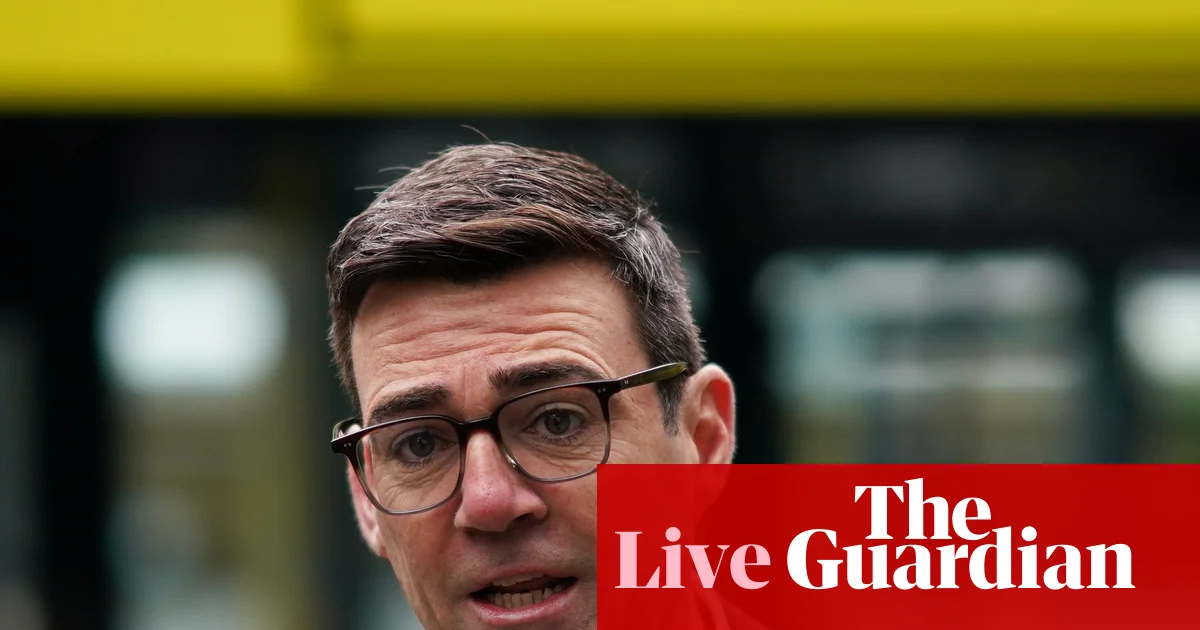
Andy Burnham is also speaking to reporters during a visit to Bath.
The prime minister said the main perpetrator in the killing of PC Andrew Harper “will not be subject to any early release”, PA reports.
The mother of Harper – who died from his injuries when he was caught in a strap attached to the back of a car and dragged for more than a mile – had called it an “insult” that two of her son’s killers could be eligible for early release.
We will bring you more as we get it.
Key events
Early prisoner release scheme will be reviewed, says Burnham
We have more from Bath where the prime minister has been speaking to reporters.
Andy Burnham has indicated that he would review the early prisoner release policy before it goes ahead.
Hundreds of offenders will start being released early under the new Sentencing Act from September. Unlike the emergency measures in the early months of the Labour government, in which tens of thousands of prisoners were released as prisons ran out of space, the new sentencing law includes no exemptions for prisoners convicted of serious crimes, domestic abuse or terrorism.
PA has reported more of Burnham’s remarks:
All I can say is I will review the whole of this policy.
Nobody can deny the pressure on prison places.
We did not invest in the prison estate when we should as a country, going back a decade or so ago, when it was clear that there was going to be pressure.
That has created an unacceptable situation now.
But I want to assure myself that everything has been looked at before this policy proceeds, and I can give that assurance that every single part of this I will look into with the justice secretary.
I can’t say that I can’t change the policy completely, but I will look at it in detail before we go further forward.”
Streeting: Trump was right to ask Europe for more on defence
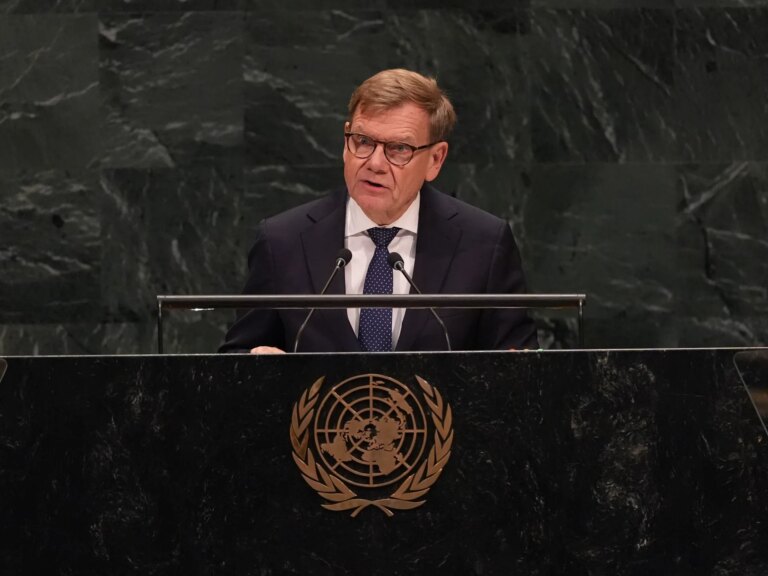
Wes Streeting said the US president was “right” to demand Europe pays more for its own defence.
Donald Trump has been increasingly critical of Europe for relying too much on the US for its security, and has demanded Nato allies reach 5% of GDP on defence spending by 2035.
Speaking at the Farnborough airshow, Streeting said:
President Trump has called on Europe to carry a greater share of the burden for our own defence, and he is right to do so. The UK has always been a leading light on defence spending, but the world is changing and in these dangerous uncertain times it is clear that we have needed to go further.
That’s why we’ve committed £298bn over the next four years, including an additional £15bn on top of last year’s spending review settlement. At the recent Nato summit, all members reaffirmed our commitment to 3.5 by 35 [3.5% of GDP by 2035].
Burnham says main perpetrator in killing of PC Andrew Harper ‘will not be subject to early release’
Andy Burnham is also speaking to reporters during a visit to Bath.
The prime minister said the main perpetrator in the killing of PC Andrew Harper “will not be subject to any early release”, PA reports.
The mother of Harper – who died from his injuries when he was caught in a strap attached to the back of a car and dragged for more than a mile – had called it an “insult” that two of her son’s killers could be eligible for early release.
We will bring you more as we get it.
New defence secretary Streeting giving speech – watch live
Wes Streeting is speaking now at the Farnborough airshow, you can watch here:
The new defence secretary Wes Streeting is in Hampshire for the Farnborough airshow, where he is expected to speak in a couple of minutes. We will bring you the latest lines.
PA has reported some of his earlier remarks about the armed forces needing to boost their use of artificial intelligence (AI).
He described a new deal with BAE Systems as a “groundbreaking moment for UK defence”, adding: “We must match the speed at which our adversaries are developing AI technology.”
BAE Systems announced the Ministry of Defence has given it a contract extension worth £708m to continue developing a next generation combat aircraft as part of the global combat air programme.
Meanwhile, the new energy secretary Miatta Fahnbulleh was met by campaigners from Fossil Free London outside the Department of Energy Security and Net Zero this morning, demanding that she scrap the Rosebank oilfield, Damian Carrington reports.
Protesters dressed as firefighters held placards reading, ‘We’re already putting out fires, don’t start new ones.’
Robin Wells, director of Fossil Free London said: “We all deserve to know where our next meal is coming from, to feel safe in our homes and have faith for our future. But the stability of our food supply, the integrity of our homes and the future of organised society is in serious jeopardy due to the gouging of new fossil fuels out of our UK seas.
“With Rosebank and Jackdaw, Big Oil billionaires are pointing a flame thrower at our health and security and the government could soon pull the trigger.”
Andy Burnham is likely to approve the two fields according to recent speculation. Labour’s 2024 manifesto pledged to honour existing exploration licences but not issue new ones. So-called “tiebacks”, where offshore oil and gasfields are connected to already approved production facilities via pipelines, may provide a loophole. Despite suggestions from opposition politicians, the new fields are too small to reduce energy bills, increase energy security or provide many jobs.
Fahnbulleh has been a strong supporter of climate action and the drive to net zero emissions. In 2025, when energy minister, she told the Commons: “We will sprint to clean power, because that is the route by which we achieve energy security for the country … we are on the right side of history and on the side of consumers.”
Boost for Burnham as UK inflation drops by more than expected

Phillip Inman
UK inflation dropped by more than expected in June to 2.6%, in a boost for Burnham’s plans to reduce the cost of living.
The new prime minister has pledged to bring down the cost of living to give households more disposable income and improve the outlook for the economy, announcing a winter VAT cut on electricity bills and lowering the cap on bus fares in England.
Last month’s consumer prices index reading outdid economists’ forecasts of a slide from 2.8% in May to 2.7%, amid a fall in the prices of fuel, particularly diesel, helped by the unstable truce in the Middle East conflict.
The Office for National Statistics said clothing also dropped in price month on month along with the cost of transport and food, offsetting modest price increases in most other goods and services.
Grant Fitzner, the ONS chief economist, said:
Food prices fell this month, driven by products including chocolate, margarine and beef. Clothing prices also fell with the start of summer sales, with bigger discounts than last year.
The cost of raw materials dipped for the first time since January, mainly due to the lower price of crude oil, while the increase in the costs of goods leaving factories slowed again.
However, analysts pointed out the reprieve is likely to be temporary, with the recent escalation of hostilities in the Middle East pushing the price of Brent crude back up above $90 a barrel this week.
You can read more here:
Also this morning, Heidi Alexander declined to answer whether two men jailed for the death of PC Andrew Harper will be eligible for early release under Labour plans to tackle overcrowding in prisons.
Harper sustained fatal injuries while responding to a quad bike theft in Sulhamstead, Berkshire, in August 2019. He died after getting caught in a strap attached to the back of a car and dragged down a country road as three teenage suspects fled the scene of the burglary.
The transport secretary said ministers had to make “difficult but necessary decisions”, but added that the driver of the car which fatally dragged Harper along a road in 2019 would not be eligible for automatic release, although his two passengers could be eligible to get out halfway through their sentences.
Alexander told BBC Breakfast: “It was a horrific crime that happened. There were three individuals in the car at the time that that incident happened.
“The individual who was behind the wheel was given a longer sentence than the other two people in the car. That individual, the person behind the wheel, has been barred from any of these sentencing changes and he will have to face a parole board before he sees the light of day.
“This government did have to take some difficult decisions back in the summer of 2024. When we entered government, there was a day when there were about 100 prison spaces left because the previous government had failed to build the prison spaces that his country needs.”
My colleagues Kiran Stacey and Peter Walker take a closer look at the questions on how the government will finance its spending pledges:
On his first full day in power, the prime minister faced questions about how he would fund the removal of VAT from electricity bills and an expected uplift in defence spending – an issue that led his new chancellor, John Healey, to resign as Keir Starmer’s defence secretary last month.
Downing Street said on Tuesday that the tax cut was funded for the next financial year, but money would have to be found in future years from existing departmental budgets, suggesting spending cuts to come. No 10 has also ruled out using defence bonds to pay for higher military spending.
The Guardian has also learned Burnham plans to accelerate the timetable for implementing his promise to roll out a national care service, a move that could cost further money before the election.
Read the full report here:
We have more comments from transport secretary Heidi Alexander who was on the media round this morning answering questions on the new £2 bus fare cap.
The government said this morning that the cap would be funded by reprioritising the energy budget, essentially money that was going to be given to third countries for climate projects as a grant will be now be given as a loan which has to be paid back.
When pressed for more details by Sky News, Alexander said they will “need to be worked out”.
She also said she was not sure whether developing countries will have to pay the UK interest on the loans.
Andy Burnham’s new government faces questions on funding after announcing £2 bus fare cap in England
Good morning and welcome to our live coverage of UK politics.
Andy Burnham’s new government is facing fresh questions on how it will fund its new policies aimed at easing the cost of living, after the prime minister announced a £2 cap on single bus fares this morning.
The cap on single bus fares in England will be in place from January, reducing the current cap of £3. The government said the measure is backed by £454m of funding, including money to allow devolved governments to take similar action. About £400m of that funding will come from switching investment in international climate finance to loans, with the rest from savings in the Department for Energy Security and Net Zero budget.
It follows yesterday’s announcement of a cut to VAT on household electricity bills from 1 October, which the government said will be funded by cancelling the digital ID scheme. But former cabinet minister Darren Jones suggested the scheme was “unfunded” and said the government “will have to set out how it will pay for its new policies at the budget”.
When posed this question on the bus fare cap, transport secretary Heidi Alexander said she was “100% sure” the new policy was fully funded, saying the government was “reprioritising spending”.
“The prime minister has been absolutely clear that we’re going to observe the fiscal rules and that you won’t get any unfunded spending commitments from this government,” she told BBC Radio 4’s Today programme.
She also insisted the cut to VAT on domestic electricity bills was properly financed, telling BBC Breakfast that it was “not true to say the money isn’t there to implement the changes on electricity bills”.
She criticised Jones, who was sacked as the Duchy of Lancaster, for questioning how new government policies will be funded on social media, telling Sky News she was “not sure it was either the most timely or wise tweet that Darren has ever put out”.
Conservative shadow chancellor Mel Stride said the government could not answer the question: “Where is the money coming from?” Speaking to BBC Breakfast, he said there was not any money to be saved from scrapping the digital ID scheme because “it was never funded in the first place”.
About the Author