
Two different women at separate TopGolf locations in the Houston area were badly hurt after getting walloped in the head by errant clubs wielded by nearby duffers, with one continuing to endure ‘persistent headaches’ more than a year-and-a-half later, according to a pair of recently filed lawsuits reviewed by The Independent.
TopGolf, headquartered in Dallas, is a souped-up driving range concept with more than 100 locations worldwide, describes itself as “a sports entertainment complex that features an inclusive, high-tech golf game that everyone can enjoy, paired with an outstanding food and beverage menu.”
The pair of suits come roughly 14 months after a Texas oil-and-gas executive who was taking a golf lesson at a Houston country club allegedly failed to make sure the surrounding area was clear before “negligently” swinging his club directly into his instructor’s face, necessitating emergency reconstructive surgery and resulting in “permanent disfigurement,” per a $1 million negligence lawsuit filed in that case.
At least three people have lost eyes at TopGolf, and last year, the chain was ordered to pay $15.8 million to the family of a 9-year-old boy who suffered a traumatic brain injury when he walked into the path of a player’s backswing, requiring emergency neurosurgery. Others have been severely injured or have even died after falling from balconies set up for players to practice their drives, with an entire subset of online videos devoted to “TopGolf fails” – compilations of people hurting themselves or others while on the premises.
In the most recent of the new suits, filed July 6 in Harris County District Court, 62-year-old Kelly Ann Auer, says she was hitting some balls last August at a TopGolf location in Webster, Texas – also a suburb of Houston – when the golfer next to her “lost control of his club and it flew in the air striking Ms. Auer in the head.”

“On TopGolf’s website, they describe the TopGolf Houston-Webster location as ‘the premiere entertainment destination in Webster, Texas’ with ‘year-round comfort,’” Auer’s complaint states. “[H]owever, other than a red line warning customers that it is dangerous to stand or sit near the hitting area while a customer is holding and/or swinging a club, there are no warning signs to warn customers of the potential dangers of flying golf clubs or balls.”
Auer’s complaint points out that there is “an entire genre of social media [posts] dedicated to sharing videos of injuries that customers have sustained while on TopGolf premises.”
Attorney Scott Sanes, who is representing Auer, told The Independent that there was no netting or barriers “of any kind” between the golfers, no helmets required, and that TopGolf “only provided gloves for purchase.”
Auer now has ongoing headaches, dizziness, lost memory, nausea, blurry vision and sensitivity to bright lights, along with ringing in the ears, and “has moments where she gets confused and freezes,” according to Sanes.
“We are at the very beginning of the litigation stage and are looking forward to determining how often this problem has arisen, how it has been addressed by this huge company and what they have done, if anything, to protect their customers,” he said.
Co-counsel Robert Rice told The Independent, “It’s tough when you go to enjoy practicing your golf swing and [you] end up with a traumatic brain injury.”
In a second suit, local resident Brandi Triplett was at a TopGolf last year in the Houston suburb of Katy, hitting balls with a friend, when she took a flying driver to the skull.
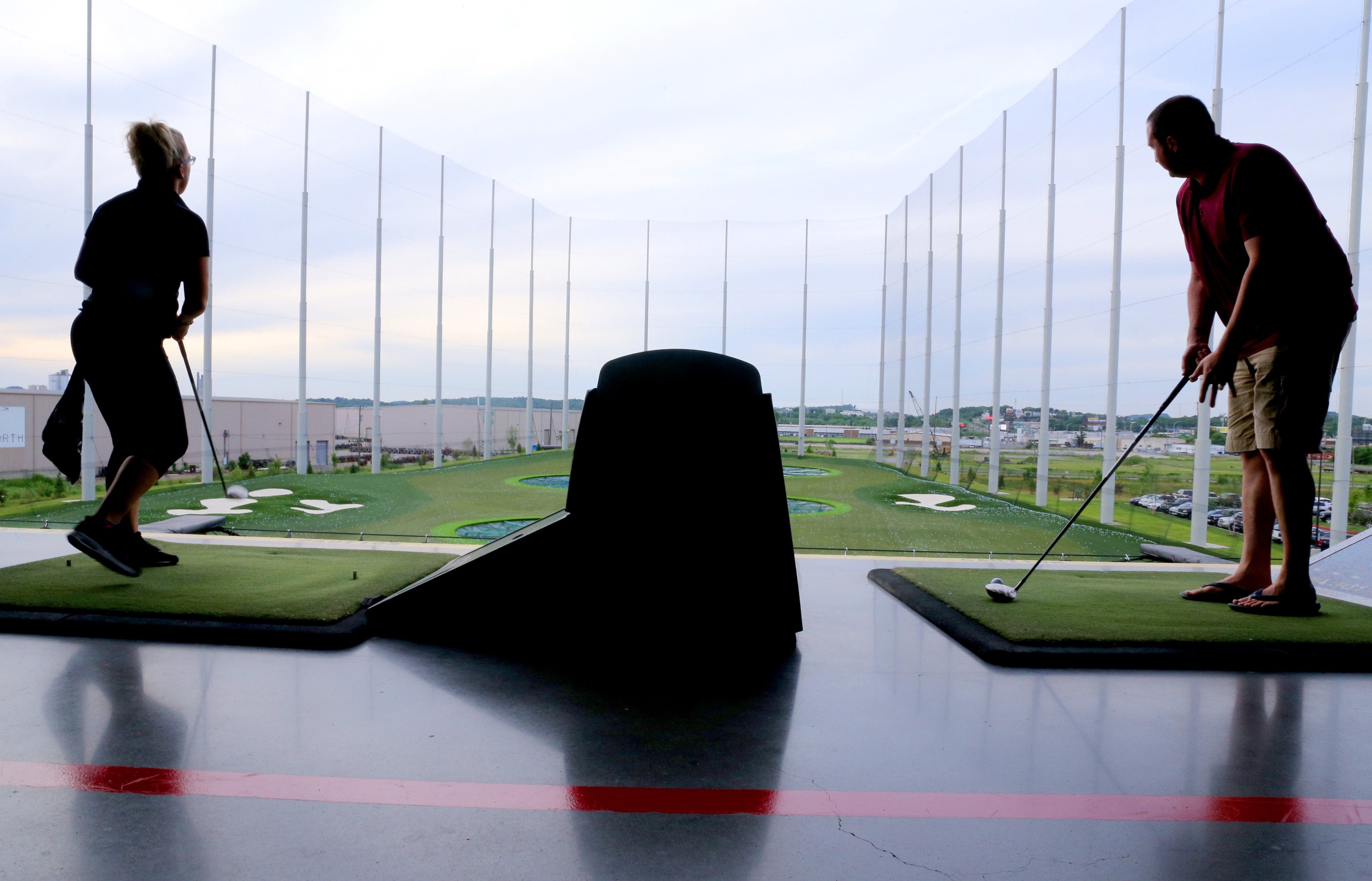
Triplett, 43, was “seated and watching her friend take a turn golfing when one of the men in the adjacent bay swung a golf club and released the club during the swing,” according to her complaint, which was filed June 4 in Harris County District Court. “The golf club flew from the adjacent bay and violently struck [Triplett] in the head and right eyebrow area.”
After Triplett went down, the golfer in question apologized, said, ‘I’m done,’ and quickly left the area, according to the complaint, which claims the group “had been consuming alcoholic beverages” while there.
The complaint says Triplett “immediately experienced pain and swelling to her head,” and that she “attempted to ice the affected area while remaining at the facility.”
However, it goes on, the pain was so intense that she “ultimately ceased participating,” and went home. The next day, Triplett saw a doctor “due to continuing pain and headaches,” and was referred to the emergency room for a more thorough evaluation, the complaint continues.
ER staff took a CT scan of Triplett’s head, which was negative for acute intracranial injury, the complaint goes on. Still, it contends, Triplett continues to suffer “persistent headaches and related symptoms,” nearly 18 months after the incident.
A paper published last year in the South African Medical Journal explained why getting hit in the head with a golf club, while rare, can be so destructive. For starters, the club head’s leading edge imparts a tremendous amount of force to an extremely small surface area, “resulting in more severe damage to the skull.” The “injury pattern” caused by a golf club is also especially damaging, and, for those playing a round outdoors, the “soil-contaminated” surface of the club head significantly increases the risk of sepsis.
To that end, the TopGolf website lays out meant to keep guests out of the emergency room.

“Combining a few laughs, great food, and hours of Topgolf can create some epic memories,” the page tells visitors. “So to ensure everyone has a fun and safe experience, it’s important to follow our conduct and safety rules.”
Players are warned to keep an eye out for “flying balls and clubs,” and to “always check their surroundings before swinging a club,” adding that guests are responsible for “any damages or injuries they cause.”
Running starts and trick shots are prohibited, as is aiming for the ball picker in the outfield. Additionally, the site says, “No rough housing, pushing, horseplay or similar dangerous activity allowed. No throwing items of any kind. Use golf clubs and balls only for golf.”
Among other things, Ayers’ complaint accuses TopGolf of “failing to properly provide adequate supervision,” “failing to continually inspect for dangerous activities,” and “failing to install physical safety barriers or other adequate safety measures between bays despite having knowledge that the absence of such barriers and safety measures created a known risk of serious injuries.”
In her complaint, Triplett blames TopGolf for “[f]ailing to properly monitor and supervise patrons consuming alcohol while utilizing golf clubs,” “[f]ailing to intervene despite patrons consuming alcohol and engaging in unsafe conduct,” and “[f]ailing to provide adequate barriers, spacing, or safeguards between adjacent bays.”
Both argue they have experienced physical pain and suffering, physical impairment, and “disfigurement.”
A TopGolf representative did not respond to a request for comment.
About the Author