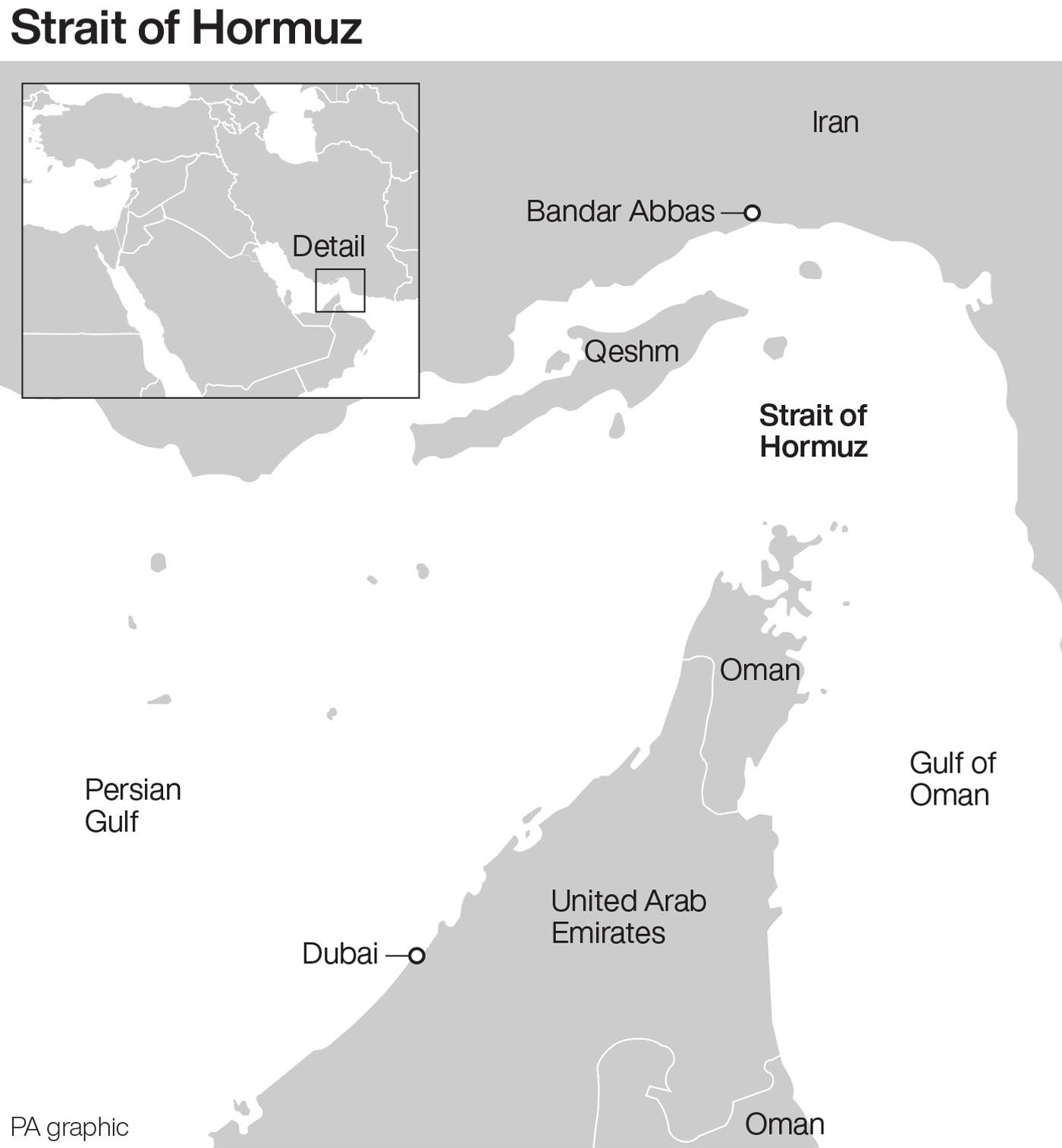
While the United States and Israel continue to pound Iran with relentless airstrikes for a third week, opening the Strait of Hormuz has become an increasingly intractable problem.
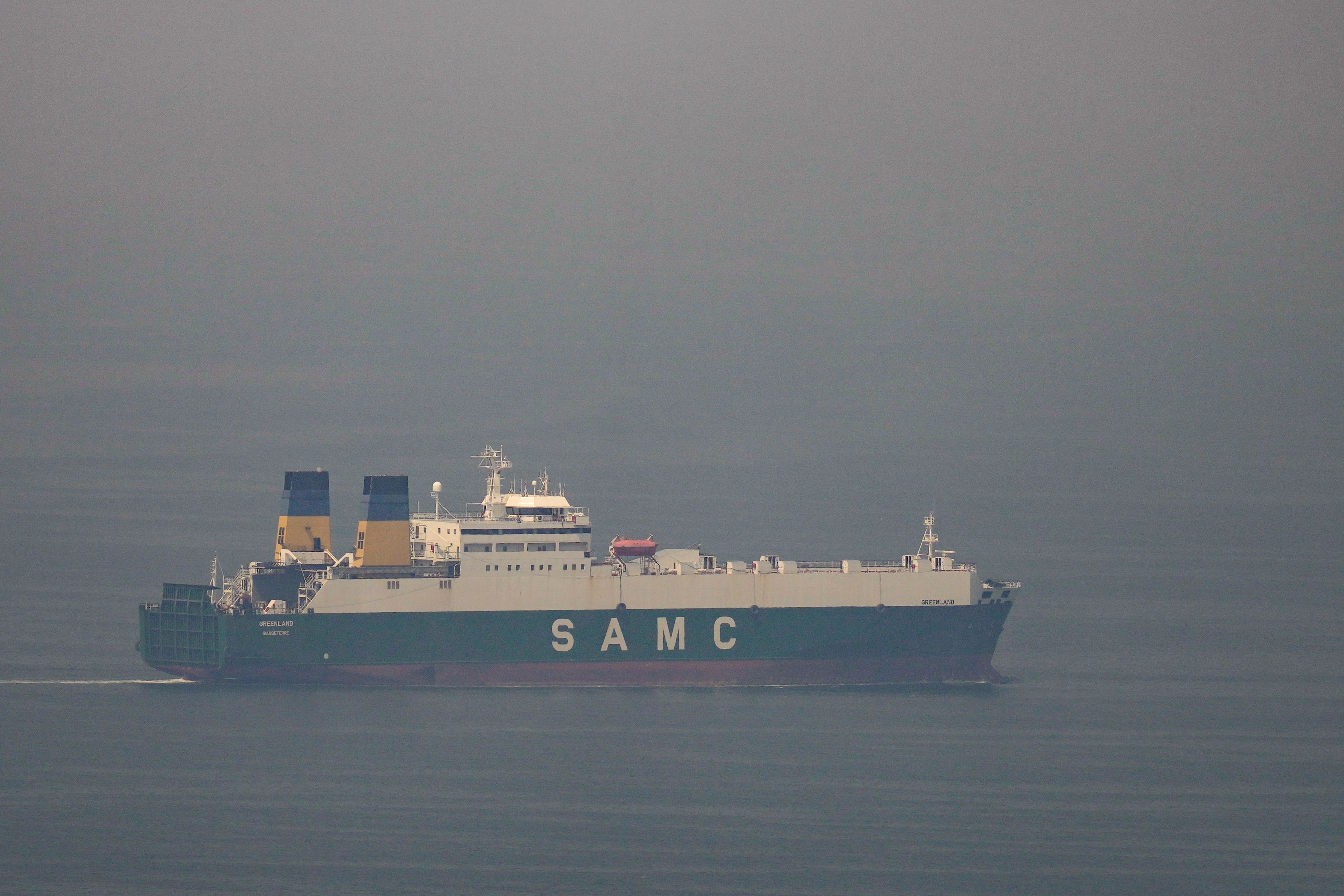
Hundreds of ships are trapped in the Gulf after Iran claimed complete control over the strait.
Within days of war being declared, Iran had laid mines in the 24-mile-wide sea passage, which typically serves as a key waterway for around a quarter of the world’s liquefied natural gas and seaborne oil trade.
Iran’s chokehold on the strait, the only maritime route out of the Gulf, has sent shockwaves through global oil costs, as prices remain above $100 a barrel as a result of the blockade.
Experts have told The Independent that the president was “naive” for discounting the possibility of Iran blockading the Strait when launching his war.
A former British naval minehunting captain said countermeasures for getting rid of the mines are a “slow and grinding business”.
Explaining how the mines operate, he said: “They wait to be activated by unwary ships passing overhead. This can be done magnetically, acoustically or by pressure, or by a combination of those.
“They can target individual types of ships by their signature. They can count the ships going over and let the first 10 or 20 go and then explode under the next one, when everybody had thought it was safe.”
The mines can be placed by aircraft, ships, submarines or even individual swimmers. They can be cheap, with some costing as little as $1,500 (£1,124), according to the Strauss Center. At least 30 countries produce, and more than 20 export, the mines, which have inflicted 77 per cent of all US ship casualties since 1950.
Some estimates say there are around a million sea mines of more than 400 types, with around 400,000 owned by possible adversaries of the US, Defence One reported. The US military is reported to possess less than 10,000 sea mines of three types, with the latest having been introduced in 1983. It is unclear how many the UK possesses, but Britain has not manufactured new mines since around the 1950s, according to naval weapons website NavWeaps.
Naval mines can include drifting mines, which float on the surface of the water and follow prevailing currents or winds. The versatile mines, which can be deployed by small boats, have been banned by international law for more than 80 years but have been used by Iran since 1980. Iran’s drifting mine stockpile is believed to be made up of Soviet, Western and Iranian-made munitions, with US experts estimating they own at least 2,000 of them.
Iran also possesses bottom mines, which can have explosive charges up to 2,200 pounds, and rising mines, which fire a projectile warhead at a target and tend to be used in deeper water. Iran is believed to have a substantial number of bottom and rising mines acquired from Russia, China and North Korea, although an exact figure is unclear.
Finding and dismantling these mines can be an arduous and costly task, the former captain explained. “Those mines have to be searched for, ‘hunted’, and destroyed before they can do damage. This is done using sonar to scan the seabed – but the seabed is not flat and smooth, but has endless obstacles and debris all over it.
“The bed of the Strait of Hormuz has the debris of centuries discarded from passing vessels, and some of this will look very ‘minelike’. All these contacts have to be investigated and either destroyed or discarded as safe. This takes time and an immense effort in a waterway as long as Hormuz.”
The former captain said that although the US and the UK do possess minehunting ships, they would have to be put into harm’s way, and there is a real risk of missile and drone attacks from the Iranian shore.
He added: “The Iranians have been threatening for years that, if they were attacked, the Strait of Hormuz would be closed. They have now achieved this, and shipping is bottled up at anchor on both sides of the Strait.
“So it would seem that the answer has to be that, unless President Trump is prepared to accept severe casualties in ships and people, it will be unlikely that anything will be able to be done to reopen Hormuz until some political settlement is reached, resulting in an end to the shooting. Even then, clearance will take some considerable time.”
Former British army officer and weapons expert Hamish de Bretton-Gordon said Trump will not make any progress in this war until he “clears the Strait”.
He said: “The Strait of Hormuz is Iran’s only ace card and they are absolutely playing it. Anything that goes in, Iran can take out. Any mine clearance asset is likely to be attacked.”
Mr De Bretton-Gordon said to get freedom of manoeuvre, the US will need boots on the ground in Iran to secure the Iranian coast around the Strait, which would require a large force.
He added: “Until the US can control the Strait, it won’t be able to de-mine it. It seems everyone knows the Strait is Trump’s achilles heel except Trump, and he’s trying to blame everyone else – and mainly the UK – for his dreadful oversight.”
About the Author