
The FIFA World Cup 2026 is making headlines for more than just football, with visa complications, player treatment and soaring ticket prices sparking widespread debate. The growing controversy has even put FIFA President Gianni Infantino under pressure, as journalists repeatedly questioned him over the issues, though his answers did little to ease concerns.
While football has captivated fans on the pitch, the FIFA World Cup 2026 has also been marred by a series of off-field controversies. Ahead of the tournament, Somali referee Omar Artan was denied entry into the United States on security grounds, ending his hopes of becoming the first Somali official to referee at a World Cup. Since then, concerns have only intensified.
Elsewhere, Senegal and South Africa reportedly faced lengthy immigration procedures, with Senegal’s delegation allegedly subjected to searches on the airport tarmac. Iraqi striker Aymen Hussein was questioned for nearly nine hours upon arrival, while Iran was forced to shift its base to Tijuana and operate under strict travel restrictions due to ongoing geopolitical tensions, raising fresh questions about the challenges of hosting a global tournament amid complex border and visa policies.
As concerns over border policies, visa regulations and player treatment continue to mount, another issue has fuelled growing discontent among supporters: the soaring cost of match tickets. Critics argue that the tournament’s increasing corporatisation is creating barriers not only for fans but also for some of the very nations taking part in football’s biggest celebration.
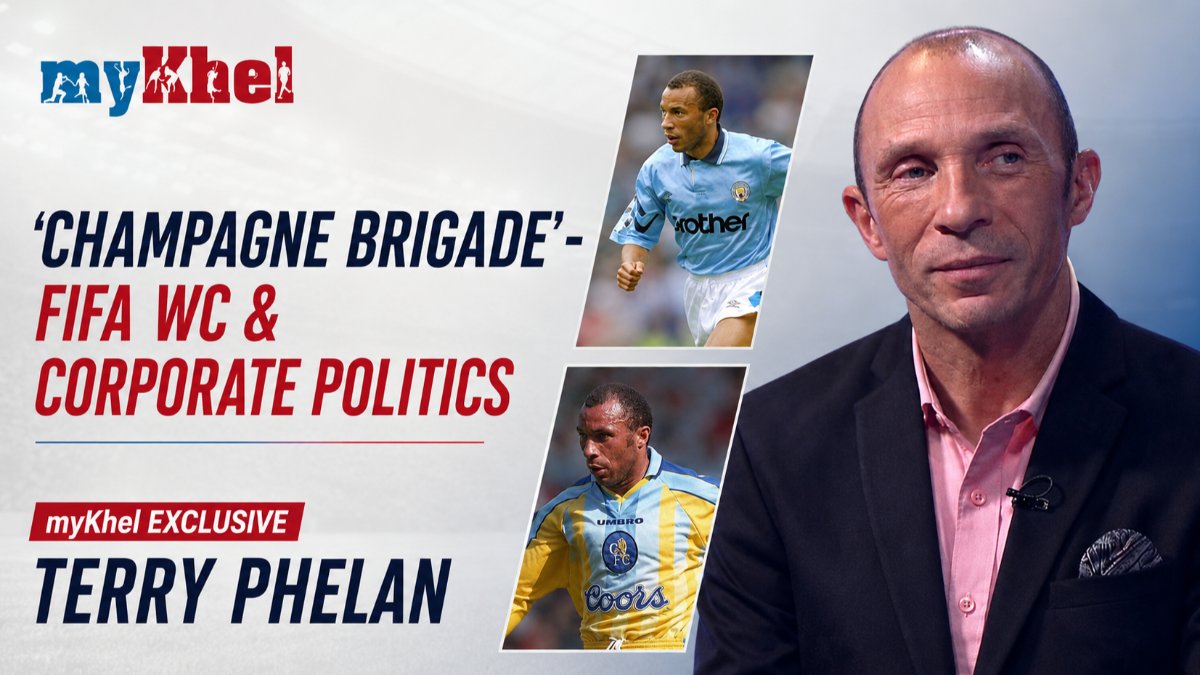
To gain a deeper understanding of the challenges surrounding the World Cup and the broader impact of football’s commercial evolution, myKhel sat down for an exclusive conversation with Terry Phelan, former Manchester City defender, Republic of Ireland international and renowned football pundit. Having donned many hats throughout his decades-long association with the game, Phelan offered a unique perspective on the issues shaping the game in modern football.
‘Absolutely Disgusting’: Terry Phelan Condemns US Treatment Of Players & Referees
Speaking about the strict screening process that has been in place, Phelan said that the process is absolutely disgusting, saying that authorities should understand that they are not some regular commoners who are trying to enter. “It is absolutely disgusting. These are regular football players who have come here to participate in the FIFA World Cup.”
“I can understand that due to security protocols you have to search them, but to whisk them away is absolutely not done. You are being searched outside the terminal, now what type of humans are we becoming?”
Phelan also voiced his strong critic on the entire incident that unfolded with the Somalian referee Artan. “FIFA had picked him to officiate and yet when the troubles unfolded, there was nothing they could do. I blame FIFA solely for this mismanagement. Were there any FIFA delegation accompanying him when he was out there on the tarmac, the answer is no.”
‘Cost’ Of World Cup- Working Class On Periphery
Former Irish footballer Terry Phelan voiced his concerns over the rising cost of attending FIFA World Cup matches, warning that football’s grandest stage is becoming increasingly inaccessible to ordinary supporters.
While the tournament still carries a sense of nostalgia, Phelan believes soaring ticket prices are pushing working-class fans to the margins. “The working-class man is getting priced out of going and watching a live World Cup game in their own country,” he said, describing the current pricing structure as “unbelievable.“
Phelan argued that the tournament is moving “more towards that corporate side,” raising concerns about whether local fans can truly be part of the spectacle. Referring to supporters in host nation Mexico, he questioned, “What about the common man in Mexico who wants to get into that stadium and watch his country play? He can’t do that.”
The former defender also pointed out that the issue extends beyond host nations, with many supporters around the world now unable to afford match tickets or the cost of travelling to tournaments. “I hope now we really have a think about it,” Phelan said, urging football authorities to ensure that the World Cup remains accessible to fans rather than becoming “just a free-for-all.”
Should FIFA World Cup Be Hosted Across The Americas?
For Terry Phelan, the issues surrounding the 2026 FIFA World Cup extend far beyond football. The former Republic of Ireland international questioned whether FIFA adequately considered the logistical and financial challenges of hosting the tournament across the United States, Mexico and Canada.
Phelan reserved his strongest criticism for ticket prices, arguing that football’s core supporters are being pushed out of stadiums in favour of corporate clientele.
“The ticket pricing is absolutely disgusting. The common man whose son plays in the favelas or on the streets of Mexico, or on the streets in Canada or America, they can’t afford to go and watch the games because they’ve been outpriced.”
According to Phelan, the World Cup risks losing touch with the very communities that have long sustained the sport. He warned that football’s biggest tournament is increasingly catering to hospitality guests and corporate sponsors rather than lifelong supporters.
“It’s boiled into a corporate world. The prawn sandwich brigade and the champagne brigade, that’s what it’s all about now.” Referring to the corporate nexus that exists in FIFA, Phelan has used the terms prawn sandwich and champagne to describe the opulence which has come spralling in the beautiful game.
The former Manchester City defender also expressed disappointment that many local fans may never get the opportunity to watch their national teams in person. “It’s really sad that a person can’t go and watch his own country for a price which allows him to do that. If a family of four can’t go and watch, maybe a family of one can’t go and watch.” Beyond affordability, Phelan questioned FIFA’s decision to stage the tournament across a region where visa restrictions and border controls were always likely to create complications for players, officials and supporters alike.
“Why haven’t they red-flagged this? They’ve had four years to realise it. Why go into America when there’s what’s happening there anyway? Keep it in Canada where it’s a little bit easier to get in, or keep it in Mexico.”
For Phelan, the problems surrounding ticket pricing and cross-border travel raise a broader question: has the ambitious three-country hosting model enhanced the World Cup experience, or has it created barriers that undermine football’s promise of being the world’s game?
The greatest spectacle in world football returned in a blaze of colour, noise and nostalgia as the FIFA World Cup 2026 officially got underway. While the football’s grandest stage has rekindled the hum of vuvuzelas and the rhythms of Mariacha bands, a lingering thought will always stare from the corner of the alley: will footballing merit be lost in the dark alleys of corporate politics forever?
About the Author