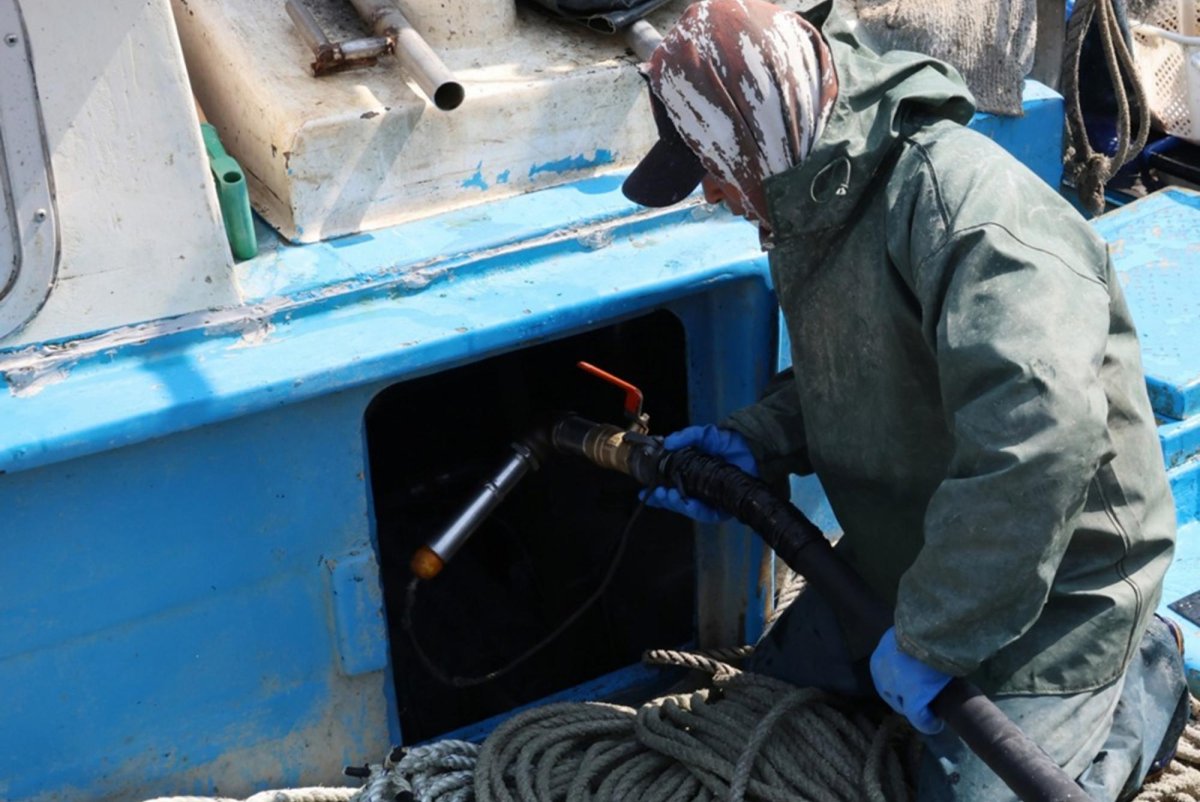
A fisherman refuels a fishing boat at a fuel dock in Busan, South Korea, 10 March 2026, as oil prices surge due to the intensifying conflict in the Middle East. Photo by YONHAP / EPA
March 12 (Asia Today) — South Korea will release 22.46 million barrels of strategic oil reserves in coordination with the International Energy Agency to address global supply disruptions caused by the Middle East conflict.
The release marks the country’s largest-ever drawdown of emergency oil reserves and the first since coordinated actions taken during the Russia-Ukraine war in 2022.
The Ministry of Trade, Industry and Energy said the International Energy Agency held an emergency board meeting Tuesday and approved a collective release of 400 million barrels among member states. South Korea was allocated 22.46 million barrels, about 5.6 percent of the total.
The volume exceeds the combined 11.65 million barrels South Korea released in two rounds during the Ukraine war under the agency’s previous coordinated action.
Based on the country’s average daily oil consumption of about 2.6 million barrels, the planned release equals roughly eight to nine days of domestic demand.
South Korea has released strategic oil reserves five times since its first emergency release during the 1990 Gulf War.
The International Energy Agency said crude oil flows through the Strait of Hormuz have been disrupted since the Middle East conflict began Feb. 28, reducing exports of crude and petroleum products to less than 10 percent of pre-conflict levels.
The agency, founded in 1974 to coordinate responses to global oil supply shocks, requires member countries to maintain emergency stockpiles equivalent to at least 90 days of net oil imports.
The South Korean government said it will consult with the agency on the timing and details of the release while considering national interests and domestic conditions.
Officials expect the move to help ease short-term pressure from surging global oil prices and stabilize supply concerns.
The ministry said it would work with major economies to support stability in global oil markets while minimizing inflationary pressure on households and the broader economy.
— Reported by Asia Today; translated by UPI
© Asia Today. Unauthorized reproduction or redistribution prohibited.
About the Author