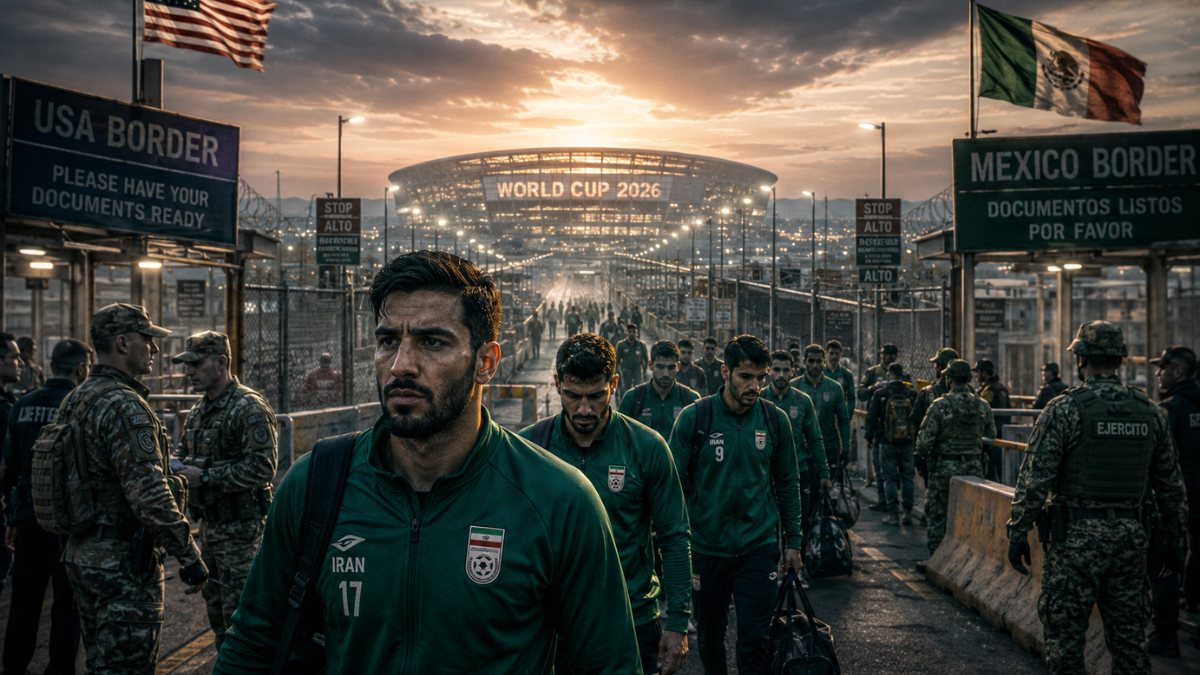
Iranian national team players have been granted U.S. visas for the 2026 FIFA World Cup, but under highly restrictive conditions that require them to enter and exit United States territory on the same day as each match.
The squad will be based in Tijuana, Mexico, and will only cross the border for matchdays before returning immediately afterwards.
According to Iranian officials, while all 26 players received approval, a significant portion of the support staff — including up to 15 key coaches, analysts, doctors, and technical personnel — were denied visas. This has forced the team to operate with a reduced backroom team, raising serious concerns about preparation quality and player welfare.
Iran to face huge Logistical Challenge
The team will face repeated long journeys across the U.S.-Mexico border. Matches in Los Angeles (June 15 vs New Zealand), Inglewood (June 21 vs Belgium), and Seattle (June 26 vs Egypt) will involve early morning departures from Tijuana, high-security travel, match play, and late-night returns, potentially adding 8–12 hours of travel fatigue per fixture.
For the Seattle match, which is around 1715 kms away from Tijuana, the Iran players will have to travel 3500 kms, around 1853 nautical miles.
This arrangement is unprecedented in World Cup history and stems from ongoing geopolitical tensions between Iran and the United States. Iranian Football Federation officials have described the restrictions as “discriminatory” and detrimental to fair competition. The setup could significantly impact player recovery, tactical analysis, and team morale during the critical group stage.
Experts believe the travel burden may hinder Iran’s performance against stronger opponents like Belgium. Repeated border crossings also raise risks of delays due to security checks, customs procedures, and potential protests near match venues.
Iran Players handed Strict Rule: But is it Fair?
Head Coach Amir Ghalenoei and captain Ehsan Hajsafi have emphasized the team’s resilience, stating that they will treat these challenges as motivation. However, sports scientists warn that accumulated fatigue and disrupted recovery routines could increase injury risk and reduce tactical sharpness in a tournament where every point matters.
FIFA has acknowledged the situation and is monitoring developments closely to ensure the team can compete without excessive disadvantage. The governing body has confirmed that the original match schedule remains unchanged, but internal discussions about possible adjustments for future stages are reportedly underway if Iran advances.
The unique circumstances highlight the intersection of sports and politics at the first 48-team World Cup. For Iran, qualifying for this tournament already represented a major achievement. Now, they must navigate not only formidable opponents on the pitch but also complex diplomatic realities off it, which is not fair for those players.
Every three days, a travel of around 10-12 hours is not feasible and recommendable, especially for a monumental stage such as the FIFA World Cup. But amid the current geopolitical tensions, it remains a norm for the Iranian players, who would be desperate to showcase their footballing skills on the field.
Story first published: Monday, June 8, 2026, 9:48 [IST]
About the Author