‘We make a lot of money’: Trump spins spiking oil prices as benefit for US
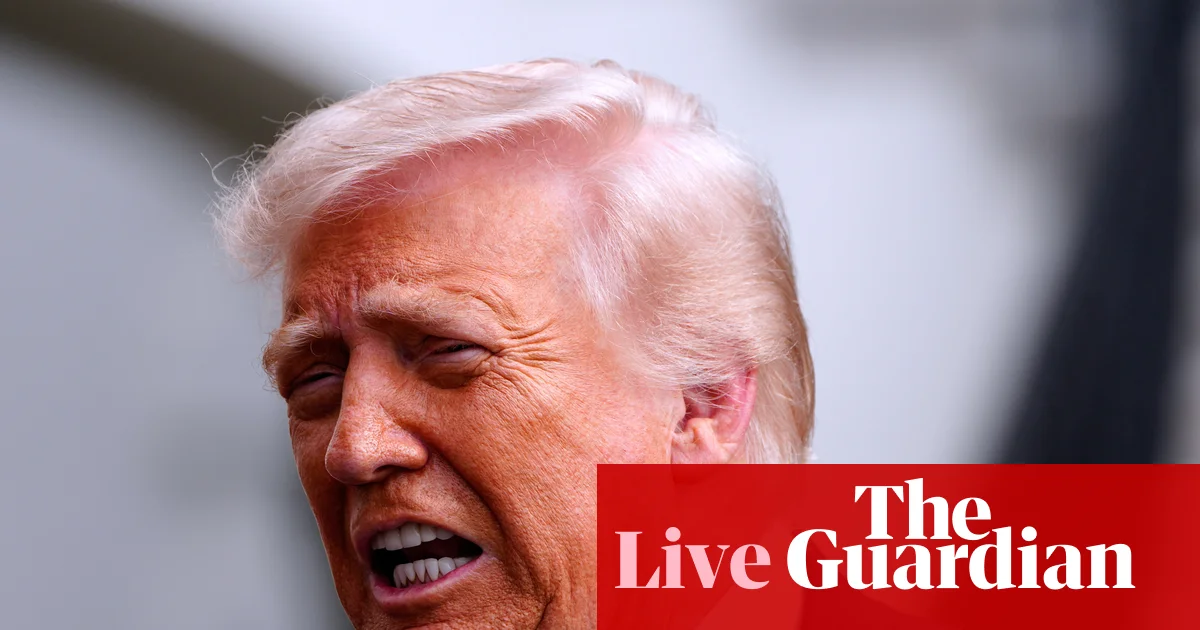
In a Truth Social post, Donald Trump suggested that the skyrocketing price of oil – which jumped back above $100 a barrel before dropping to $98 a barrel – would ultimately be beneficial for Americans who are facing increased gasoline prices at the pump.
“The United States is the largest Oil Producer in the World, by far, so when oil prices go up, we make a lot of money,” the president – who campaigned on bringing down costs – wrote. “BUT, of far greater interest and importance to me, as President, is stoping an evil Empire, Iran, from having Nuclear Weapons, and destroying the Middle East and, indeed, the World. I won’t ever let that happen!”
On Wednesday Trump tried to assuage concerns over spiking gas prices. “I would say it went up a little bit less than we thought. It’s going to come down more than anybody understands,” the president told reporters in Ohio.
The national average for a gallon of fuel is currently $3.59 – up from $2.94 a month ago.
Key events
Senate Democrats send letter to defense secretary for more information on Iran girls’ school bombing
Almost all Senate Democrats, and the two independent lawmakers who caucus with the party, sent a letter to Pete Hegseth demanding answers to more questions about the bombing of an Iranian girls’ school that killed at least 175 people.
All but one Democratic lawmaker – senator John Fetterman of Pennsylvania – signed the letter, after the New York Times reported that a preliminary investigation shows the US is to blame for the strikes near a naval base in Minab.
Citing unnamed officials familiar with the preliminary findings, the Times reports that Tomahawk missile strike on the Shajareh Tayyebeh primary school was the result of a “targeting mistake” by the US military.
In their letter, upper chamber Democrats say that the “findings must be released to the public as soon as possible, along with any measures to pursue accountability.”
They also provide a list of questions for the defense secretary, including whether the US carried out the strikes, or played any role in planning, coordinating, or supporting the strikes. They also ask whether the Pentagon is complying with the rules of engagement to prevent possible war crimes.
Pentagon tells lawmakers that war cost over $11.3bn in the first week – reports
US defense officials told senators on the armed services committee that the cost of the war on Iran totaled more than $11.3bn in the first six days alone, according to multiple reports.
The New York Times was first to break the news about the conflict’s price tag, citing three people familiar with the closed-door briefing on Tuesday.
According to the Times, the figure did not include many of the costs associated with the operation, such as the buildup of military hardware and personnel ahead of the first strikes. For that reason, lawmakers expect the number to grow considerably as the Pentagon continues to calculate the costs that accumulated during the first week of military action on Iran.
Several reports note that the White House is expected to submit additional funding requests for the conflict, despite the fact that Donald Trump claimed last week the US has a “virtually unlimited supply” of medium and upper grade ammunition that is primarily being used in the war.
The administration has not provided a public estimate of the cost of the conflict, and has offered confusing messages about its timeline. Trump said on Wednesday that “we won” the war but that the US will stay in the fight to “finish the job”.
‘We make a lot of money’: Trump spins spiking oil prices as benefit for US
In a Truth Social post, Donald Trump suggested that the skyrocketing price of oil – which jumped back above $100 a barrel before dropping to $98 a barrel – would ultimately be beneficial for Americans who are facing increased gasoline prices at the pump.
“The United States is the largest Oil Producer in the World, by far, so when oil prices go up, we make a lot of money,” the president – who campaigned on bringing down costs – wrote. “BUT, of far greater interest and importance to me, as President, is stoping an evil Empire, Iran, from having Nuclear Weapons, and destroying the Middle East and, indeed, the World. I won’t ever let that happen!”
On Wednesday Trump tried to assuage concerns over spiking gas prices. “I would say it went up a little bit less than we thought. It’s going to come down more than anybody understands,” the president told reporters in Ohio.
The national average for a gallon of fuel is currently $3.59 – up from $2.94 a month ago.
My colleagues are covering the latest developments out of the Middle East, including the first statement from the new supreme leader, Mojtaba Khamenei.
In his first remarks, Khamenei called for national unity and said that all US bases in the region should close or face attacks. He added that the strait of Hormuz will remain closed in order to pressure Iran’s enemies.
A reminder that Khamenei took over after his father, the late ayatollah, was killed in a targeted US-Israeli strike.
We’re waiting to hear from Donald Trump, who has previously denigrated the new leader, calling him a “lightweight” and an “unacceptable” choice in interviews with reporters.
Dharna Noor
Donald Trump’s war on Iran has triggered shocks in fossil fuel markets, exposing the perils of an agenda that prioritizes “drill, baby, drill” while sabotaging renewable power and energy efficiency in the US, experts and advocates say.
The US-Israeli war on Iran has already led to hundreds of deaths, created an ecological crisis linked to strikes on oil depots and sent fossil fuel prices haywire across the globe.
Critics say the war also shows the inherent instability of dependence on oil and gas: unlike wind and solar power, fossil fuel-based energy requires constant inputs of products whose availability and costs are determined by the global market.
Since the strikes on Iran began late last month, oil prices soared past $100 a barrel to their highest price since the 2022 Russian invasion of Ukraine. They eventually dropped to $98 a barrel on Thursday. The spike has pushed up the cost of gasoline – in which crude oil is a key component – nationwide. And it has sparked concern about broader inflation, which is often triggered by higher crude prices.
The president this week dismissed concerns about surging prices, telling Reuters that if gas prices “rise, they rise”, and later writing on social media that oil spikes are a “very small price” to pay for US safety and that “ONLY FOOLS WOULD THINK DIFFERENTLY”. But on the campaign trail and in the White House, Trump repeatedly pledged to bring down the price of household electricity and gasoline by “unleashing” American fossil fuels and boosting energy “independence” and “dominance”.
It’s an “emperor has no clothes moment” for Trump’s pro-fossil fuel policies and claims to support the working class, said Collin Rees, US policy manager at the climate research and advocacy non-profit Oil Change International.
“Americans are seeing, in real time, the deep failings of Trump’s strategy,” he said. “We’re seeing that he’s not doing anything to provide energy stability or price stability.”
Read the full report here with graphics by Aliya Uteuova:
A reminder that while several agencies have been impacted by the DHS shutdown, including the Transportation Security Administration (Tsa) and the Federal Emergency Management Agency (Fema), federal immigration enforcement is able to largely continue, thanks to the billions of dollars conferred for ICE in Donald Trump’s sweeping tax-policy bill that was signed into law last year.
Senate to vote on DHS funding bill as department shutdown continues
Twenty-seven days into the Department of Homeland Security (DHS) shutdown, Senate lawmakers will try – for a fourth time – to pass a funding bill to reopen the department.
The impasse over guardrails for Immigration and Customs Enforcement (ICE) and Customs and Border Protection (CBP) means that the upper chamber has yet to clear the 60-vote threshold needed to advance.
It’s expected to fail again today, a glaring reminder of the partisan schism over federal immigration funding during Donald Trump’s second administration. A reminder that two US citizens were fatally shot during the immigration crackdown in Minneapolis. And the president ousted Kristi Noem as his homeland security secretary, 13 months into the job.
US cannot escort ships through Strait of Hormuz now, maybe by month’s end, says energy secretary
Graeme Wearden
This won’t reassure the oil market much!
US energy secretary Chris Wright told CNBC on Thursday that the Navy cannot escort ships through the strait of Hormuz now but it was “quite likely” that could happen by the end of the month.
This comes as oil prices jumped almost 10%, to above $100 a barrel, before dropping to $98 a barrel amid renewed fears about supply disruption.
Donald Trump is in Washington today. He’ll be in closed-door policy meetings for most of the afternoon. However, we will hear from the president at 4pm ET, when he speaks in the East Room at a White House event for Women’s History Month with first lady Melania Trump.
We’ll bring you the latest lines as that gets under way.
Democrats press for answers over potential conflict of interest between Bondi and her lawyer brother
Democrat lawmakers have asked the Department of Justice to examine a potential conflict of interest in relation to attorney general Pam Bondi and matters involving her lawyer brother.
California Democrats Adam Schiff Dave Min said they have been waiting since 16 December to hear whether the Justice Department properly implemented firewalls and screening procedures in relation to her brother Brad, Bloomberg reports.
“Given the troubling pattern at the department of repeated interventions or dismissals in cases involving Mr Bondi, we are concerned that DOJ officials, including the attorney general, may have failed to ensure the independence of internal accountability mechanisms,” they said in a letter to Justice Department Deputy Inspector General William Blieron Wednesday.
DOJ spokesperson Gates McGavick said in a statement:
double quotation mark These decisions were made through the proper channels and the attorney general had no role in them.
Republicans pile pressure on Thune to alter rules for Trump’s voter ID bill
Hello and welcome to the US politics live blog.
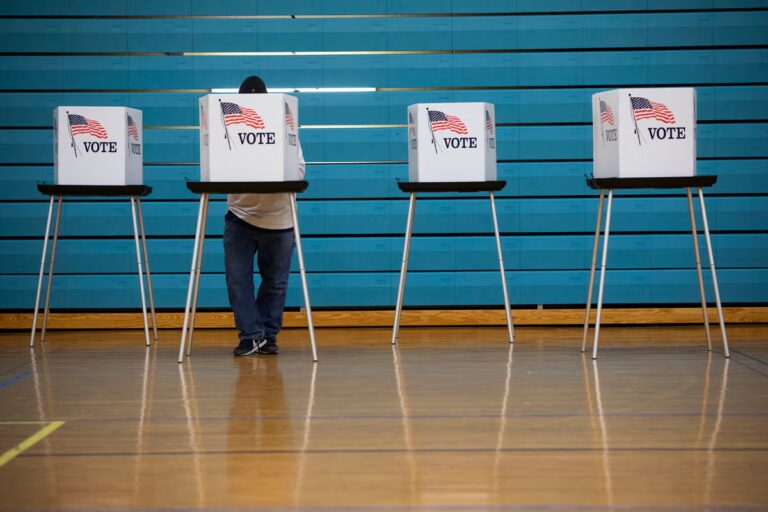
Republican Senate majority leader John Thune came under renewed pressure last night to change the rules to force a vote on the Save America act, a sprawling bill that would upend elections for American voters amid the midterms.
President Donald Trump delivered a blunt message for Thune to reporters outside the White House on Wednesday:
double quotation mark He’s got to be a leader.
The comments came after the president said he would not sign any other legislation until the Save America act came to his desk to sign. And Trump has the support of several in his party as he attempts to bulldozer through the changes.
Texas senator John Cornyn publicly backed changing the filibuster rules in order to help pass the bill. He suggested bringing back a “talking filibuster”, where senators must hold the floor to block legislation.
Meanwhile, Wisconsin senator Ron Johnson called for a test vote on the filibuster, arguing it would force Democrats to go “on the record”. He added that Republicans should consider scrapping the rule if Democrats will not help pass the bill.
He said:
double quotation mark I’ve got colleagues who just simply won’t believe the Democrats will actually do it, just because two of them held out last time – those [two] who’ve been purged from their partySo let’s get them on the record. Let’s —-[make the] first vote out, ‘let’s end the filibuster’ – and just see what they do.
Thune, from South Dakota, said he planned to bring the bill up for a vote next week, but that would mean it would fail – he does not have 60 votes to overcome the filibuster rule and vote on the bill outright, and the talking filibuster isn’t a feasible option.
While the House approved a version of the bill, the Senate does not have the votes, because it would need 60 votes to move forward because of the filibuster rule.
Among the provisions of the Save America act: a requirement to provide documented proof of US citizenship to register to vote (such as a passport or birth certificate); a voter ID requirement for casting a ballot; a prohibition on states registering people to vote unless they provide such documentation at the time of registration; requirements for states to ensure only US citizens are registered; a demand that states turn their voter rolls over to the federal government; and an allowance for private parties to sue election officials if anyone registers to vote without presenting documentary proof of citizenship, as well as potential criminal penalties.
In other developments:
-
Donald Trump insisted to reproters that the war on Iran he launched from his Florida beach club is going so well that “most people” on the cable news channels he turns to for information, “say it’s already been won”.
-
In a political rally in Kentucky, the president urged voters to get rid of Thomas Massie, the Republican congressman who co-wrote the Epstein Files Transparency Act, which compelled the justice department to release investigative files of Jeffrey Epstein, the late child sex offender Trump socialized with for nearly two decades.
-
The United States bombed an Iranian girls’ elementary school, killing at least 175 people, many of them girls between the ages of 7 and 12, according to the New York Times.
-
Joe Rogan, the podcaster who hosted and endorsed Donald Trump in 2024, said that the US military attacks on Venezuela and Iran ordered by Trump were a betrayal of voters won over by his claim to be against regime change wars.
-
As video circulating online showed oil tankers filled with Iraqi oil in flames in the Persian Gulf after reported attacks by Iran, Trump assured his supporters in Hebron, Kentucky, that the war on Iran is already over and “we won”.
About the Author