Ukraine warns Belarus it has 500 targets if Lukashenko joins war
Ukraine has a list of 500 targets in Belarus ready if Belarusian leader Alexander Lukashenko joins the war with Vladimir Putin, a senior Ukrainian military commander has warned.
Robert “Magyar” Brovdi, commander of Ukraine’s Unmanned Systems Forces, advised Belarus against interfering in the ongoing Russia-Ukraine war.
“To the Minsk Gauleiter Lukashesku: a barking dog does not bite. A bird of prey is different. The first 500 targets are already on the list. Free and very practical advice: don’t get in Ukraine’s way,” Brovdi said in a Facebook post, as reported by Ukrinform.
The warning comes after a series of verbal escalations and accusations between Kyiv and Minsk along the shared northern border.
Russia and its ally Belarus held joint nuclear drills last week, and Ukrainian president Volodymyr Zelensky has warned in recent days that Belarus could provide a launchpad for Russia to open a new front in northern Ukraine.
Some Russian troops entered Ukraine from Belarusian territory in Moscow’s initial invasion on 24 February 2022.
Shweta Sharma27 May 2026 06:57
Pope Leo decries ‘sharp intensification’ of war in Ukraine
Pope Leo on Wednesday decried what he called a “sharp intensification” of the war in Ukraine, telling pilgrims at his weekly audience at the Vatican that he wanted to express closeness to civilians killed in recent attacks.
“I am following with concern the war in Ukraine,” Leo, the first U.S. pope, said.
“War does not solve problems, but aggravates them. It does not build security, but multiplies suffering and hatred”.
“Where missiles and drones fall, hopes also fall, homes and places of worship are destroyed, and innocent lives are shattered,” he said.
Pope Leo has condemned escalations in the war and last month called for dialogue to end the conflict.
Last month he called Volodymyr Zelensky and stressed his concerns about the humanitarian situation in Ukraine
James Reynolds27 May 2026 10:26
Half of countries have pulled out from Czech-led initiative to supply ammunition to Ukraine
Participation in a Czech-led initiative to supply ammunition to Ukraine has fallen from 18 countries to nine since prime minister Andrej Babis took office in December 2025, Czech president Petr Pavel said in an interview with the Financial Times.
Pavel said the scheme remains operational despite declining financial backing, warning it would be difficult to replace it.
“The initiative is still working, but the new difficulty is that only about nine member states are contributing financially,” Pavel told the FT. “This initiative has been delivering up to 50 per cent of all large calibre ammunition to the Ukrainians, so in this sense it cannot be replaced easily by anything else.”
The initiative narrowly avoided cancellation after Babis, who campaigned against further military aid to Kyiv, entered government.
Since launching in 2024, the programme has delivered more than three million artillery shells to Ukraine.
Shweta Sharma27 May 2026 10:30
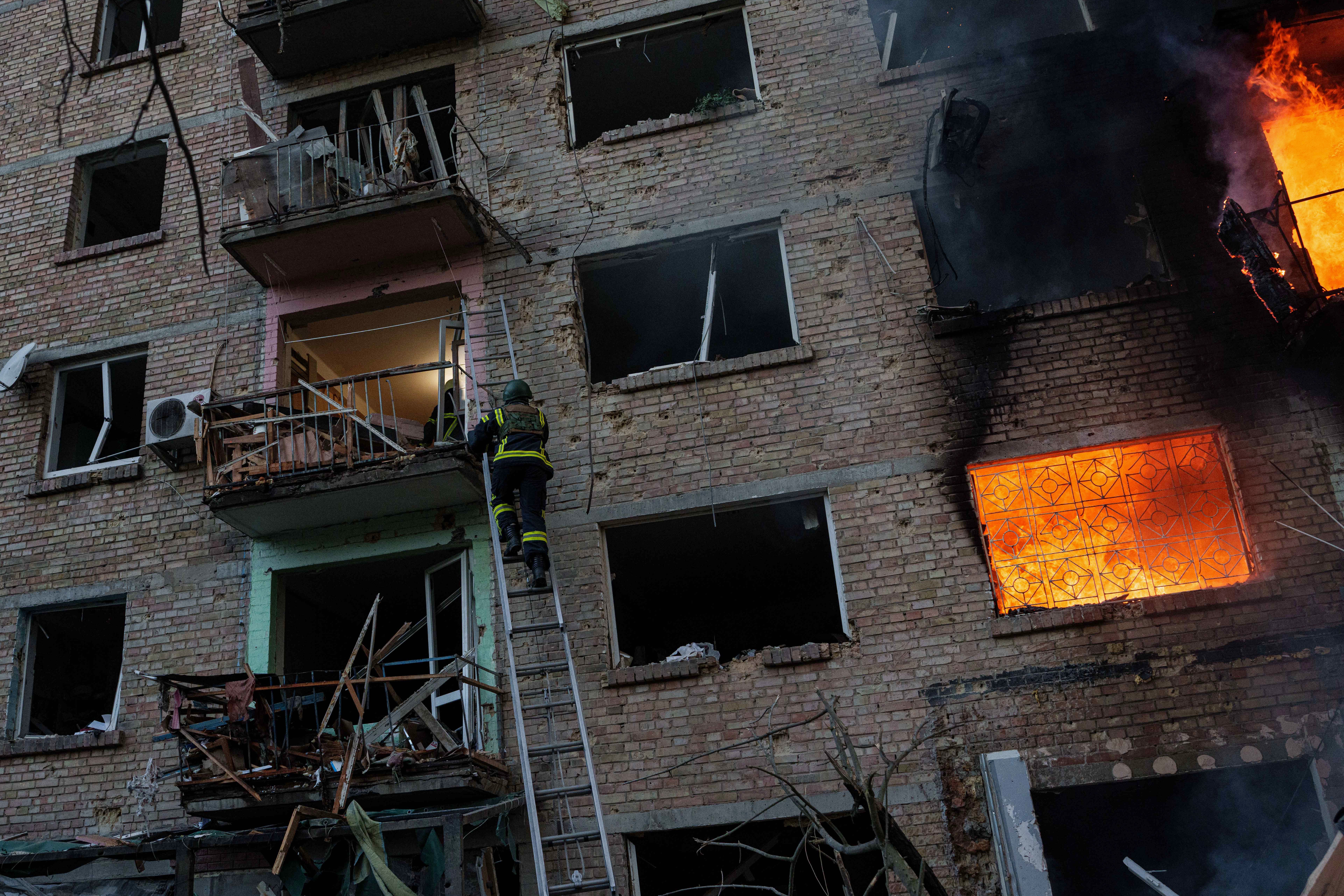
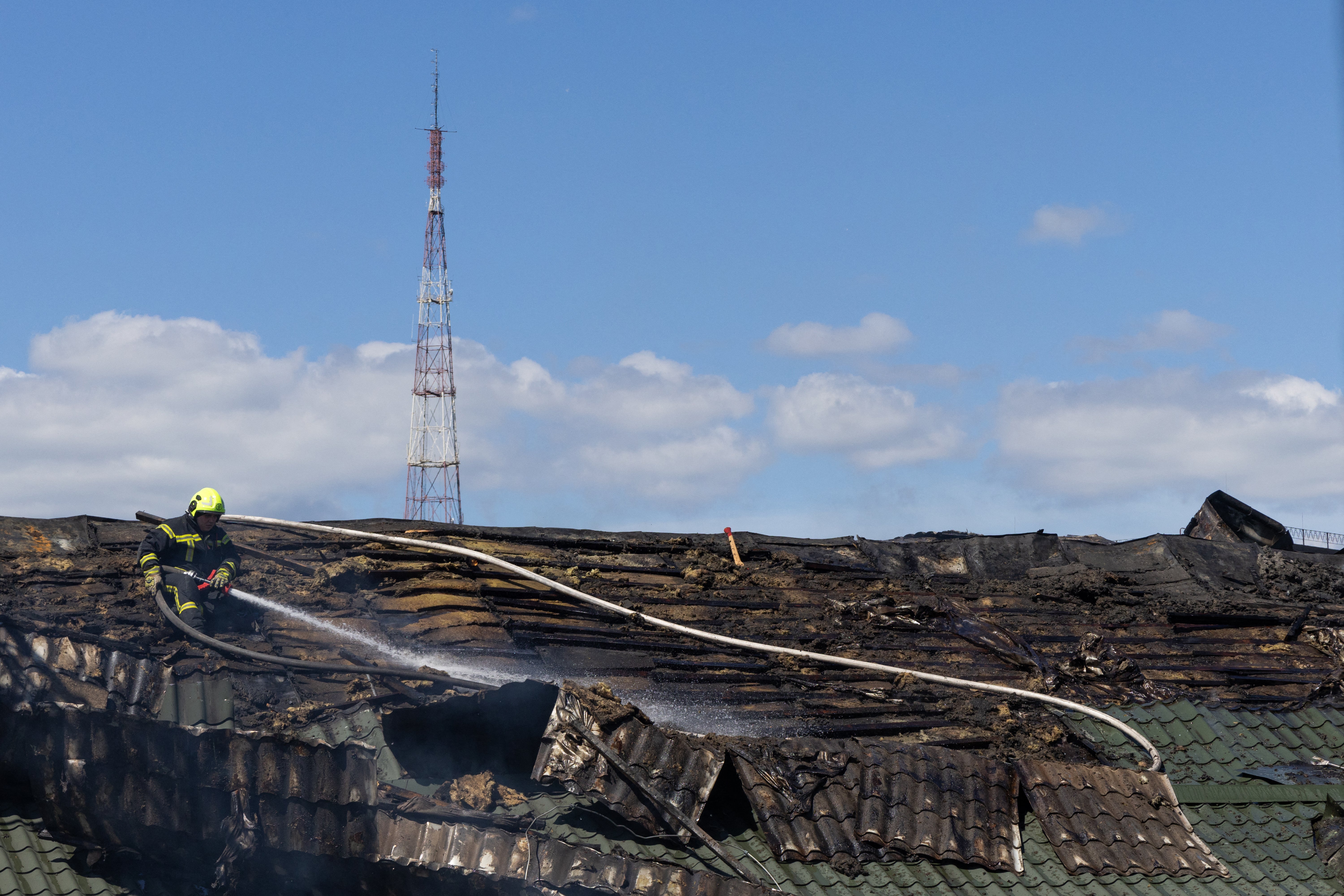
In photos: Rescue and restoration teams work after deadly Kyiv attack
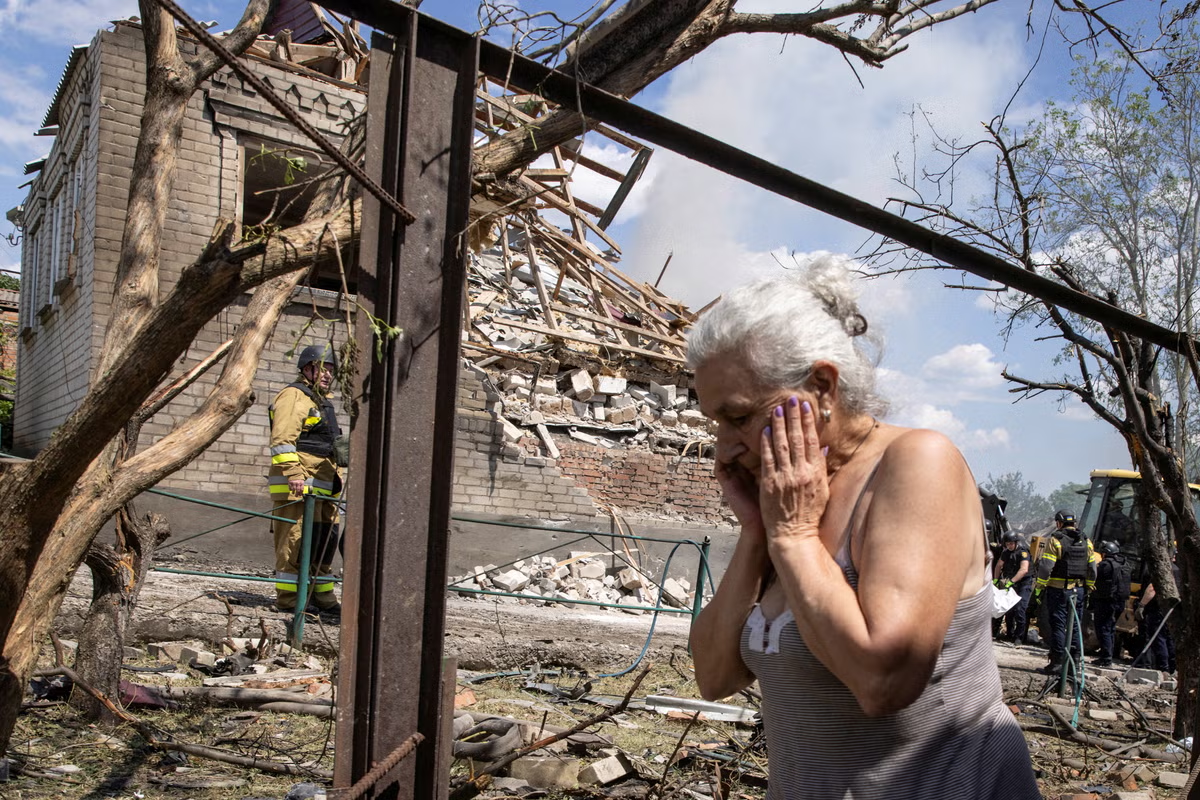
The Kyiv region was pounded with hundreds of drones and missiles over the weekend in a mass bombardment of Ukraine’s capital and surrounding area.
The fatal attack came after Vladimir Putin vowed to retaliate for the strikes on a student dormitory on Friday.
Russia struck the region with a powerful Oreshnik hypersonic intermediate-range ballistic missile, which Putin has claimed is immune to any missile defence system.
Russia launched 600 strike drones and 90 air, sea and ground-launched missiles, with Ukrainian air defences destroying and jamming 549 drones and 55 missiles.
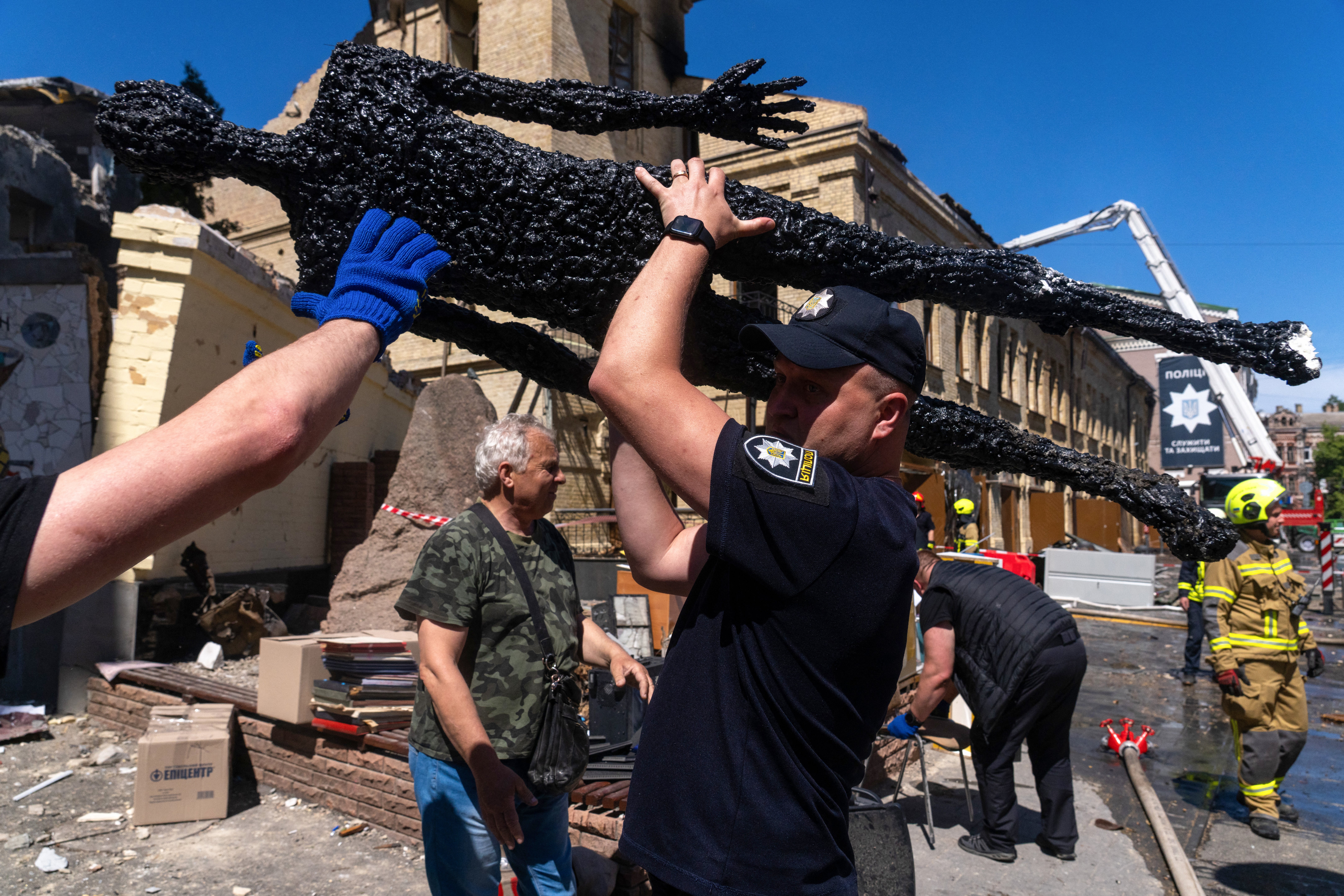
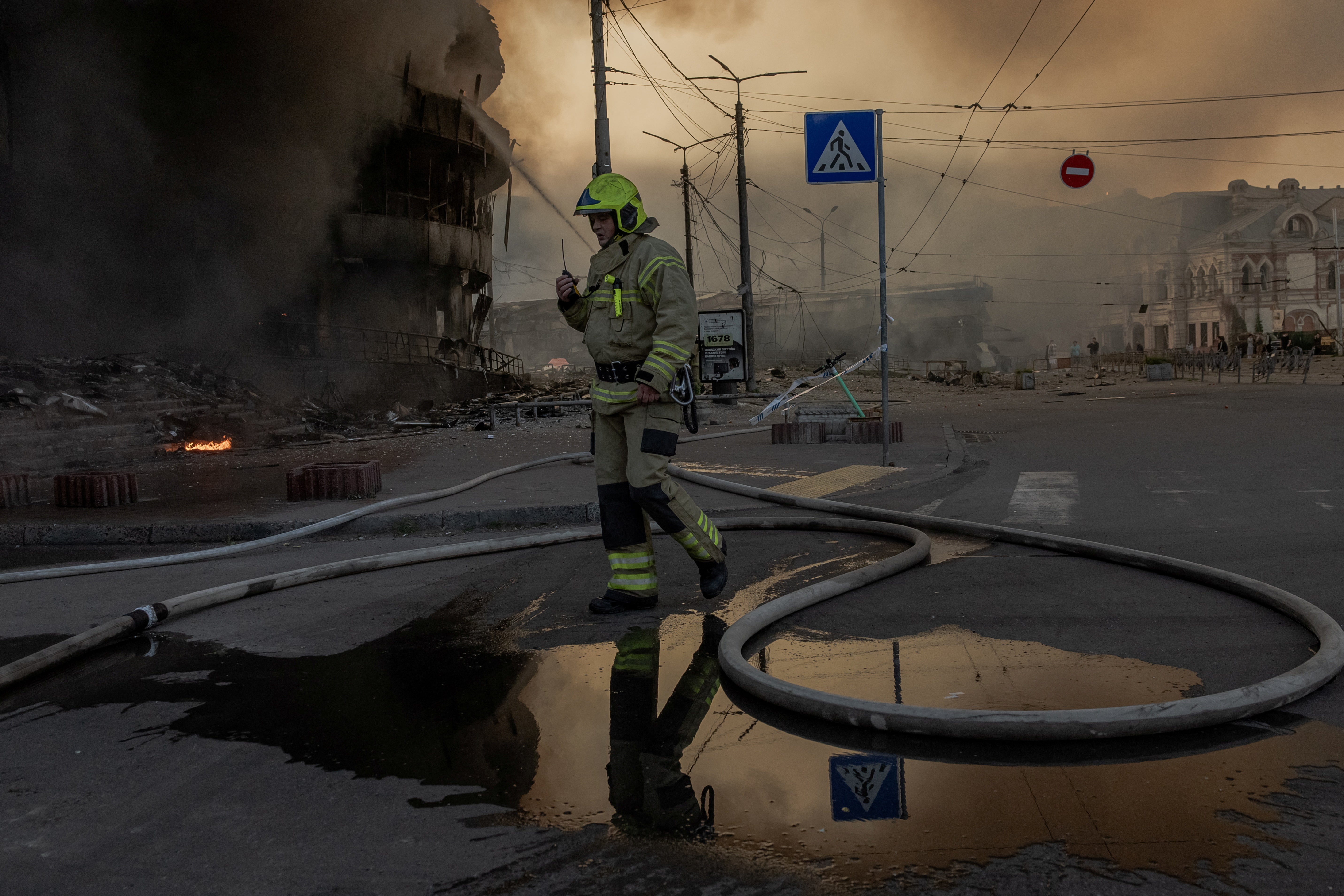
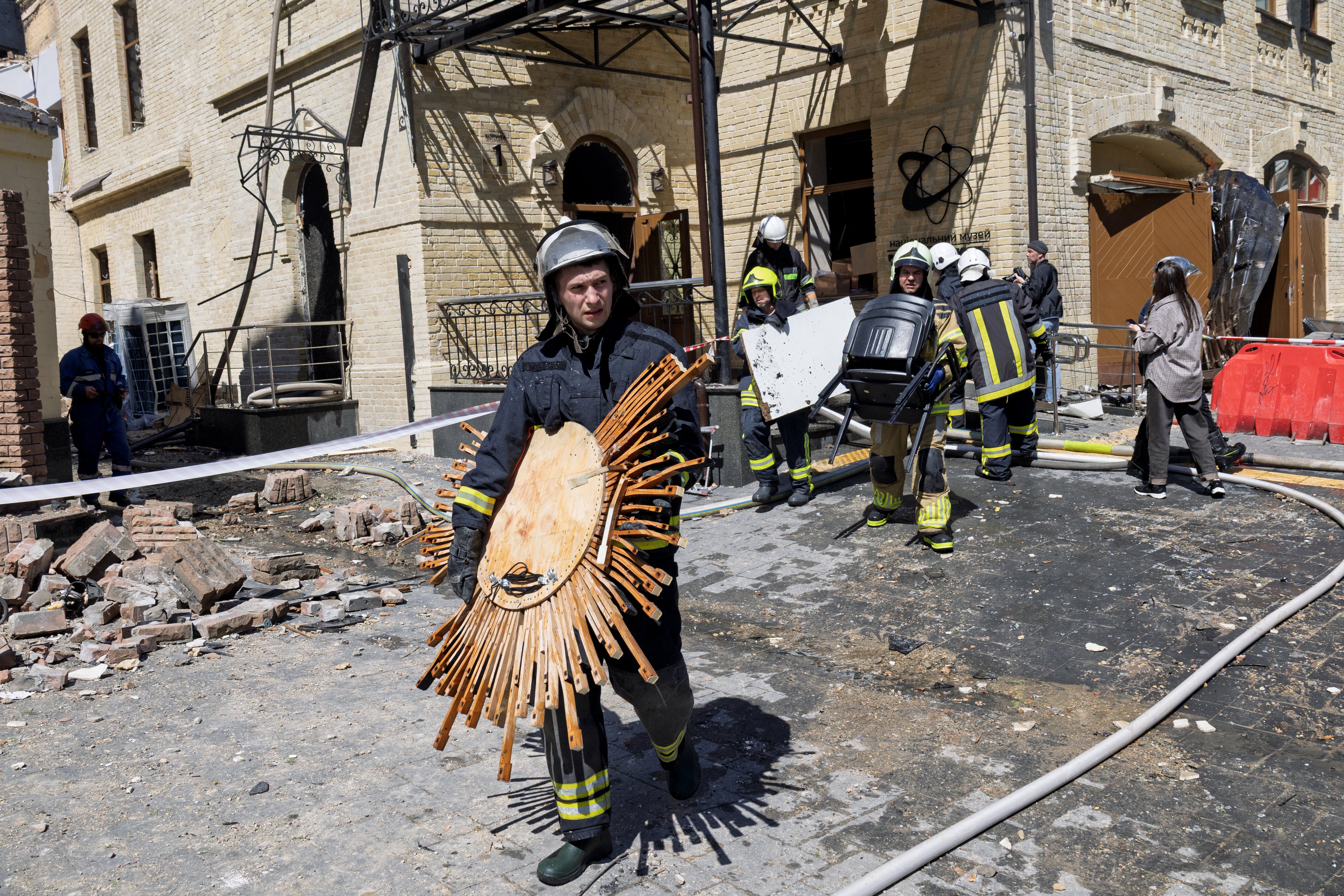
Shweta Sharma27 May 2026 09:30
Diplomats refuse to leave Kyiv after Russia’s threat
There were no announcements of diplomatic departures from Kyiv as of Wednesday afternoon after Russia threatened to carry out “systemic strikes” on the Ukrainian capital.
The European Union, French and Polish delegations publicly said that they would not leave.
The level of security threats posed by Russia to Kyiv and other Ukrainian cities “remains the same as in previous years and months,” Ukraine’s foreign ministry said in a statement late last night.
Russia had urged foreign citizens, including members of diplomatic missions, to leave the Ukrainian capital as quickly as possible and told residents to steer clear of military and government facilities.
It said that “systemic strikes” on Kyiv were being prepared.
Russia has continuously launched missile and drone attacks on the capital for more than four years, it pointed out, adding that Ukraine was prepared to assist diplomatic missions seeking additional security measures.
Shweta Sharma27 May 2026 09:00
Russia can ‘spoof’ GPS signals up to 450km into Europe, says Lithuania
Russia now possesses the capacity to falsify GPS signals up to 450km (280 miles) into Europe from its Kaliningrad exclave, a Lithuanian official revealed on Tuesday.
This expanded capability raises significant concerns about electronic interference across the continent.
Darius Kuliesius, deputy head of Lithuania’s communications regulator, told Reuters that Russia has increased its GPS “spoofing” antennae – which broadcast false signals to confuse other location systems – from three in early 2025 to 36.
These units are located in heavily militarised Kaliningrad, between Nato members Lithuania and Poland on the Baltic coast.
European nations have frequently accused Moscow of electronic interference since the 2022 Ukraine invasion, though President Vladimir Putin’s government denies this, citing “Western smear tactics.”
Mr Kuliesius stated: “The occasional interference began with the 2023 Nato summit in Vilnius. Now they have built up the infrastructure and the interference has become systemic, permanent, unending Russian provocation against European security.”
Shweta Sharma27 May 2026 08:30
Russian strikes on Zaporizhzhia injure 12, including infant
Shweta Sharma27 May 2026 08:00
UK targets Russian crypto networks in latest sanctions
Britain on Tuesday imposed sanctions on Russia-linked cryptocurrency platforms, banks and financial networks that it said were being used to bypass sanctions, freezing their assets and barring UK firms from processing payments or maintaining correspondent banking relationships with them.
The measures target what the government described as “shadow financial systems” supporting Russia’s war economy, including the Kremlin-backed A7 network, which Britain said had been used to route funds, finance procurement and exploit foreign banking systems to evade restrictions.
The package also targets crypto exchanges and entities operating Russia-focused platforms, including a Kyrgyz bank and several firms registered in countries such as Georgia and the United Arab Emirates, as well as individuals linked to the network.
Britain said it was “tracking down and shutting off” payment routes helping to sustain Moscow’s invasion of Ukraine.
In a statement, the Russian embassy in London described the sanctions as unlawful and ineffective.
“Russia has long since adapted to external pressure and will not alter its course on account of London’s whims,” the embassy said.
“The consequences of these multiplying restrictions will primarily affect the citizens, businesses and reputation of the United Kingdom itself.”
Among those sanctioned was Huobi Global SA, one of the world’s largest cryptocurrency exchanges, founded in China in 2013 and now operating under the name HTX. Britain’s sanctions list said the company had provided funds, economic resources, goods or technology to individuals and entities in Russia’s financial sector.
An HTX spokesperson said in an emailed statement: “Regulatory compliance remains our absolute top priority at HTX. We proactively monitor and strictly adhere to regulatory frameworks in all jurisdictions where we operate globally, including the UK.”
Shweta Sharma27 May 2026 07:30
UK and Poland set to sign defence treaty to tackle threats across Europe
Britain and Poland will sign a new defence and security treaty on Wednesday aimed at strengthening cooperation in response to growing threats across Europe, the British government said, following similar agreements with France and Germany.
The deal is set to be signed during a meeting in London between British prime minister Keir Starmer and his Polish counterpart Donald Tusk. According to the government, the treaty will boost border security, tackle organised crime and deepen defence cooperation with the European Union.
The two leaders are also expected to discuss what Britain described as a sharp rise in hybrid threats, including alleged Russian-backed arson attacks in east London and elsewhere in Europe, as well as cyberattacks and espionage.
Although Britain and Poland are already close allies, Starmer said “the challenges Europe now faces demand an even stronger partnership”.
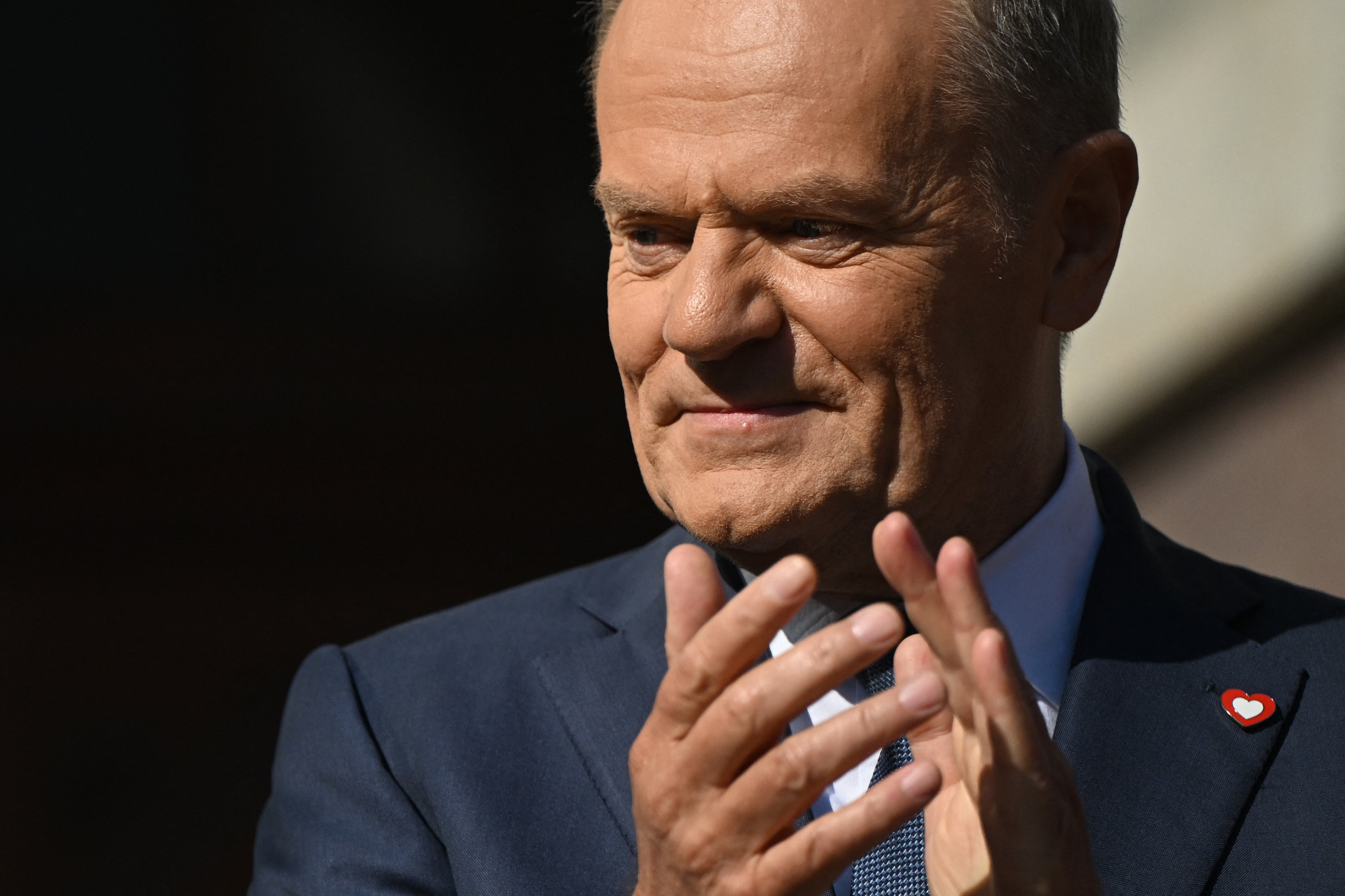
“This treaty is the biggest step forward in our defence and security relationship with Poland in a generation, allowing us to confront modern security threats that may be less visible but no less dangerous,” he said.
Europe has come under increasing pressure from US president Donald Trump’s administration to take greater responsibility for its own defence.
Speaking at a Polish government meeting on Tuesday, Tusk described the agreement as a “historic moment”.
Poland signed a defence treaty with France in 2025 and is pursuing a similar agreement with Germany, as Warsaw places greater emphasis on alliances with European partners.
Shweta Sharma27 May 2026 07:00
University sports body reinstates Belarusian athletes and eases restrictions on Russians
The International University Sports Federation (FISU) said on Tuesday it would fully reinstate Belarusian athletes and ease restrictions on Russian competitors barred from events following Russia’s 2022 invasion of Ukraine.
In a statement, FISU said the move aligned with policies adopted by the International Olympic Committee (IOC) and international federations governing individual sports, several of which have recently relaxed restrictions on athletes from Russia and Belarus.
“The International University Sports Federation Executive Committee has decided today to reinstate student-athletes with a Belarusian passport at all its events with immediate effect, in line with the IOC’s 7 May 2026 recommendations,” the organisation said.
FISU described the status of Russian competitors as “more complex”, noting that the IOC has not fully lifted restrictions on senior Russian athletes, and announced what it called a “uniform eligibility framework”.
“Russian student-athletes may therefore, depending on the sport and the applicable international federation position, be eligible to participate at FISU events under full national conditions,” it said.
Russian sports minister and Olympic committee chief Mikhail Degtyarev welcomed the decision, writing on Telegram: “FISU is continuing consistently to ease conditions for students from Russia. We welcome this.”
In recent weeks, international federations for aquatics, gymnastics, wrestling and modern pentathlon have also eased restrictions on athletes from one or both countries.
Shweta Sharma27 May 2026 06:40
About the Author