As Americans grimace at the higher prices they’ve been forced to pay at the gas pump since the start of the U.S.-Israeli war on Iran, the White House is promising all will be well — or better — once the bombing campaign wraps up.
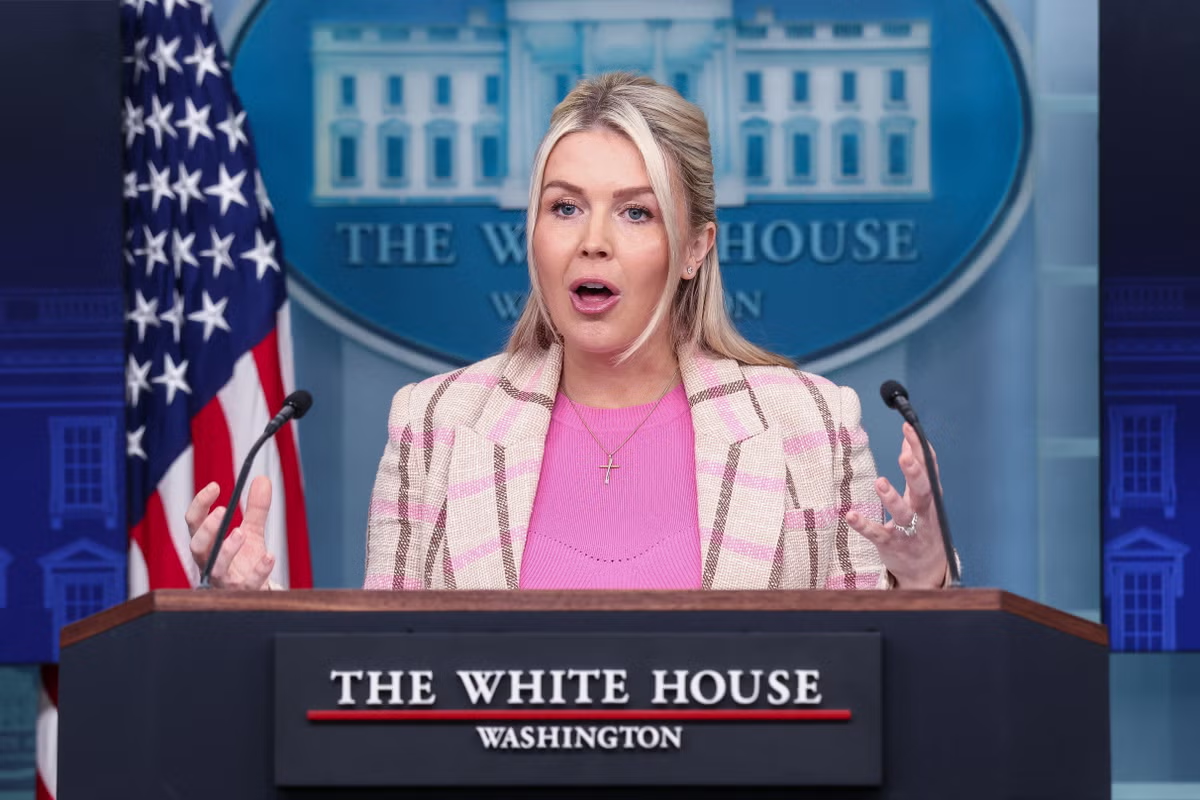
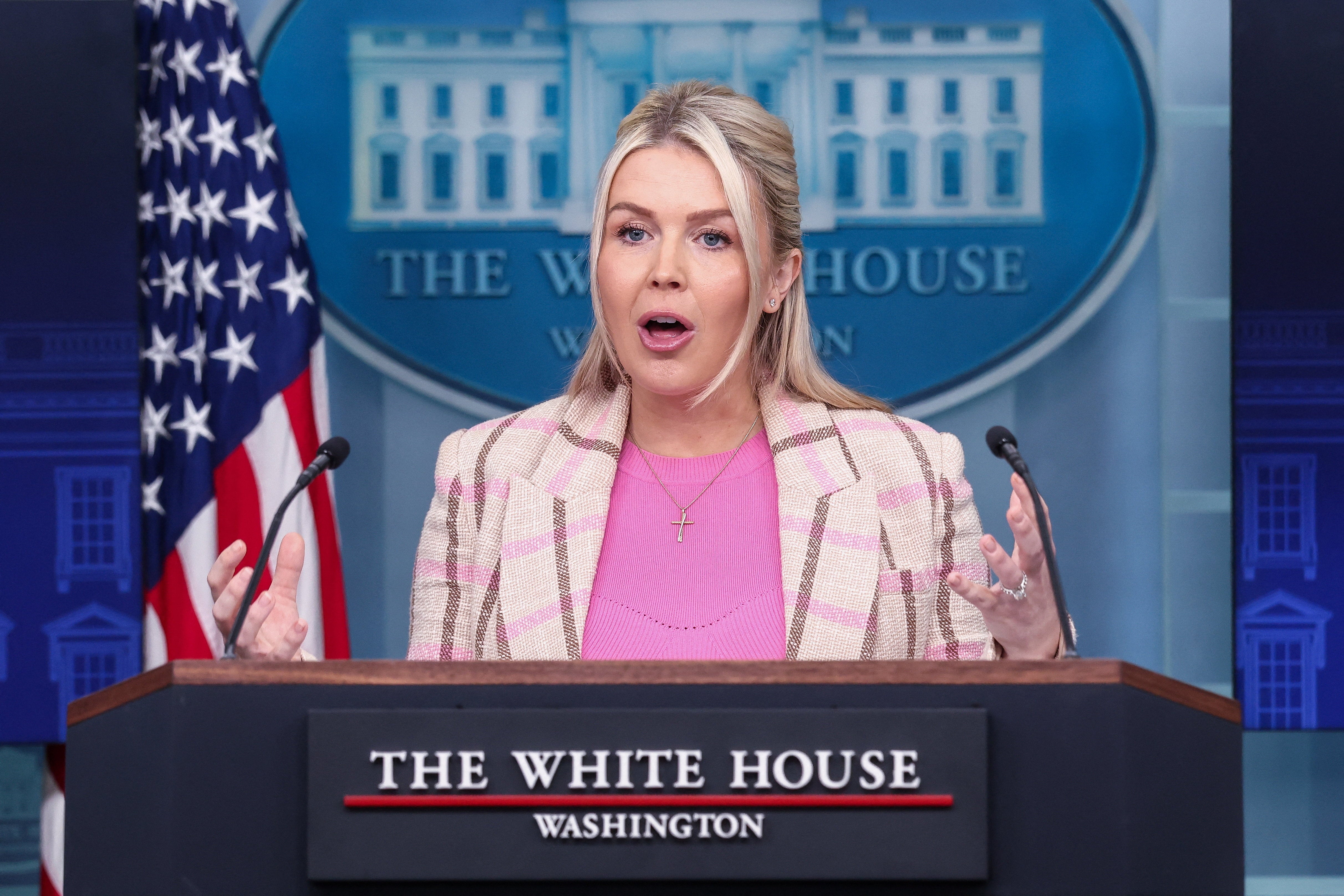
White House Press Secretary Karoline Leavitt on Tuesday claimed the spike in gas prices, which has left consumers paying in excess of $5 per gallon in some states, is only “temporary”and said prices levels would actually fall as a result of the Trump administration’s decision to strike Iran.
Speaking at an afternoon briefing with reporters, Leavitt said the ongoing war with Iran would “result in lower gas prices in the long term.”
“Once the national security objectives of Operation Epic Fury are fully achieved, Americans will see oil and gas prices drop rapidly, potentially even lower than they were prior to the start of the operation, and we will live in a world where Iran can no longer threaten the United States or our allies with a nuclear bomb,” Leavitt added.
Her latest comments come as gas prices have continued to surge amid the ongoing bombing campaign by American and Israeli warplanes, which has led Iran to threaten shipping in the Strait of Hormuz — the narrow waterway through which roughly a fifth of the world’s oil must pass to reach refineries.
On Monday, prices climbed to an average of $3.48 per gallon, according to the American Automobile Association, a 17 percent increase.
A day later, that figure was up to $3.54, representing a 19 percent increase.
There are currently big regional variations in how much drivers are being asked to pay at the pumps; however, with California motorists paying as much as $5.20 per gallon, compared to their Kansas counterparts paying $2.92,
Gasoline costs are closely tied to oil prices and the latest explosion of violence in the Middle East has badly disrupted the flow of crude oil from the Persian Gulf, sending oil soaring beyond the $100 per barrel mark for a time on Monday, the first time it has reached that level since the outbreak of war in Ukraine four years ago.
Iranian threats against shipping have led to oil-laden tankers idling in port rather than risk being attacked. As a result, shipments are going undelivered and the world faces being cut off from a significant portion of the global petroleum supply.
As a result, major Middle East oil producers, including Iraq, the U.A.E. and Kuwait, have made precautionary cuts to their domestic oil production in anticipation of forthcoming storage issues if their exports remain grounded.
The impasse could soon worsen due to Iranian efforts to mine the strait, a move which could effectively close it to all manner of shipping until any mines that are laid can be cleared.
The Trump administration has attempted to assuage shipping companies by offering to insure tankers attempting to cross the strait, and President Donald Trump has taken to social media in recent days with threats to retaliate against Iran “TWENTY TIMES HARDER than they have been hit thus far” if there are any attempts to block oil tankers from transiting the narrow waterway.
Leavitt reiterated the president’s threat on Tuesday, telling reporters the president would “not allow the rogue Iranian terrorists to stop the freedom of navigation and the free flow of energy” through the strait and noted that he’d been “unequivocally clear” in his prior statements on the matter.
She also repeated the president’s offer of “political risk insurance to tankers operating in the Gulf” and boasted that Trump and his team have long planned for potential oil market disruptions, including by drawing up plans for U.S. Navy vessels to escort tankers if need be.
“The President and his energy team are closely watching the markets, speaking with industry leaders, and the US military is drawing up additional options to continue keeping the Strait of Hormuz open,” Leavitt said.
She added that she would not elaborate on what those options might be, but she further stressed that Trump is “not afraid to use them.”
Joe Sommerlad contributed additional reporting from London
About the Author