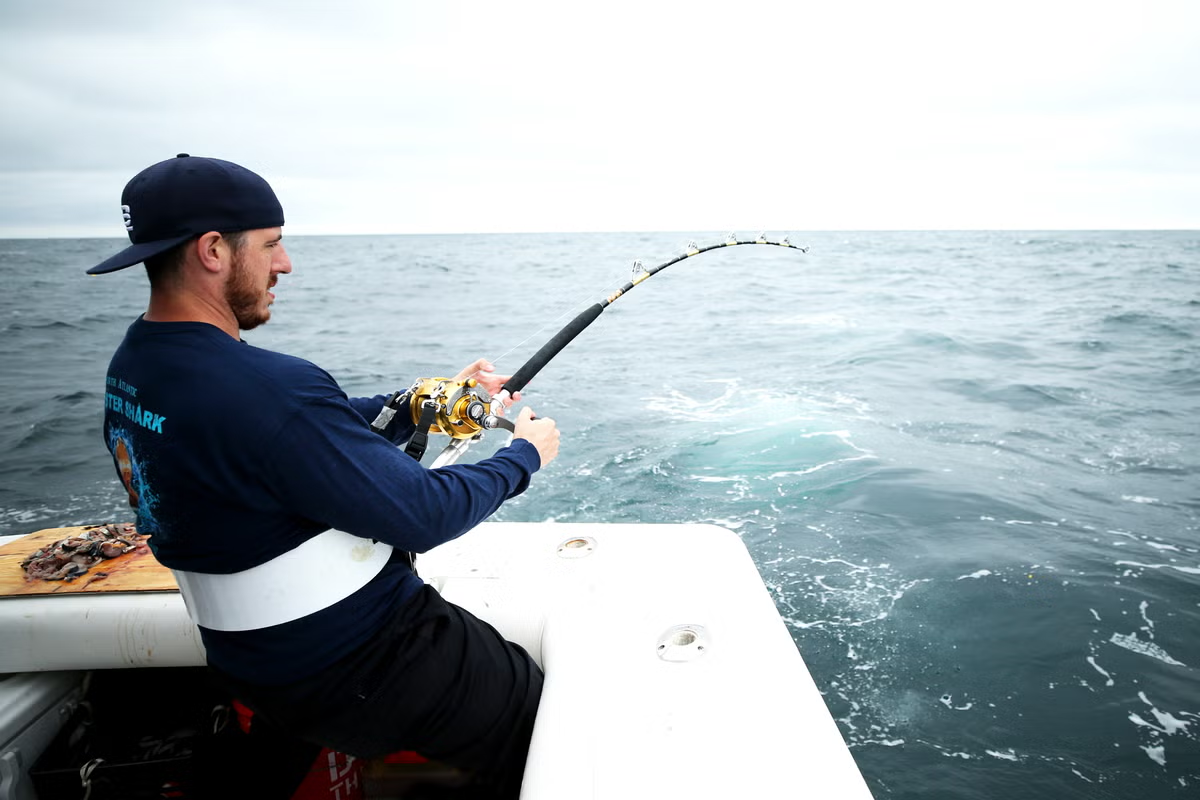
Atlantic fishermen could be allowed to catch even more sharks, if the Trump administration’s newly proposed updates to fishing regulations are approved.
The regulations would impact protections for the endangered blacknose shark, which has seen its population cut by more than half over the last quarter of a century. They would also raise the number of sharks recreational fishermen can catch per species and alter how big the sharks that are caught need to be.
The proposed changes are necessary to make it easier for recreational and commercial fishermen in the Atlantic Ocean by reducing the shark population, the administration says.
But ocean and conservation groups assert that the updates are not based on what the science shows and could hurt species in the process of recovering after assessments showed a third of all sharks and rays were at risk of extinction.
“We are concerned that the proposal creates opportunities for fishermen to kill significantly more sharks without providing any added protection to the most vulnerable species,” said Sonja Fordham, president of Shark Advocates International.

“This is just a bad idea,” Sarah Uhlemann, international program director at the Center for Biological Diversity, said in a statement shared with The Independent.
She noted that the outlook for sharks around the world is “increasingly grim” and that the long-lived creatures “deserve more protection, not expanded opportunities for fishing them out of our seas.”
“This is another example of the weakening regulations on behalf of commercial fishing interests in the absence of science,” David McGuire, Director of the non-profit Shark Stewards, also told The Independent.
When asked for comment on the matter, NOAA Fisheries directed The Independent to information that had already been made public about the rule and comment period. Fishermen claimed that there is an overabundance of Atlantic sharks that are impeding their ability to fish. Although, they did not cite any data for their position or acknowledge factors scientists say is changing where Atlantic sharks swim and feed, such as climate change.
McGuire noted that most of the species included in the proposal do not have formal assessments of their populations, although there is evidence that many populations are in decline.

Blacknose sharks remain subject to overfishing along the East Coast, according to Shark Stewards.
“So, catching less than the quota is good, and it is not clear why there would be efforts to increase the portion of the quota captured without a new stock assessment,” the Save Our Seas Foundation said.
Hammerhead sharks are also endangered. Current limits for recreational fishing allow one per trip, if it is at least 78 inches long. The new regulations would allow “up to three, or no limit,” but would extend the minimum size for hammerheads to up to 115 inches.
Larger size catches ensures that the sharks that are fished are older.
Still, the revised minimum size limits are “still well below the age at maturity for most species,” the New York Aquarium wrote in a public comment.
The minimum size for the blue shark, common thresher and porbeagle are listed at 54 inches, while the female size at maturity is typically 75 inches, 85 inches and 86 inches, respectively, it noted.
“Proposals to amend recreational minimum sizes could have merit if the final limits are well matched to the sizes associated with female maturity. This is not the case, however, for the size proposed for the common thresher, porbeagle, and blue shark grouping,” Fordham explained.

Shark populations around the world have dwindled as they are caught by trawlers and due to rising ocean temperatures and marine heat waves.
It’s also harder to determine shark populations than species on land just because of where they live.
“Many of the shark species affected by this proposal are already vulnerable, and scientists still do not have enough information about some of their populations,” Alex Aines, a marine scientist at the non-profit Oceana, said.
“Oceana is urging NOAA to keep strong protections in place and focus on better science and monitoring before reducing safeguards for these sharks,” she added.
Public comments are being accepted on the matter for the next 10 days and the final rule is expected later this year.
About the Author