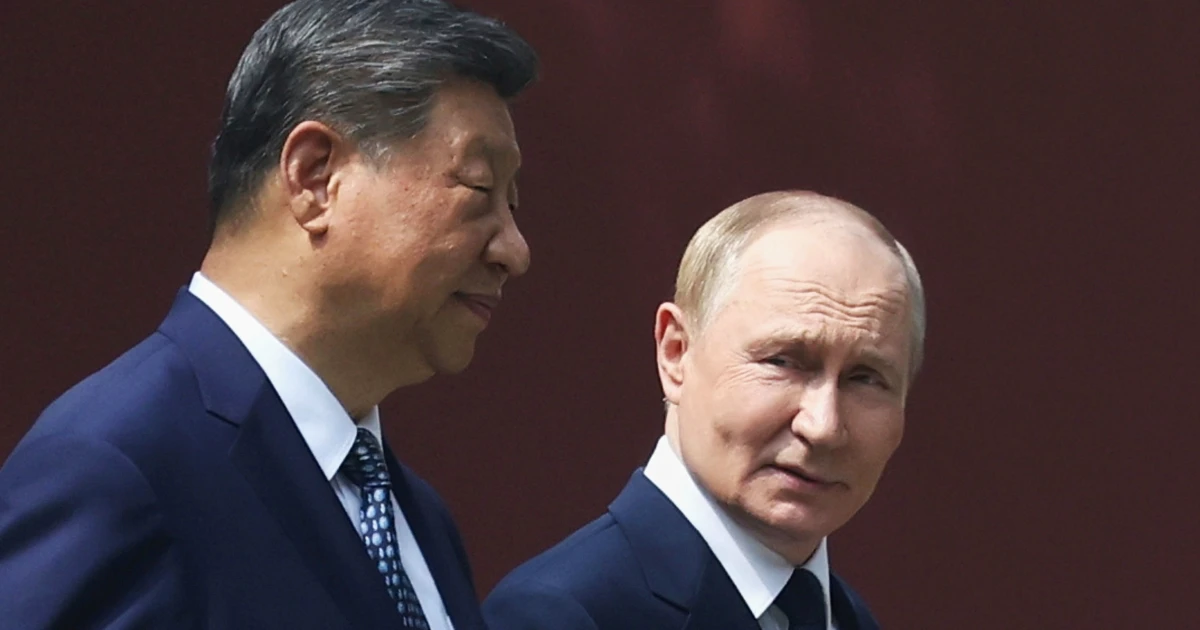
HONG KONG — Days after hosting President Donald Trump, Chinese leader Xi Jinping is welcoming another big guest, with Russian President Vladimir Putin arriving Tuesday as Beijing seeks to project itself as a stabilizing force on the world stage.
Subscribe to read this story ad-free
Get unlimited access to ad-free articles and exclusive content.

If Trump’s state visit last week was about managing ties between the superpowers, Putin’s is about reassuring a long-standing partner whose leader calls Xi a “dear friend.”
For Putin — whose two-day visit this week is his 25th to China as president — it is crucial to reaffirm ties with China amid an intractable war with Ukraine he seems increasingly unable to win, which is helping fuel rare signs of public dissatisfaction.
Russia-China relations have reached a “truly unprecedented level,” Putin said Tuesday in what Chinese state media said was his first-ever video address before a foreign trip.
“We will continue to work hand in hand and spare no effort to deepen the Russia–China partnership and good-neighborly friendship,” he said.

Presidential aide Yuri Ushakov told reporters Monday that Putin’s visit was unrelated to Trump’s and that it had been arranged in February. But Kremlin spokesperson Dmitry Peskov said last week that it would be a “good chance to exchange views” on Trump’s China trip.
During the Trump visit, which showcased warm feelings but produced relatively modest deals, Xi said the U.S. and China have the most important bilateral relationship in the world and that they “should be partners, not rivals.”

FORSUBSCRIBERS
Trump wraps up China trip with few clear wins
02:18
The two countries also agreed to build a “constructive relationship of strategic stability,” a new label for U.S.-China ties that Beijing hopes will usher in a period of detente between the world’s two biggest economies.
Last week, when Xi gave Trump a personal tour of Zhongnanhai, the secluded leadership compound of China’s ruling Communist Party, the president was pleased to be among the few leaders who had ever been bestowed such rare access.
In a comment that was picked up by a hot mic, Xi said, “Very rare. For example, Putin has been here.”
Analysts say that Beijing will want to show that its relationship with Moscow is rock solid, even if relations with Washington are now in a better place.
“It’s useful for the Russians to avoid a narrative that this meeting between the Americans and the Chinese will hurt Russia’s interests,” said Joseph Torigian, a research fellow at Stanford University’s Hoover Institution.
“You don’t want to create a sense of betrayal or abandonment in the Russians,” said Torigian, author of “The Party’s Interests Come First: The Life of Xi Zhongxun, Father of Xi Jinping.”

Putin’s official visit will begin with Xi greeting him Wednesday at a welcoming ceremony, followed by talks at the Great Hall of the People in an echo of Trump’s experience last week. The two leaders will meet again in the evening for a gala reception in honor of the 25th anniversary of the Sino-Russian Treaty of Friendship.
Chinese and Russian officials say the two leaders will discuss economic and other cooperation, as well as “key international and regional issues.”
The visit comes at a critical juncture for the Kremlin, with Ukrainian drones striking the heart of Moscow over the weekend and peace talks stalled.
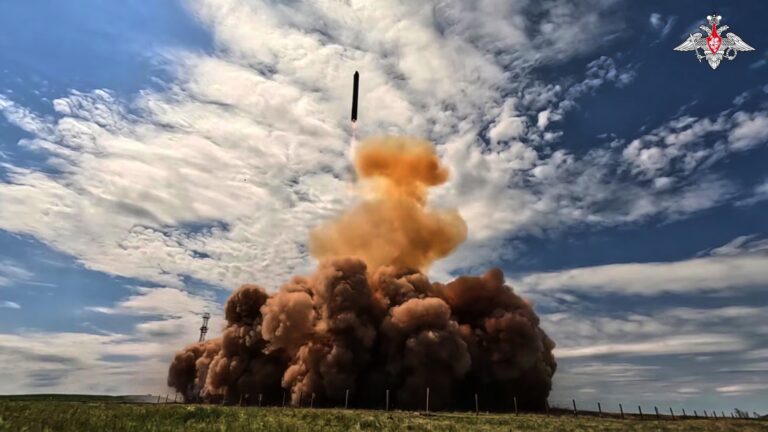
Putin’s military parade this month was stripped of its usual ballistic missiles and tank columns, laying bare just how much of Russia’s hardware remains tied up in Ukraine.
“Putin is very nervous, very paranoid, very anxious right now,” said Michael Bociurkiw, a nonresident senior fellow at the Atlantic Council’s Eurasia Center. “He is of the mindset that if he loses the war, he’s finished.”

The Russian leader is also facing a rare sense of pressure at home, with doubts over the war, its economic impact and a raft of unpopular measures including mobile internet shutdowns fueling criticism from some prominent Russian influencers and media.
State pollster VTsIOM said last month that Putin’s approval rating was at 65.6%, its lowest level since the full-scale invasion of Ukraine in February 2022.
The disquiet reflects fractures inside the regime, according to a U.S. and a European official briefed on the matter and regional analysts.
The war has reinforced Russia’s relationship with China, which has strived to portray itself as neutral in the conflict but backed Moscow diplomatically and economically, supplying dual-use technical components despite protests by the U.S. and its allies.
Putin may “want to know Trump’s latest thinking on Ukraine and potential peace negotiations,” said Natasha Kuhrt, a senior lecturer at the Department of War Studies at King’s College London.
China has also become Russia’s top trading partner and the biggest buyer of its oil and gas, a strategic bet now somewhat insulating Beijing from the impact of Iran’s effective shutdown of the crucial Strait of Hormuz trade route.
Ushakov said Monday that Russian oil supplies to China had increased 35% in the first quarter of this year.
But Russia is “much more on the back foot now,” Kuhrt said. “The likelihood of Russia prevailing in the war is far less certain. This means that Russia’s value to Beijing could diminish.”
Though Putin could be looking to Beijing to help bridge some of the gap in his military inventory, analysts say China is rather happy to see Russia weakened, though not completely decimated.
“A weakened Russia means China can take advantage economically even more than it is currently doing,” Kuhrt said, noting China’s pursuit of joint ventures in the resource-rich Arctic, which Russia has been hesitant about.
Putin said in his video address that Russia and China support each other’s “core interests,” which for China includes Taiwan, the self-ruling democracy that Beijing claims as its territory. The island is heavily reliant on the U.S., which like most countries has no formal relations with the island but is its biggest international backer.

Trump has alarmed Taiwan supporters in recent days by saying he sees a proposed $14 billion U.S. arms sale to the island as a potential bargaining chip with Xi, which some experts say would violate long-standing U.S. policy that prohibits consultations with Beijing on Taiwan arms sales. Trump administration officials have said repeatedly that U.S. policy on Taiwan is not changing.
Bociurkiw said any sense of a watered-down U.S. commitment toward Taiwan could embolden Russia in its neighborhood.
“It’s bad for Europe, because Russia feels it will be able to press further its hybrid warfare,” he said, adding that both China and Russia will be “tied at the hip on that one, in terms of degrading U.S. reputation.”
About the Author