Officials and experts in Argentina are scrambling to determine if their country is the source of a deadly hantavirus outbreak that has gripped an Atlantic cruise ship, amid reports that a number of passengers have already returned to their home countries.
Argentina, where the cruise to Antarctica departed, is consistently ranked by the World Health Organization (WHO) as having the highest incidence of the rare, rodent-borne disease in Latin America. Investigators there are working to contact trace the source of contamination.
The Argentine health ministry on Tuesday reported 101 hantavirus infections since June 2025, roughly double to the year prior.
A hantavirus found in South America, called the Andes virus, can cause a severe and often fatal lung disease called hantavirus pulmonary syndrome. The disease led to death in nearly a third of cases in the last year, Argentina’s health ministry said.
Authorities said passengers on the MV Hondius ship tested positive for the Andes virus.
Three passengers have died, one is in intensive care in a South African hospital, and three others were evacuated from the ship Wednesday. Another man who left the ship earlier in the voyage tested positive in Switzerland.
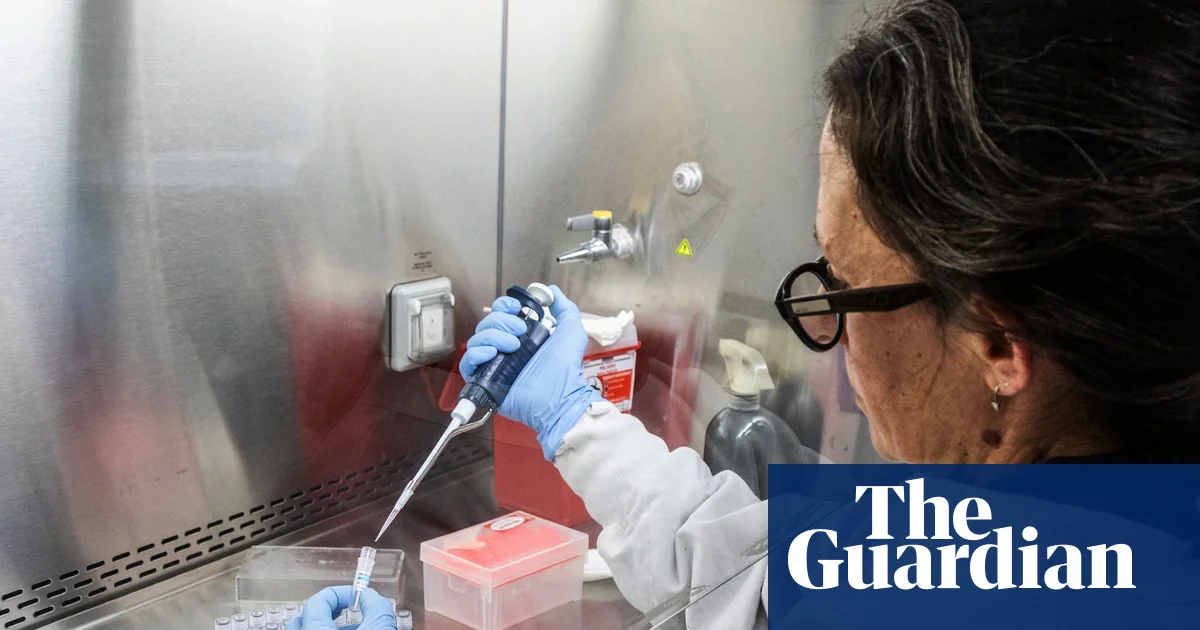
Argentina on Wednesday said it was sending genetic material from the Andes virus and testing equipment to help Spain, Senegal, South Africa, the Netherlands and the United Kingdom detect it.
People usually become infected with hantavirus through contact with infected rodents or their urine, their droppings or their saliva, and human-to-human transmission is rare. But a limited spread among close contacts has been observed in some previous outbreaks with the Andes strain.
Concern has also arisen about 23 passengers who reportedly disembarked the MV Hondius on the island of Saint Helena on 23 April, as reported by Spanish newspaper, El País.
“There are 23 people wandering around there, and until three days ago, no one had contacted them,” a passenger, who asked to remain anonymous, reportedly told the paper in a phone interview.
The cohort reportedly returned to their respective countries, including the United States. American passengers were being monitored in Georgia, California and Arizona, the New York Times reported Wednesday, although none of them had shown signs of illness.
The WHO says the first death on board the cruise ship, a 70-year-old Dutch man, happened on 11 April. His body was taken off the vessel nearly two weeks later, at Saint Helena. His 69-year-old wife travelled by plane from Saint Helena to South Africa; she collapsed at a Johannesburg airport and died at a hospital on 26 April.
The third passenger, a German woman, died on 2 May.
Argentine officials say they’re trying to pin down where infected passengers travelled in the country before boarding the Dutch-flagged cruise liner in Ushuaia, a city in southern Argentina known as the end of the world. Once they know the itineraries, they plan to trace contacts, isolate close contacts and actively monitor to prevent further spread.
Before boarding, the Dutch couple went sightseeing in Ushuaia, and travelled in Argentina, Uruguay and Chile, the Argentinian government said.
The virus can incubate for between one and eight weeks, making it hard to know whether the passengers contracted the virus before leaving Argentina for Antarctica on 1 April; during a scheduled stop to a remote South Atlantic island; or onboard.
Tedros Adhanom Ghebreyesus, the director general of the WHO, said earlier on X that the “WHO continues to work with the ship’s operators to closely monitor the health of passengers and crew, working with countries to support appropriate medical follow-up and evacuation where needed.”
“Monitoring and follow-up for passengers onboard and for those who have already disembarked has been initiated in collaboration with the ship’s operators and national health authorities,” he added. “At this stage, the overall public health risk remains low.”
The evacuation of three passengers from the ship, with close to 150 people onboard, means it can now continue on its three-day journey to the Canary Islands after Spanish authorities gave permission for the vessel to dock. But a row has erupted, with the president of the Canary Islands expressing concern over the ship docking in Tenerife.
The ship was anchored off Cape Verde while arrangements were put in place to evacuate the crew members but on Wednesday evening the ship was on its way to the Canary Islands.
Those evacuated on Wednesday include a British man, Martin Anstee, 56, who was an expedition guide onboard the ship. He was removed from the vessel along with a Dutch colleague, 41, who was the ship’s doctor, and a 65-year-old German passenger, the Telegraph reported.
The health emergency aboard the MV Hondius comes as local public health researchers in Argentina point to climate change accelerating the risk of the spread of hantavirus.
Public heath experts say that higher temperatures expand the virus’ range because, in part, as it gets warmer and ecosystems change, rodents that carry the hantavirus can thrive in more places. People typically contract the virus from exposure to rodent droppings, urine or saliva.
“Argentina has become more tropical because of climate change, and that has brought disruptions, like dengue and yellow fever, but also new tropical plants that produce seeds for mice to proliferate,” said Hugo Pizzi, a prominent Argentine infectious disease specialist. “There is no doubt that as time goes by, the hantavirus is spreading more and more.”
With Associated Press and Reuters
About the Author