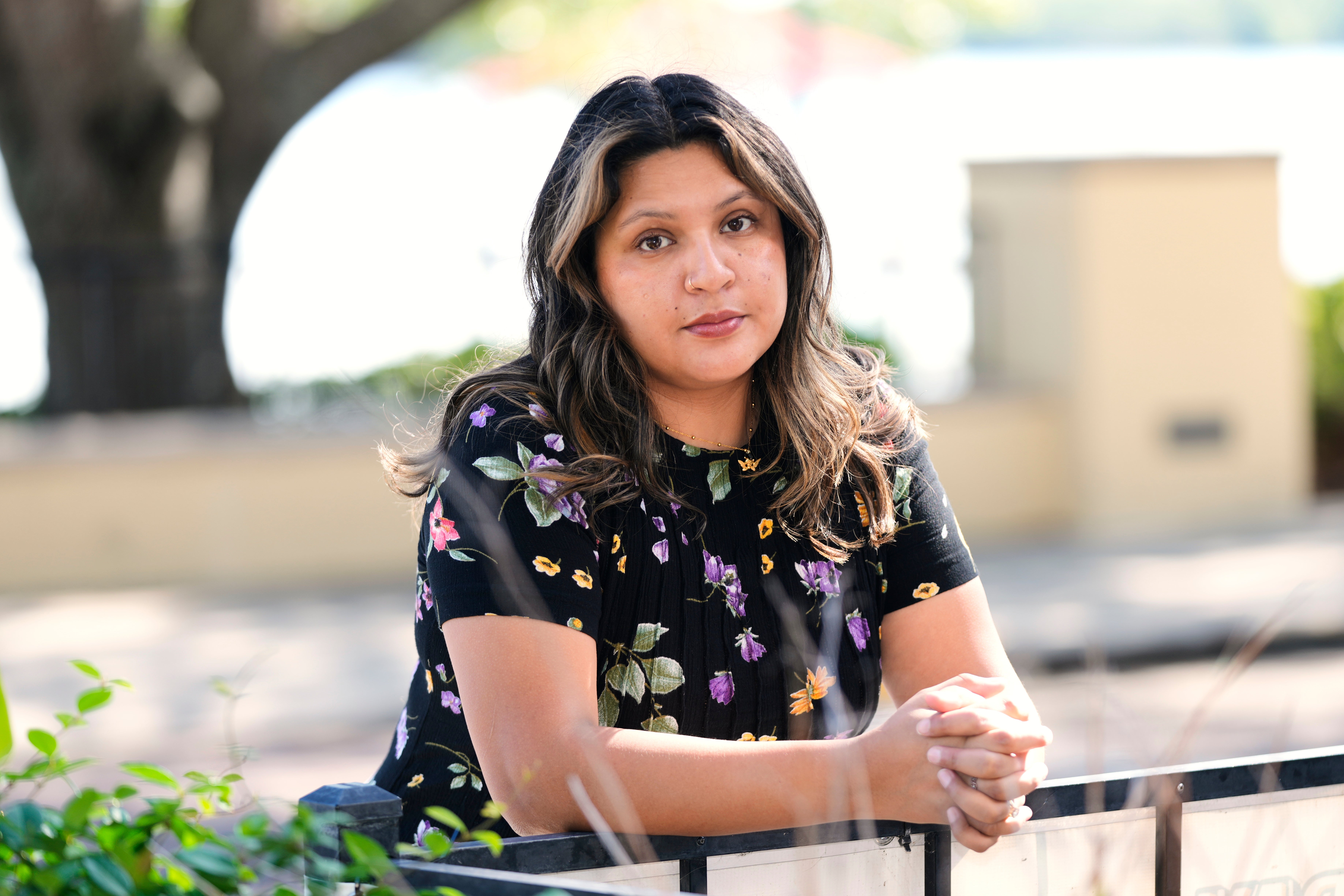
Melani Candia, a Florida special education worker who has called the U.S. home since she was six, is now facing the prospect of detention after delays in the Deferred Action for Childhood Arrivals (DACA) program caused her to miss a critical renewal deadline.
For more than a decade, Candia had consistently secured her status every two years, allowing her to live with her husband and two cats and continue her work. This year, however, the program’s holdups have cost her job and intensified her fears.
The Obama-era initiative, which shields hundreds of thousands of individuals brought to the U.S. as children from deportation and grants them temporary work authorization, is experiencing renewal wait times not seen since 2016, when technical issues were widespread.
Candia described her long-standing fear as an immigrant as her “new baseline.” She added, “But now, having a new level of vulnerability, it was a very quick increase in the fear.”
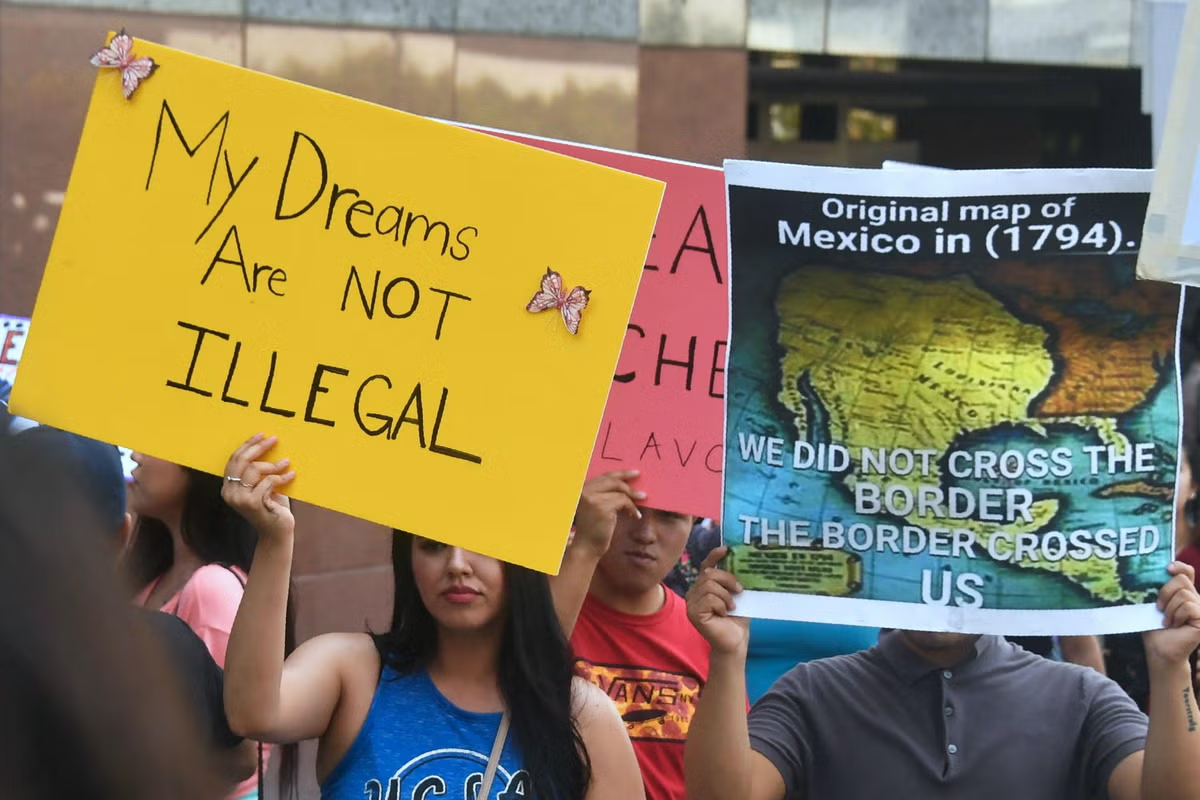
Some of the program’s more than 500,000 beneficiaries, often referred to as “Dreamers,” have waited months for an answer only to see their deadline pass without a decision. Now they’re stuck in a type of limbo in which their work authorization disappears, oftentimes along with their driver’s license, and their ability to stay in the U.S. is at risk.
“It’s not just anecdotal; it’s happening at a larger scale than we’ve ever seen before,” said Greisa Martinez Rosas, executive director of United We Dream, an immigrant youth-led network.
No numbers were available on how many people have recently missed their renewal deadline despite applying 120 to 150 days before their DACA lapses, which is what U.S. Citizenship and Immigration Services recommends.
“Under the leadership of President Trump, USCIS is safeguarding the American people by more thoroughly screening and vetting all aliens, which can lengthen processing times,” Zach Kahler, an agency spokesperson, said in a statement.
Wait times are nearly 5 times longer
DACA grants those who qualify two-year, renewable permits to live and work in the U.S. It does not confer legal status but is meant to offer protection from deportation.
From October 2025 to the end of February 2026, the median wait time for renewals was about 70 days, compared to about 15 days in fiscal year 2025, according to USCIS. This is the longest median wait time since 2016, when it was about 79 days, according to the agency’s data, which did not include 2020 because of the pandemic.
The Department of Homeland Security attributed the 2016 delays to technical issues that emerged as it transitioned to fully processing DACA renewals in its electronic immigration system.
At the end of April 2026, USCIS was reporting that the majority of renewal requests were being completed within about 122 days. That marked a two-week increase from the processing times listed earlier that month.
Federal lawmakers and immigrant groups say some applicants recently have had to wait 6 months — about 183 days — or longer.
“The delays that people are concerned about used to be sort of a matter of weeks at a time,” U.S. Sen. Alex Padilla, D-Calif., said in an interview. “Now it’s from a few months to many, many months.”
He is one of dozens of lawmakers behind letters sent to federal agencies that question the inflated wait times and whether people who have missed their renewal deadline are being targeted for arrest or deportation.
More than five months after Elsa Sanchez submitted her DACA renewal request, she is still waiting for an answer. When the deadline passed at the beginning of April, she was put on leave at her job at a healthcare IT company and now, as a single mother of a college freshman, has no income.
It’s made her worried about everything from traveling to spending money on pricier household products like shampoos and detergents.
“I’m like, ‘I don’t know, maybe I can cut down on that. Maybe I don’t need this,'” she said. “Because I’m saving every penny.”
Sanchez said something similar happened about a decade ago, but this time she’s scared of the possible repercussions amid President Donald Trump’s mass deportations agenda.
Since DACA’s introduction in 2012, it’s faced myriad legal battles, including two that made it to the Supreme Court. And now, while the government is still approving renewals, a 2025 federal court decision means it isn’t processing first-time applications and has left the door open for another possible trip to the Supreme Court.
Hundreds of DACA recipients arrested
In the first 11 months of 2025, more than 250 DACA recipients were arrested and 86 deported, then-Homeland Security Secretary Kristi Noem said earlier this year. She said the majority of those arrested had “criminal histories,” without indicating the nature of the crimes or if they were arrests, charges or convictions. In a separate response to a Democratic congresswoman’s inquiry, DHS reported conflicting numbers saying that 270 were arrested and 174 DACA applicants were removed in the first nine months of 2025.
Their eligibility is dependent in part on not having a felony conviction, a significant misdemeanor or three misdemeanors. Previously, if their status was in jeopardy, they would get a warning and still have the chance to fight it before immigration officers detained them and began efforts to deport them.
Kahler, from USCIS, said that DACA recipients are not automatically protected from deportation.
“Any illegal alien who is a DACA recipient may be subject to arrest and deportation for a number of reasons —including if they committed a crime,” he said.
U.S. Immigration and Customs Enforcement did not respond to questions about whether DACA beneficiaries were being targeted after missing their renewal deadlines.
But federal lawmakers have recently noted people picked up by ICE after their DACA lapsed.
Their protections may have been further eroded with a precedent decision last week in which the Board of Immigration Appeals determined that DACA status alone is not enough to stop deportation.
People from certain countries may be most at risk
Experts have suggested the longer wait times could be related to the biometric appointments, which were paused during the pandemic, being restarted. Some may also not be getting approved by their deadline because they’re not sending it in by the recommended time.
Maria Fernanda Madrigal is an immigration attorney and DACA recipient who submitted her renewal application about a month and a half before the deadline because she said that’s all the processing time that’s been needed in the past. She said she was also waiting for her job to hold a DACA workshop so that she could get the more than $550 fee for renewal waved.
Earlier this month, her DACA lapsed and the mother of three was let go from her job.
“My first concern was my cases, to be honest, because I knew I was going to have to hand off everything, and my team is already overworked,” said Madrigal.
Immigration attorneys have also said that USCIS has paused processing renewals for people from dozens of countries the agency described in recent policy memorandums as “high-risk” following presidential proclamations. The National Immigration Law Center estimated that as many as 3,000 to 4,000 people could be impacted.
“This process that has no timeline is leading to people from certain countries experiencing a pause. And we don’t know how long that pause will be in place,” said Ignacia Rodriguez Kmec, attorney at the National Immigration Law Center.
Every day, Candia checks on her renewal. She said she’s most afraid of being locked up in bad conditions in an ICE detention facility, but also thinks about what it would be like returning to Bolivia after more than 25 years.
“If God forbid that happened, it would break my heart because I’ve been in this country since I was 6,” she said. “My entire life is here.”
About the Author