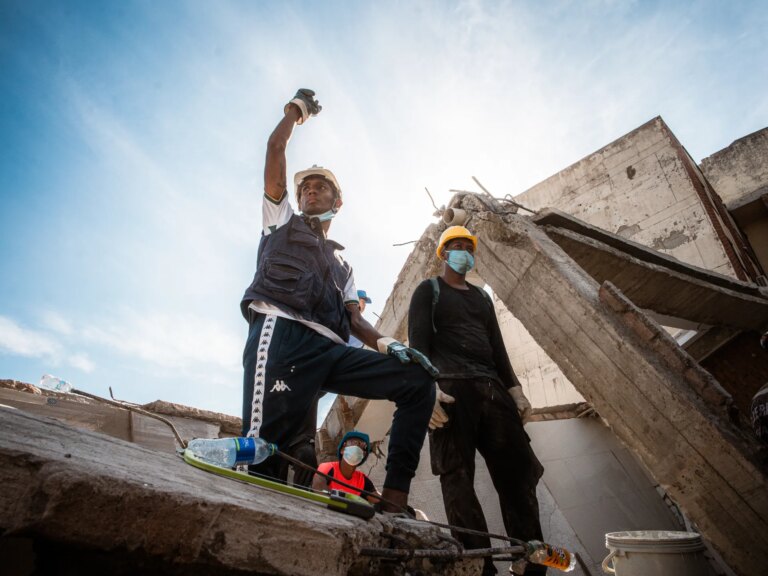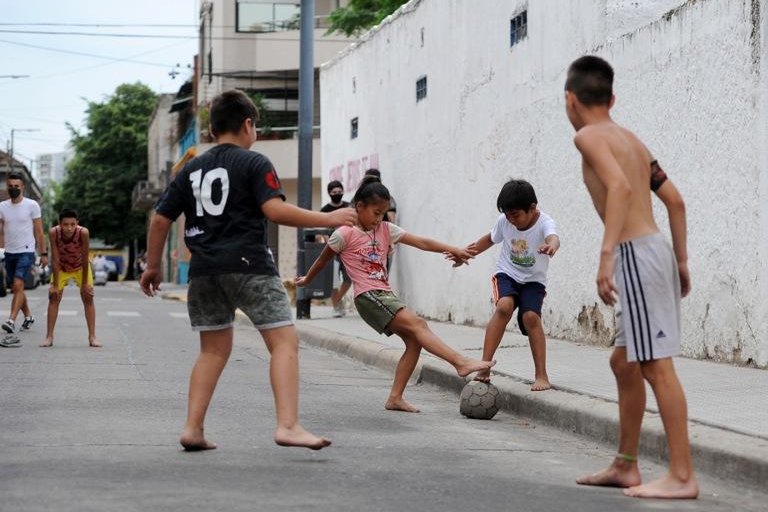
Researchers say child poverty remains a long-term structural problem in Argentina. File Photo by nrique Garcia Medina/EPA
BUENOS AIRES, May 1 (UPI) — More than half of children and teenagers in Argentina live in poverty, with the crisis hitting hardest in the greater Buenos Aires region, according to a new report that highlights the country’s persistent social and economic struggles.
The report by the Social Debt Observatory at Pontifical Catholic University of Argentina found that 53.6% of children and adolescents in the country lack sufficient household income to meet basic needs.
The situation is even more severe in the Buenos Aires metropolitan area, home to more than 23% of the country’s population, where 6 out of 10 children live in poverty.
Researchers said the figures show child poverty remains a long-term structural problem in Argentina.
The report found child poverty affected 45.2% of children and adolescents in 2010. Conditions improved in 2011 and 2012, when rates fell to 35.7% and 38.4%, respectively, but poverty began to rise steadily afterward.
The indicator reached 64% in 2020 and 65% in 2021 during the COVID-19 pandemic. It stood at 62.9% in 2023 before falling to 59.7% in 2024 and 53.6% in 2025. Despite the recent decline, the level remains critically high.
Extreme poverty, defined as households without enough income to cover basic food needs, followed a similar trend with sharper fluctuations.
Sociologist Ianina Tuñón, a researcher at the Childhood Social Debt Observatory at Pontifical Catholic University of Argentina, told UPI that one of the main factors is the lack of momentum in the formal labor market.
That has been compounded by changes in household spending. According to Tuñón, families now allocate a larger share of their income to services such as electricity, gas, water, education and healthcare.
“That restructuring often means families cut back on food,” she said.
Compared with other countries in the region, Argentina’s situation is more severe. While child poverty stands at about 31% in Chile and around 29% in Uruguay, it is close to 54% in Argentina.
“The country is emerging from a very acute crisis and is undergoing deep spending cuts aimed at achieving fiscal balance,” the expert said.
She also warned that the economy has yet to generate sufficient income for families, “making it difficult to sustain continued improvements in poverty levels.”
Gala Díaz Langou, executive director of the Center for the Implementation of Public Policies for Equity and Growth, told UPI that having children increases the likelihood that households will fall into poverty for two main reasons.
On one hand, household income must be divided among more people. On the other, the lack of accessible and widely available childcare services across the country also plays a role.
“Many families are forced to choose between working or caregiving, which means giving up income, care or both,” Díaz Langou said.
She added that the situation worsens even in periods of stronger employment, which she said is not currently the case in Argentina because many businesses continue to struggle economically.
“Single-parent households led by women are the poorest,” she said.
The report also pointed to other contributing factors, including higher birth rates in low-income households and limited access to education and job skills that could help children escape poverty later in life.
“If as a society we had to decide where to guarantee the best conditions, households with children should be the priority,” Díaz Langou said.
She said the issue also carries ethical, moral and legal implications because it is tied to international commitments adopted by Argentina, including the United Nations Convention on the Rights of the Child.
“At the same time, ensuring good conditions for children is essential for future productivity,” she said.
The report also found that nearly three in 10 children lack regular access to sufficient or quality food, highlighting broader difficulties in meeting basic needs beyond household income levels.
“In a country that produces food for hundreds of millions of people, we cannot guarantee adequate nutrition for the 45 million people who live here, much less for children,” Díaz Langou said.
She warned that inadequate nutrition and poor living conditions could have lasting consequences for children growing up in a world that increasingly demands higher levels of education and technical skills.
She added that demographic changes, labor market transformations and advances in technology, including artificial intelligence, are raising those demands further.
About the Author