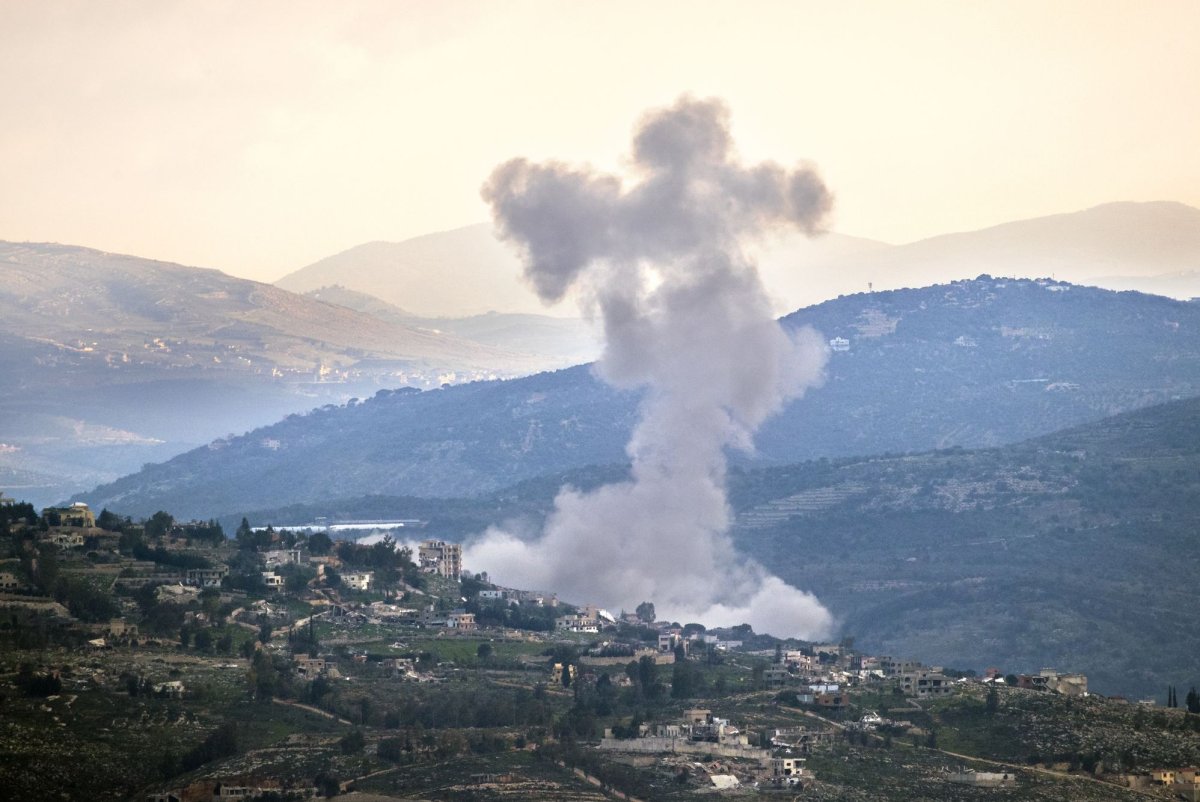
BEIRUT, Lebanon, April 30 (UPI) — Lebanon is building a case against Israel to hold it accountable for alleged violations of international humanitarian law, including direct attacks on civilians, the killing of entire families, the leveling of multi-story residential buildings, and large-scale demolitions in the southern border area, rendering it uninhabitable.
The Lebanese government, along with multiple local and international organizations, has been actively documenting Israeli violations, particularly since the Nov. 27, 2024, ceasefire that was intended to halt the Israel-Hezbollah war, which began on Oct. 8, 2023. Israel continued to carry out attacks in Lebanon despite the truce, while Hezbollah remained inactive until it resumed fighting on March 2.
Lebanese civilians who lost their loved ones in intensive Israeli military attacks are joining the efforts, resolved to speak out rather than remain silent this time.
Wael Sabbagh, 52, is among them.
He learned of the deaths of his mother, Afaf, and his brother, Hassan, through messages on a WhatsApp group reporting an Israeli strike that struck and destroyed a building in Beirut on April 8.
Sabbagh was in Mexico — where he has been working for 10 years — when he began receiving the news.
It took him some time to review the photos he began receiving on a WhatsApp group and realize that the targeted, half-destroyed building in Beirut’s residential neighborhood of Tallet al-Khayyat was where his mother and brother lived.
On that day, Israel conducted 100 airstrikes in 10 minutes, targeting several neighborhoods in the heart of Beirut, as well as southern and eastern Lebanon. At least 376 people were killed, including 31 children and 99 women, and 1,223 injured, including 154 children and 378 women.
On Thursday, the Health Ministry released a new casualty toll showing 2,586 killed and 8,020 injured since the new escalation began on March 2, adding to more than 4,000 killed and around 17,000 injured between October 2023 and early 2025.
Sabbagh, like his octogenarian mother, believed their neighborhood was safe and their home would not be a target, despite Israel occasionally striking residential buildings in Beirut, claiming that they harbor suspected members of Hezbollah and the Islamic Revolutionary Guard Corps (IRGC).
He strongly dismissed the Israeli claims that there was “someone in the building” to justify the attack, insisting that his family and the other residents have lived there for 50 years, know each other well and that none has “any political affiliations.”
“Is my mom a terrorist? It is incomprehensible,” he told UPI, recalling how they had to wait a week for a pause in Israeli airstrikes on their hometown of Nabatiyeh in southern Lebanon before they could bury her and his brother.
He said their tragic deaths, as well as those of other Lebanese and people in Gaza, changed him completely from someone “with political views” to an activist determined to expose injustice.
“My mother and brother are not collateral damage. They were assassinated and murdered in their home,” Sabbagh said. “I want justice, accountability, and recognition that Israel killed my family without justification and that the attack was disproportionate.”
Proper documentation and data collection would be essential to his efforts and any legal action against Israel, as he is exploring options to file cases related to “crimes against humanity” in European countries and elsewhere, including France, Spain, Belgium, Switzerland, and Canada.
However, such actions require a coordinated collective effort, timely and systematic recording of Israeli attacks, and preservation of evidence — such as casualty data, witness accounts, and types of weapons used — in line with international standards for any domestic or international accountability process.
The Office of the High Commissioner for Human Rights (OHCHR) has been conducting independent monitoring and documentation of alleged violations of international humanitarian law and human rights law by all parties to the conflict in Lebanon since Oct. 8, 2023.
“Our monitoring and documentation work can be instrumental in the collection of evidence that may support judicial proceedings at national and international level,” said Mazen Shaqoura, the OHCHR regional representative.
According to Shaqoura, operations by Israeli forces in Lebanon involved “direct attacks on civilians,” including medical personnel, as well as strikes that in some cases “leveled multi-story residential buildings, killing entire families.”
He said the agency also observed other documented “patterns,” including repeated attacks on healthcare personnel, attacks impacting humanitarian relief organizations, journalists and media outlets, “without any verifiable evidence that there were military objectives or that civilians targeted were taking a direct part in the hostilities.”
“Some of these attacks may amount to serious violations of international humanitarian law,” Shaqoura said in an interview with UPI, noting that the U.N. agency was also monitoring Israeli large-scale destruction of property and demolitions in border areas.
He added that Hezbollah’s firing of unguided and imprecise rockets into populated areas of Israel may also “amount to violations of international humanitarian law” given the “expected indiscriminate” effects of the use of these weapons in populated areas.
He explained that crimes against humanity require a widespread or systematic attack against a civilian population carried out pursuant to a state or organizational policy, while war crimes can only occur in the context of armed conflict.
Lebanese Deputy Prime Minister Tarek Mitri has recently confirmed that documentation of Israel’s violations of international humanitarian law is making “notable progress” as part of the government’s efforts to prepare a comprehensive legal dossier for submission to international bodies to hold Israel accountable.
However, Lebanon faces legal and practical challenges as its domestic law does not explicitly criminalize war crimes, crimes against humanity, and genocide, creating an accountability gap that limits the domestic prosecution of serious violations of international humanitarian law.
In addition to adopting legislation incorporating war crimes and related offenses into domestic law, Lebanon could also accede to the International Criminal Court (ICC), the only permanent international court mandated to prosecute individuals and issue arrest warrants for such crimes, according to Reina Wehbi, regional campaigner at Amnesty International.
Wehbi explained that the government, moreover, needs to support the establishment of independent domestic judicial investigations into the war, including providing investigators in Lebanon with the authority, protection and resources to complete their work effectively.
“It’s true that the current global political landscape makes accountability difficult. But if there is a will, there is a way,” she told UPI. “The road to accountability is long and complex, but that cannot be an excuse for inaction. Politics should never be a barrier to upholding the rights of victims.”
She explained that Amnesty International has documented a wide range of direct, indiscriminate and disproportional attacks on civilians in Lebanon since 2023, specifically citing “journalists, medical workers and destruction of civilian properties” in the southern region.
“These are all war crimes under international laws,” Wehbi said, adding that the Israeli Army used explosives “to extensively” destroy Lebanese border towns already under its control “with no active combat or military targets.”
She noted that “even small steps,” such as preserving evidence, matter because they build “momentum for broader justice efforts” and signal to victims that their suffering is being acknowledged.
According to Sabbagh, survivors of Israeli attacks need to organize themselves “to speak loudly in a collective voice.”
“Then I think there will be more hope for accountability,” he said.
About the Author