LOS ANGELES, April 30 (UPI) — Andy Serkis said he wanted to give young viewers of his Animal Farm adaptation, in theaters Friday, a little more hope than George Orwell did at the end of his 1945 novel.
The animated film updates the story of animals taking over their farm and becoming more oppressive than the human farmers were.
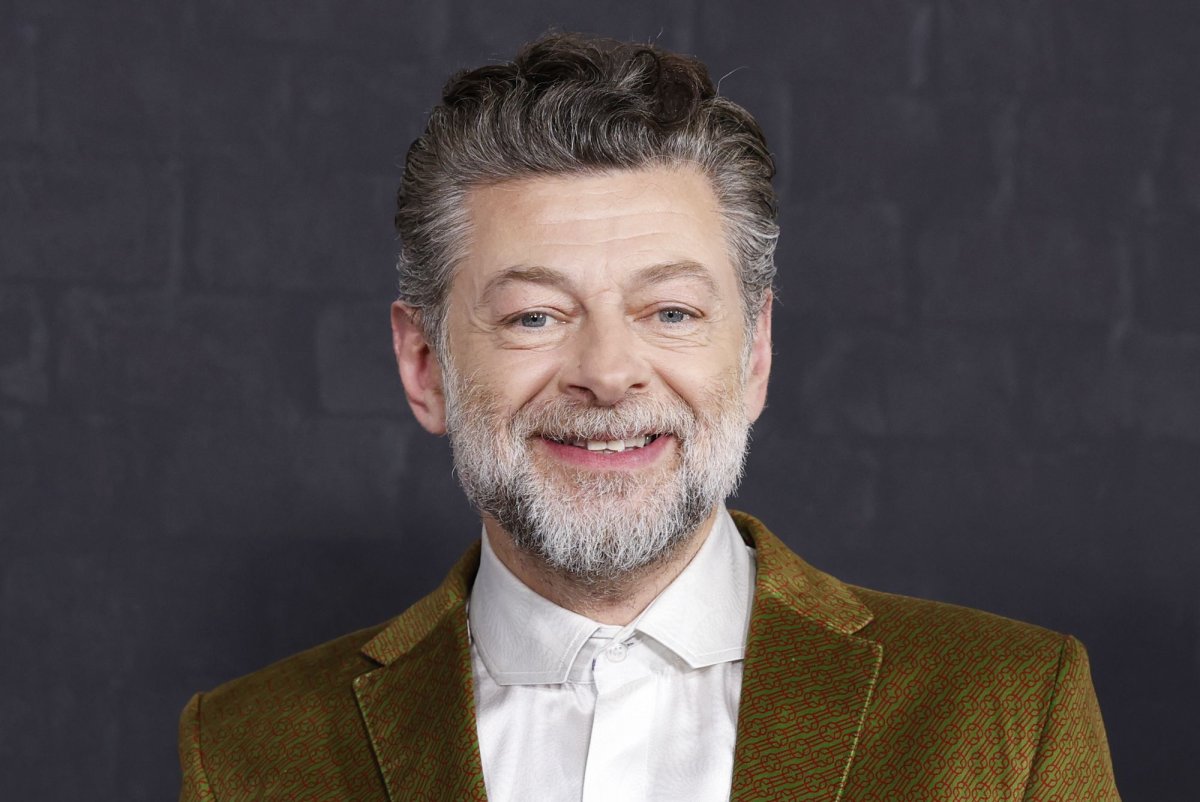
In a recent Zoom interview with UPI, Serkis, 62, said the film he directed extends beyond the conclusion of Orwell’s story. His hope is to inspire young viewers to ask the adults in their lives questions.
“We actually have a third act to our story rather than leave it in Orwell’s complete bleak hands, that there is no hope,” Serkis said. “We don’t know what the answer’s going to be but we’ve got to keep trying.”
The script by Nicholas Stoller also introduced the new character of Lucky, voiced by Gaten Matarazzo. Lucky is a piglet who questions Napoleon’s (voice of Seth Rogen) decisions and rewriting of the Animal Farm rules.
The way Napoleon gaslights the animals about decisions he made, and blames others for his own failings, remains relevant more than 80 years after the book’s publication, Serkis said.
“How does the next generation, who are going to inherit this cyclical problem of oppression and leadership that doesn’t listen to the people it’s supposed to be taking care of, how do we get over that?” Serkis said. “The answer is there is no answer but you have to keep trying.”
The addition of Lucky, Serkis said, adds the element of a young person learning for himself who is trustworthy. Napoleon proves not to be.
“Part of the journey of this telling of the story is to enable kids to feel out what’s going on and really begin to understand and make moral decisions for themselves,” Serkis said, adding that Lucky “has to navigate this treacherous world of who to believe and who not to, and realize if they made a wrong decision.”
As in the book, Napoleon ousts Snowball (Laverne Cox) over a disagreement over building a windmill to power the farm. In the film, Snowball also violated the rule that animals should vote on everything, thus enabling Napoleon to manipulate his followers against her.
“Her downfall is partially that she believed herself to be more intelligent than them,” Serkis said. “That is a failing in leadership as much as being an oppressor and a tyrant who doesn’t listen.”
Serkis said he began thinking of an Animal Farm adaptation when playing Caesar in 2011’s Rise of the Planet of the Apes. Serkis would play the ape leader in two more films, using performance capture technology to translate human actors into simians.
He directed 2018’s Mowgli: Legend of the Jungle directing actors in performance capture rigs as The Jungle Book creatures. However, Serkis said producer Jonathan Cavendish advised that the realistic style could undermine his hopeful intensions.
“By making a performance capture driven movie, it would inevitably have been a much darker, more realistic film,” Serkis said. “It would lose its innocence and the innocence of a fable and a sort of fairy tale as George Orwell calls it.”
Serkis directed the animators to favor close-ups and subtle performances amongst the animals.
“I really wanted to see inside the heads of the animals and what they were thinking and feeling,” Serkis said. “To get animators or ask animators rather to do less and let us, the audience, do more of the work and not tell, but show, that was the objective.”
Next, Serkis will direct the live-action The Lord of the Rings: The Hunt for Gollum, and reprise his performance capture role as Gollum. The films based on Rudyard Kipling, Orwell and J.R.R. Tolkien, coincidentally, he said, represent the literature Serkis read as a child.
“Plus, I was reading C.S. Lewis,” Serkis said. “That version of young adult material that’s dealing with adult themes were really beginning to get under my skin, I suppose.”
As for reprising the role of Gollum, which Serkis also did in Peter Jackson’s The Hobbit adaptation, it’s become second nature.
“Gollum’s never really left me, to be honest,” Serkis said. “It’s very hard to lose characters like that. They have a habit of coming back.”
Stephen Colbert has been hired to write a Lord of the Rings film to follow Hunt for Gollum. Serkis is not involved in that one.
“I’m not anything to do wtih Stephen’s film at all but I’m fascinated to see where that’s going to go because that’s going to be really interesting,” he said.
With Animal Farm, Serkis’s intentions are expressed in a dedication in the end credits.
“The quote is, ‘This film is dedicated to all those who are oppressed for your time will come and to those who oppress, for your time will most certainly come to an end,'” Serkis said. “I really believe that.”
About the Author