April 28 (UPI) — For years, Central America has spoken confidently about regional integration. The language is familiar: coordination, competitiveness, shared opportunity, common markets. But the real test of integration has never been found in declarations or photo opportunities. It is found at the border, where trucks wait, costs rise and trust is either built or lost.
Two steps in the right direction
That is why two developments last month deserve more attention than may first appear. On March 13, the Central American Integration System (SICA) announced a new roadmap, in partnership with FECATRANS, the regional federation of freight transport associations, to strengthen cargo security across the region.
Around the same time, authorities moved ahead with a new requirement: drivers making international overland shipments must now be registered in a shared regional database before they can generate a transit document called DUCA-T, the standardized customs declaration used for cross-border cargo.
On paper, both measures sound technical. In practice, they go to the heart of whether Central America can make trade safer and more predictable without making it more cumbersome. The region’s next integration test is not another summit. It is about goods moving across borders with less insecurity, less delay and greater confidence.
The price of a slow border
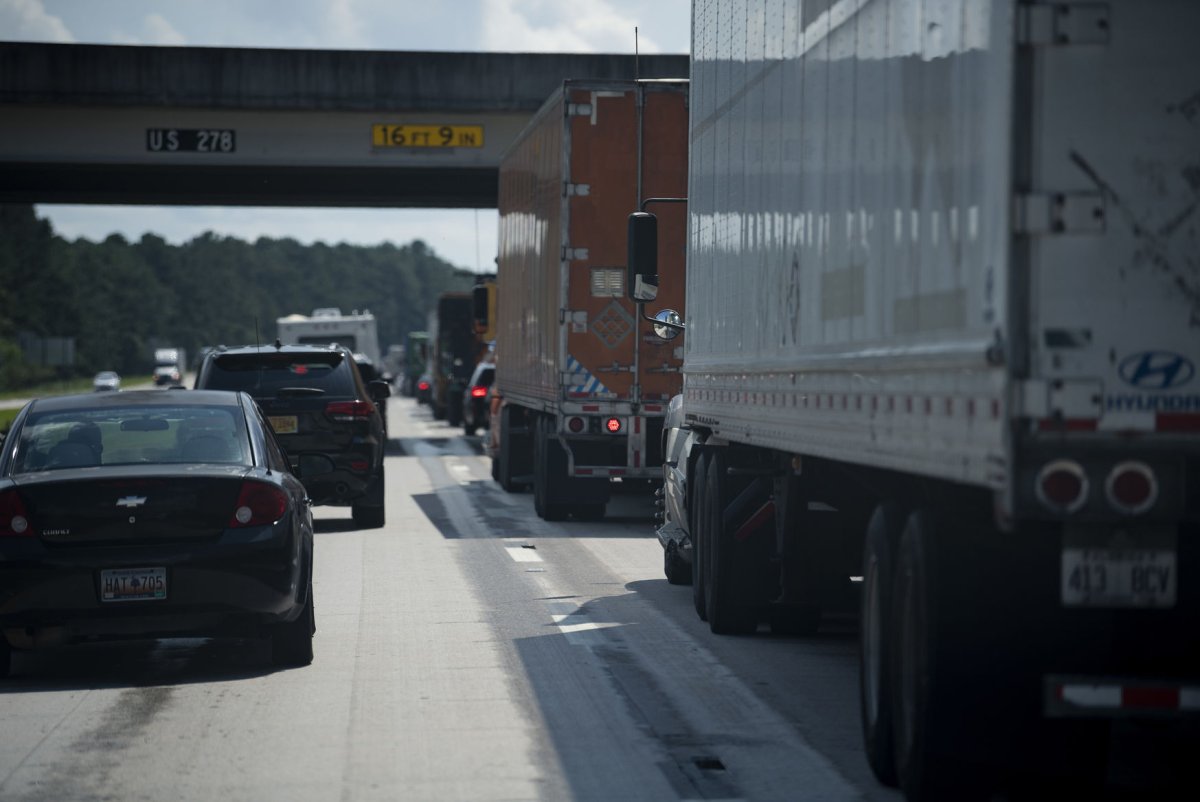
The cost of border friction in Central America has been high for years. World Bank data shows that trucks can wait up to 48 hours at some crossings, and that security-related expenses, driven by theft and disruption, can account for up to 22% of total transport costs. That burden does not stop with trucking firms. Exporters, importers and consumers all pay the price.
Small and medium-sized businesses feel it most. Larger companies can absorb delays, stockpile inventory or hire compliance support. Smaller operators cannot. For them, an unreliable border is not a nuisance. It is a direct hit to their ability to compete.
The implementation test
The SICA-FECATRANS roadmap reflects an overdue recognition that cargo security and trade facilitation cannot be treated as separate agendas.
Insecure transport corridors push up costs and make procedures more defensive. Fragmented or opaque customs systems create openings for fraud and diversion. Central America does not face a choice between security and efficiency. It has to improve both at once.
The driver registration requirement fits that same logic. Knowing who is moving cargo and sharing that information across borders, rather than keeping it locked in separate national systems, is the foundation of smarter enforcement. It allows authorities to focus on genuine risks rather than treating every truck the same.
The risk is that a sound idea becomes a bureaucratic obstacle. If the registration process is confusing, inconsistently applied, or technically unreliable, it will erode the trust of the legitimate operators it is supposed to help. The goal is not more paperwork. It is a cleaner system where honest operators move more easily and abuse becomes harder to hide.
A model that works
There is reason to think this can be done. The Inter-American Development Bank has pointed to Paso Canoas, the main land crossing between Costa Rica and Panama, as proof of what coordinated infrastructure, digital systems and joint border management can achieve. After modernization, the facility cut cargo transit times from hours to minutes and is expected to add roughly $95 million to Costa Rica’s trade earnings each year.
The lesson is clear: when infrastructure, procedures, and technology improve together, borders become more efficient without becoming less secure.
Central America already has its own proof point. Since the customs union between Guatemala and Honduras began in 2017, trade between the two countries has become faster and more predictable. Integrated customs posts at key crossings such as Corinto and El Florido have reduced transit times from hours to minutes, demonstrating that when borders are managed jointly rather than sequentially, integration produces tangible results.
What the region stands to gain
Global supply chains remain under pressure from geopolitical tension, shifting trade rules and a broad push by companies to reduce risk. In that environment, Central America has a real opportunity to present itself not just as a collection of small markets but as a more integrated production and transit space. It can only make that case if moving goods across the region is genuinely dependable.
Investors and manufacturers do not look only at wages, geography or tax policy. They assess whether inputs arrive on time, whether compliance is predictable and whether border crossings operate without constant disruption. A region that cannot move goods reliably will struggle to turn its geographic position into a competitive advantage.
Integration also becomes real for ordinary people when they feel it, not through institutional language, but through lower transport costs and fewer shortages. Reforms that shorten delays and reduce risk do more to build public support for integration than any number of regional summits.
The measure is simple
A legitimate truck carrying goods should be able to move across Central America with transparent documentation, interoperable data and a much lower risk of delay or theft. Honest operators should find compliance manageable. Enforcement should become smarter, not merely heavier. Security should support commerce, not suffocate it.
If the SICA-FECATRANS roadmap and the DUCA-T driver registry are implemented with that standard in mind, they could mark a quiet but meaningful step forward. If not, they risk becoming one more regional initiative that looks good on paper but falls short in practice.
The next phase of Central American integration will not be judged by how many meetings are held or how many communiqués are issued. It will be judged at border posts and along freight corridors, in the daily movement of goods. The measure is whether integration can be felt where it matters most: at the border.
Olinda Salguero is a Guatemalan leader in regional integration and peacebuilding in Latin America. She has served as Chief of Staff to the Secretary-General of the Central American Integration System (SICA) and is the President of the Esquipulas Foundation for Peace, Democracy, Development, and Integration, as well as Vice President of the Latin American & Caribbean Presidential Mission. Forbes has recognized her three times as one of the most influential women in Central America. The views and opinions expressed here are solely those of the author.
About the Author