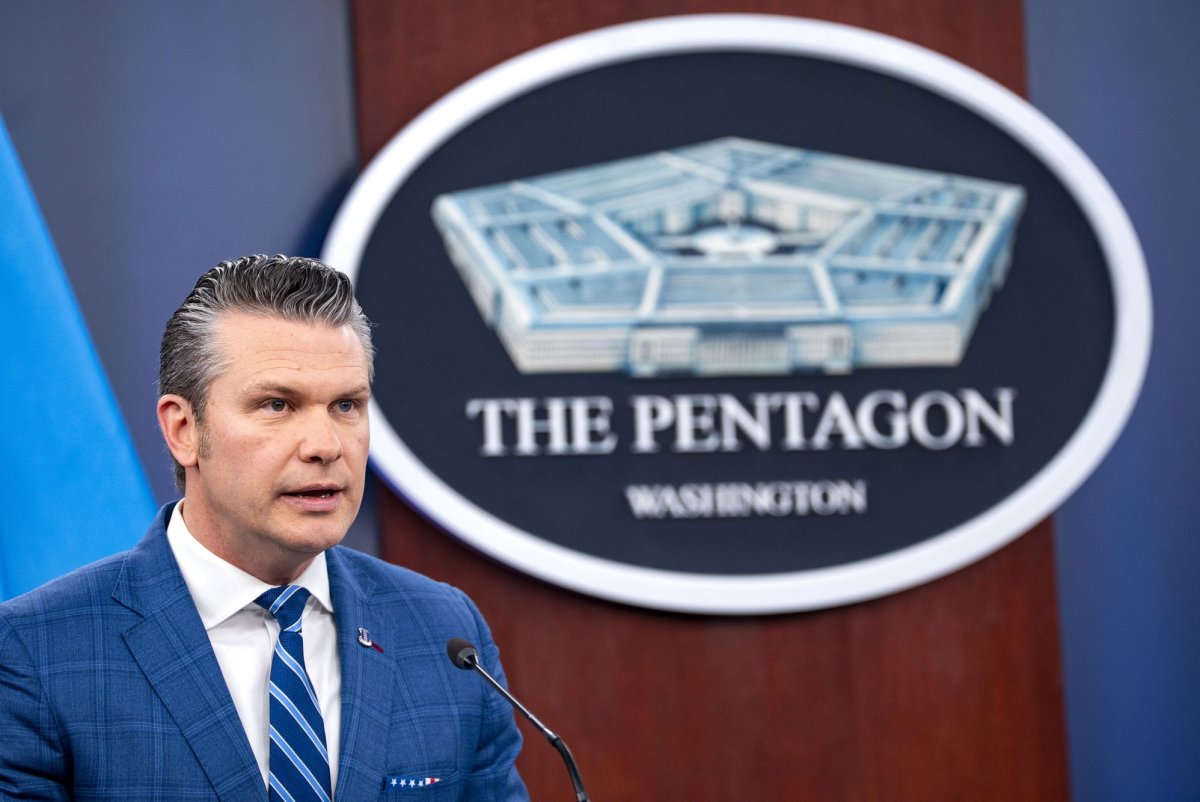
April 28 (UPI) — The Department of Defense may require reporters to be escorted inside the Pentagon, a federal appeals court has ruled, handing the Trump administration a rare win in litigation challenging its press restrictions.
A divided three-judge panel of the U.S. Court of Appeals for the D.C. Circuit granted the Trump administration’s emergency request for a stay pending appeal, but only concerning its Pentagon escort requirement.
The 2-1 ruling stays part of U.S. District Judge Paul Friedman’s April 9 order that had found an interim Pentagon policy was in violation of his earlier order that blocked the Department of Defense’s initial policy requiring journalists to sign a form acknowledging that they could have their credentials revoked for gathering unauthorized information.
The Trump administration argued that the escort requirement of the interim policy was a new rule not affected by the initial order and was put in place to prevent the disclosure of sensitive or classified information.
The appeals court agreed that the administration was likely to win on the merits of its narrow argument.
Chief Pentagon spokesman Sean Parnell said Monday that the Department of Defense “welcomes” the court’s decision.
“The department looks forward to presenting its full case to the D.C. Circuit on the merits,” he said in a social media statement.
The Trump administration has repeatedly taken actions critics see as attempting to influence media coverage, including a Defense Department policy announced in October that threatened the credentials of reporters who gather sensitive information.
Most credentialed journalists refused to sign, and The New York Times and one of its reporters sued.
Friedman blocked the rule. The Pentagon then attempted to enact an interim policy that was again blocked on April 9 by Friedman, who ruled that the Trump administration “cannot simply reinstate an unlawful policy under the guise of taking ‘new’ action and expect the court to look the other way.”
D.C. Circuit Judge J. Michelle Childs said in dissent that though the escort policy on its face appeared different from the policy blocked by the March order, its practical effect was the same: denying reporters meaningful access to the Pentagon.
“The point of the injunction, as the district court interpreted it, ‘was to restore The Times journalists’ access to the Pentagon, not merely to ensure that they have possession of a physical credential,” she said.
“Reporters can hardly verify sources, gather information, or speak candidly with department personnel with an escort looming over their shoulders.”
About the Author