
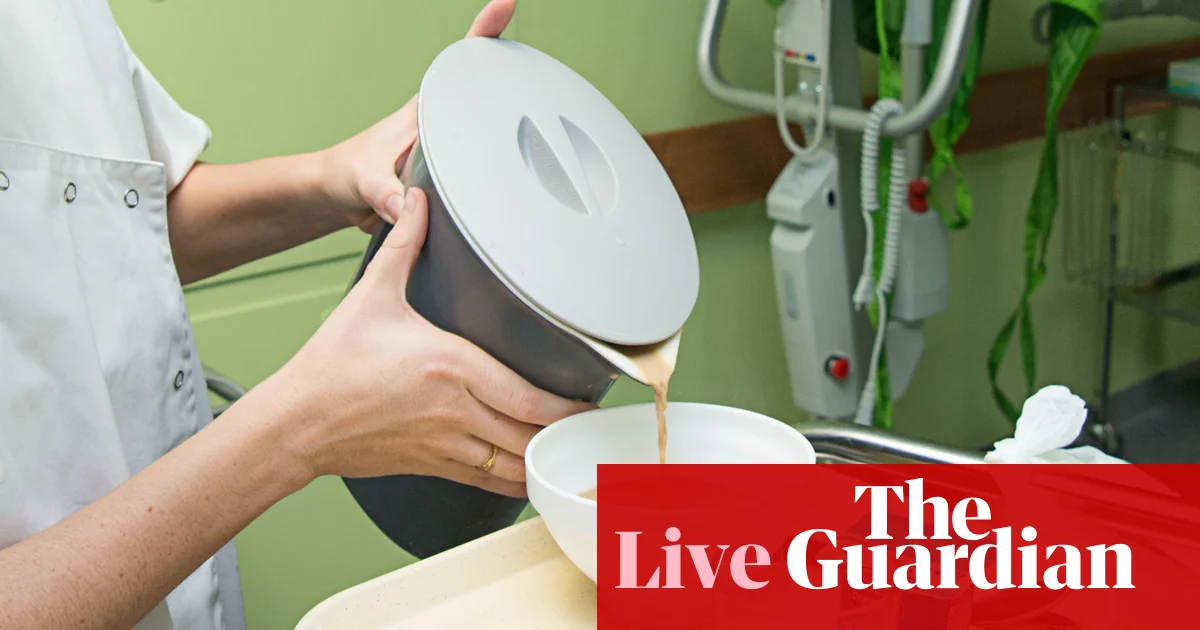
Poor hospital food adding to health costs, report says
Natasha May
Australian governments are spending $2.13bn every year feeding people in hospitals, aged care facilities and other public settings – low-quality food which contributes to poor diet and long-term health costs, a new report has found.
That investment (which equates to $6m a day) is one of the most powerful policy levers available to governments to improve national health outcomes, but it is currently marked by a near-exclusive focus on cost and scale, according to the report titled Transforming the Public Plate.
Commissioned by philanthropic organisation Macdoch Foundation and released by the newly formed Good Food Purchasing Australia (GFPA) initiative, it has found public food procurement is dominated by large suppliers and multinationals, with limited pathways for small, medium, local and First Nations producers to participate.

Without a national framework of standards to drive better outcomes from public food spending, the authors say Australia is falling behind other comparable countries such as the UK, EU and parts of the US.
Indeed, when Guardian investigated hospital food around the world, what Australia was serving paled in comparison with more wholesome options overseas. And a big part of the problem was not using fresh food but contracting out food preparation services to private companies to produce meals in bulk and deliver them frozen.
Key events
Good morning, Nick Visser here to take over the blog. Let’s get to it.
Suspected crocodile remains dumped on Adelaide roadside

Ima Caldwell
Reptile remains, believed to be from a crocodile, have been found dumped on the side of the road in Adelaide.
A spokesperson for the state’s environment and water department confirmed in a statement that department staff had “collected the remains of a reptile at Waterloo Corner”. They said:
double quotation mark The remains, which were dumped on the side of the road at Coleman Road, will be analysed in an effort to confirm the species and any other information.It is not currently known how the remains came to be located at the site.
The department asked anyone with information to visit the Call it Out wildlife crime portal, or contact CrimeStoppers on 1800 333 000.
Food supplied to hospitals and nursing homes at risk due to fuel crisis
The authors say it is the first comprehensive assessment of public food procurement in Australia. Leah Galvin, co-lead of GFPA and report co-author, says:
double quotation mark A different approach can increase the use of fresh, local produce, redirect spending to Australian farmers and producers, support the people working in public food service kitchens, and generate real benefits for Australia.
The authors also emphasise the prescience of the release of the report, which comes as Australia’s food system and supply chains, including food supplied to public institutions such as hospitals and aged care centres, are all at risk of breakdown due to the fuel crisis triggered by the war in Iran.
Dheepa Jeyapalan, also a co-lead of GFPA and co-author of the report, says:
double quotation mark Better public food procurement is not about spending more, it’s about spending smarter. The evidence is clear, public support is strong, and the solutions exist. Given the threat to our food system caused by the global fuel and fertiliser crisis, now is the moment for leadership.
Health experts have previously warned governments there needs to be a national food policy movement away from multinational corporations and towards healthier, more local food systems.
Poor hospital food adding to health costs, report says

Natasha May
Australian governments are spending $2.13bn every year feeding people in hospitals, aged care facilities and other public settings – low-quality food which contributes to poor diet and long-term health costs, a new report has found.
That investment (which equates to $6m a day) is one of the most powerful policy levers available to governments to improve national health outcomes, but it is currently marked by a near-exclusive focus on cost and scale, according to the report titled Transforming the Public Plate.
Commissioned by philanthropic organisation Macdoch Foundation and released by the newly formed Good Food Purchasing Australia (GFPA) initiative, it has found public food procurement is dominated by large suppliers and multinationals, with limited pathways for small, medium, local and First Nations producers to participate.
Without a national framework of standards to drive better outcomes from public food spending, the authors say Australia is falling behind other comparable countries such as the UK, EU and parts of the US.
Indeed, when Guardian investigated hospital food around the world, what Australia was serving paled in comparison with more wholesome options overseas. And a big part of the problem was not using fresh food but contracting out food preparation services to private companies to produce meals in bulk and deliver them frozen.
Welcome
Good morning and welcome to our live news blog. I’m Martin Farrer with the top overnight stories and then it’ll be Nick Visser with the main action.
About the Author