
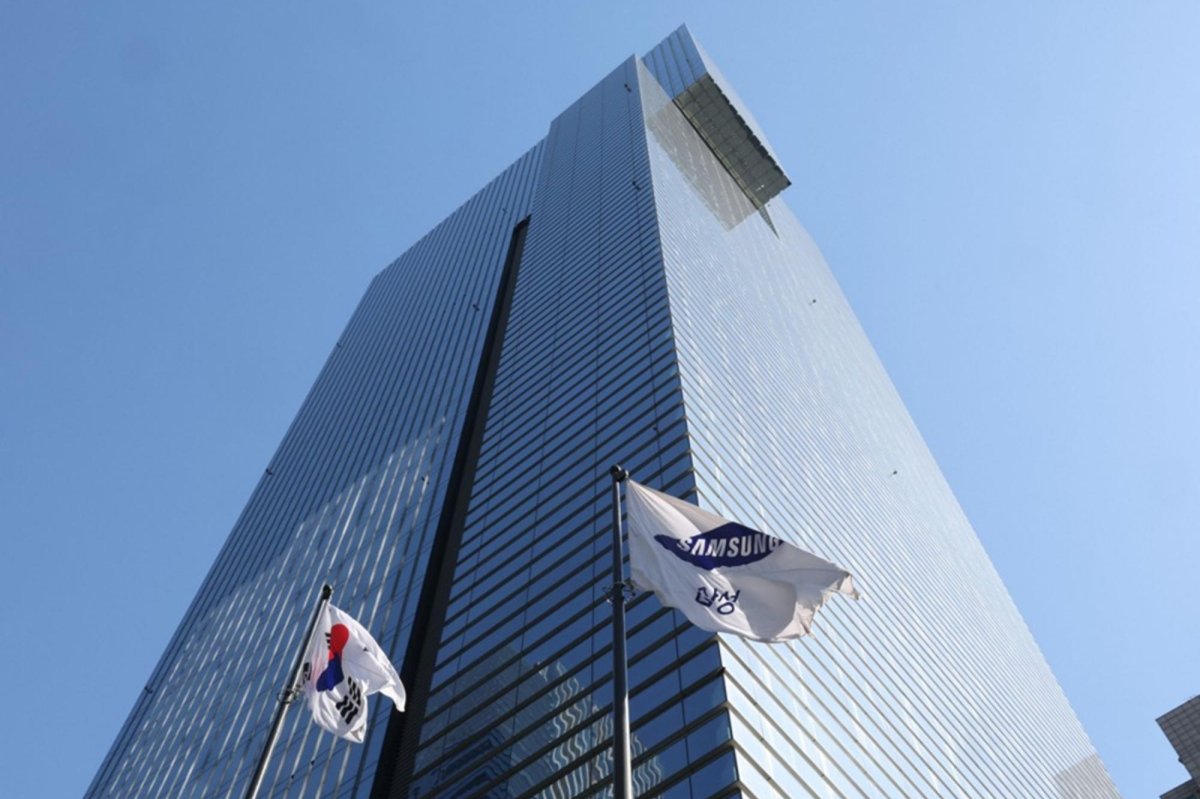
A flag of Samsung Electronics flutters outside the company’s headquarters in Seoul, South Korea, 07 April 2026. Samsung estimates its first quarter operating profit to have surpassed 50 trillion won driven by demand for premium memory chips from the artificial intelligence industry. Photo by YONHAP / EPA
April 12 (Asia Today) — Major candidates in South Korea’s June 3 local elections are increasingly pledging to bring a Samsung Electronics semiconductor plant to their regions, turning the vote into what some are calling a “semiconductor election.”
Promises to attract a chip factory from the country’s largest company have stirred public interest by raising expectations of local economic growth.
Amid the economic slowdown, such pledges carry major political and economic weight because they suggest the potential for more jobs, higher tax revenue and growth in related industries. Some of the proposals are based on local industrial conditions and geographic advantages, leading to assessments that they cannot be dismissed simply as campaign slogans.
Still, the location of a semiconductor plant is not something that can be decided by election rhetoric alone.
Basic requirements include the ability to supply hundreds of thousands of tons of water a day and a stable power grid that cannot tolerate even a one-second interruption. A suitable site must also have supporting industrial complexes, transportation and housing infrastructure and conditions that allow for a reliable labor supply.
Semiconductors are also a core industry supporting the South Korean economy and a strategic national asset in global supply chain competition. Decisions on plant locations therefore require national-level industrial strategy, including supply chain stability and policies to protect advanced industries, rather than being driven only by local development logic.
Corporate decisions, which place priority on profit and efficiency, are also made on stricter and more specific conditions than political campaign pledges.
Ahead of the elections, Asia Today said it would examine the wave of campaign promises to attract semiconductor factories from political, economic and community perspectives, including whether the proposals match industry logic, how feasible they are and what semiconductor industry officials and experts think.
— Reported by Asia Today; translated by UPI
© Asia Today. Unauthorized reproduction or redistribution prohibited.
About the Author