LIMA, Peru — A former minister, a comedian and a political heiress are among 35 candidates for Peru’s ninth president in just 10 years.
The election Sunday takes place during a surge in violent crime and corruption, fueling widespread discontent among voters, who largely view candidates as dishonest and unprepared for the presidency. Many of the contenders have responded to people’s crime concerns with wide-ranging proposals, including building megaprisons, restricting food for prisoners and reinstating the death penalty for serious crimes.
“You can’t trust anyone anymore, nothing’s going to change,” construction worker Juan Gómez, 53, said as he carried two heavy bags with potatoes and rice to feed his five children. “(Criminals) come on motorcycles, put a gun to your head… you look around and there’s no police officer. What are you going to do? You just let them rob you.”
Here’s what to know about Sunday’s election.
Voting is mandatory for Peruvians from the ages of 18 to 70. More than 27 million people are registered, and of those, about 1.2 million are expected to cast ballots from abroad, mainly in the United States and Argentina.
A candidate needs more than 50% of votes to win outright. However, a runoff in June is virtually assured given the deeply divided electorate and the pool of candidates, the largest in the Andean country’s history.
A major preoccupation is surging crime, which has led to frequent protests. Homicides have doubled and cases of extortion have increased fivefold this decade, according to official data.
“You get on the bus, and you have to sit far from the driver; you don’t know if you’ll make it home alive,” retiree Raúl Zevallos, 63, said. “Criminals drive by on motorcycles, shoot, kill the driver, and you could die, too.”
More than 200 public transportation drivers were killed in Peru in 2025. The same year, a national survey carried out by the state’s National Institute of Statistics and Informatics found that 84% of respondents in urban areas feared becoming victims of a crime in the following 12 months.
Thirty-five people are on the ballot, including Keiko Fujimori, a conservative former congresswoman and daughter of the late President Alberto Fujimori. This marks her fourth attempt to become president.
Keiko Fujimori has promised to crack down on crime with an iron fist, but she has also defended laws that experts say make it difficult to prosecute criminals. The laws, which her party backed in recent years, eliminated preliminary detention in certain cases and raised the threshold for seizing criminal assets.
If elected, she has said judges presiding over criminal cases will be anonymous and prisoners will have to work to earn their food.
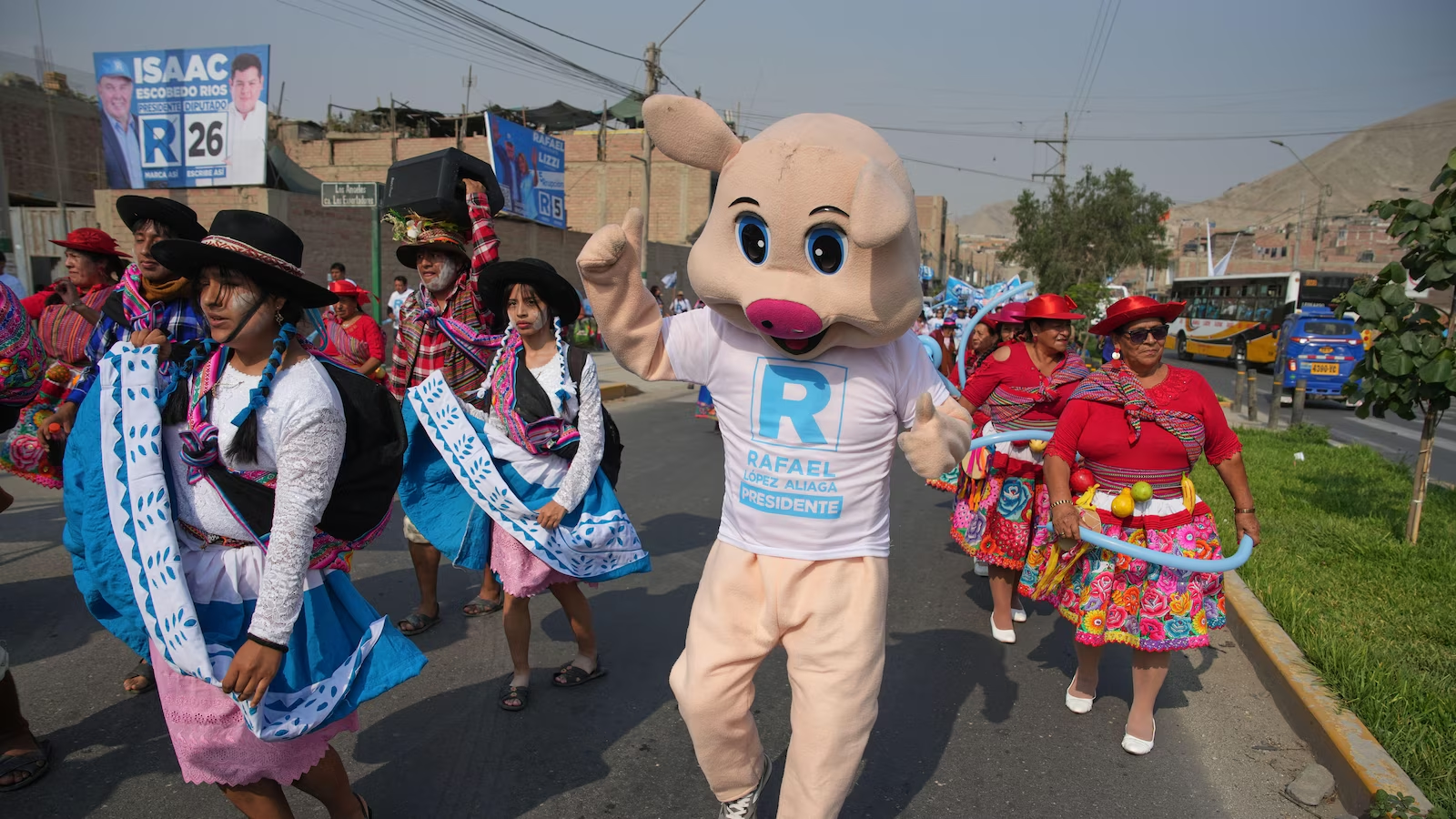
Also running is Rafael López Aliaga, the conservative former mayor of Peru’s capital, Lima. He has proposed building prisons in the country’s Amazon region, allowing judges to conceal their identities and expelling foreigners who are living illegally in Peru.
Meanwhile, comedian-turned-politician Carlos Álvarez has tried to garner support by promising to convene the leaders of El Salvador, Denmark and Singapore to tap their expertise in security.
Peruvians will also choose a bicameral Congress for the first time in more than 30 years, following recent reforms of the legislature that will concentrate a great deal of power in the new upper chamber. The president won’t be able to dissolve the new Senate, though the chamber will be able to remove a president from power.
Under the new bicameral structure, impeaching the president will be easier, with the Senate only needing 40 of the 60 senators to approve it. Previously, 87 of 130 lawmakers in the unicameral chamber had to vote in favor of removal, and they frequently exercised that power, contributing to the country’s revolving door of presidents in the last decade.
The bicameral system is returning even though 80% of voters rejected it in a 2018 referendum. Lawmakers amended the Constitution in 2024 to make it possible.
Alejandro Boyco, a researcher at the Institute of Peruvian Studies, said the Senate will appoint and sanction high-ranking officials, including the country’s Ombudsman, Constitutional Court members and some Central Bank directors. Senators will also review and amend bills from the lower chamber.
“They’ve concentrated too much power in a 60-people chamber,” Boyco said. “They are not going to be immune to being corrupt.”
___
Garcia Cano reported from Caracas, Venezuela.
___
About the Author