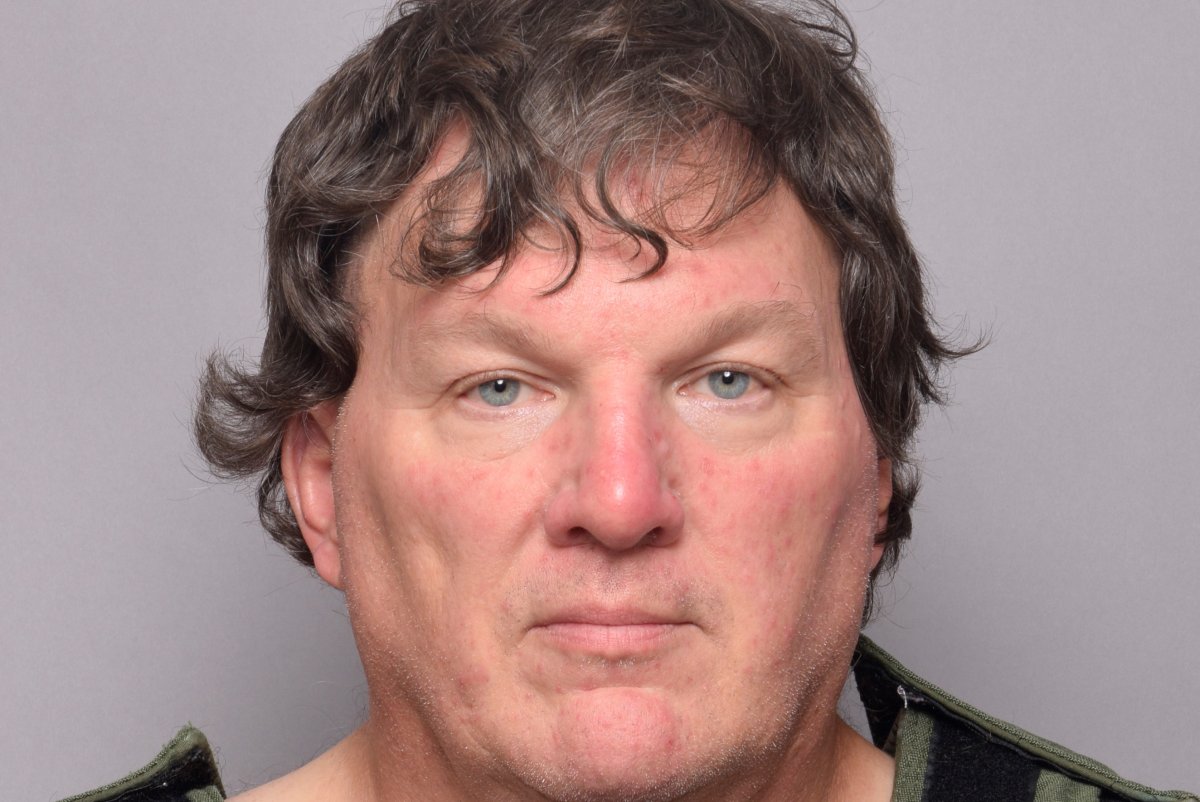
Rex Heuermann, of Massapequa Park, Long Island, pleaded guilty Wednesday to the killing of seven women. He also admitted to causing the death of one more. File Photo courtesy of the Suffolk County Sheriff’s Office
April 8 (UPI) — Rex Heuermann pleaded guilty Wednesday to the murders of seven women and admitted to one more.
Heuermann, 62, had pleaded not guilty to killing the women and dumping their bodies near Gilgo Beach on Long Island, N.Y., but changed his plea at the hearing in Suffolk County Court. He also admitted that he intentionally caused the death of Karen Vergata, 34, of Manhattan, and left her remains.
As part of his plea agreement, the prosecution won’t charge him with Vergata’s murder.
He admitted to meeting all eight women, strangling them and dumping their bodies in Gilgo Beach, Manorville and Southampton.
He also agreed to cooperate with the FBI’s Behavioral Analysis Unit.
Heuermann is expected to get life in prison without parole, three consecutive life sentences, followed by four sentences of 25 years to life. The sentencing is set for June 17.
Heuermann’s ex-wife, Asa Ellerup, and their daughter, Victoria, watched from the last row of the packed courtroom.
Asa Ellerup gave a statement at a press conference. She asked the press to respect their privacy.
“My thoughts and prayers are with the victims and their families,” Ellerup said. “Their loss is immeasurable, and the focus should be on them at this time in the moment.”
Defense attorney Michael Brown told reporters that the decision to plead guilty gave Heuermann a “sense of relief.”
“I think that was a huge sense of relief for him,” Brown said. “When you have that type of — in your head, and on your body — I think by admitting it, it’s cathartic to some extent.”
Brown said Heuermann won’t give details of how he killed the women.
“He certainly wanted to save the families of the victims the ordeal of going to trial, coupled with saving his family from that,” Brown said.
He also said Heuermann would likely have something to say about his own remorse at the sentencing.
Melissa Cann, sister of victim Maureen Brainard-Barnes, said, “I lived in a space between heartbreak and hope” for nearly 20 years while watching the investigation.
“I will never stop searching for justice for you. Through every year, every setback, through every unanswered question,” she said.
Suffolk County District Attorney Raymond Tierney gave a 40-minute long statement and promised to hunt for more killers from Gilgo Beach and beyond.
“This case closes and another opens,” he said. “There are still bodies on that beach. There are still bodies in Suffolk County. There’s no rest for the weary.”
A source familiar with the case told CNN earlier that Heuermann was expected to “take responsibility” for all seven murder charges, and there was no deal made with the district attorney’s office.
It’s unclear why Heuermann decided to plead guilty. He has been in custody since his arrest in July 2023.
The trial was scheduled to happen in September.
Heuermann murdered seven women believed to be sex workers and whose remains were found in secluded areas near Gilgo Beach and parts of eastern Long Island.
There were 11 slayings found between 2010 and 2011, but police don’t believe Heuermann committed all 11.
Heuermann is an architect who was married with children at the time. He was arrested in 2023 and charged with three counts of first-degree murder. The other four charges came later.
Heuermann was first charged in the deaths of Melissa Barthelemy, 24; Megan Waterman, 22; and Amber Costello, 27. Barthelemy was reported missing in 2009, and Waterman and Costello went missing in 2010.
Then in 2024, he was charged with killing four more: Maureen Brainard-Barnes, 25; Jessica Taylor, 20; Sandra Costilla, 28; and Valerie Mack, 24. Brainard-Barnes disappeared in 2007, Taylor went missing in 2003, and Mack in 2000. Costilla’s remains were found in a wooded area in Southampton in 1993.
In September, Judge Timothy Mazzei refused to try each case separately, instead charging all the cases as one. On Sept. 3, he also said that DNA evidence is admissible in the trial.
About the Author