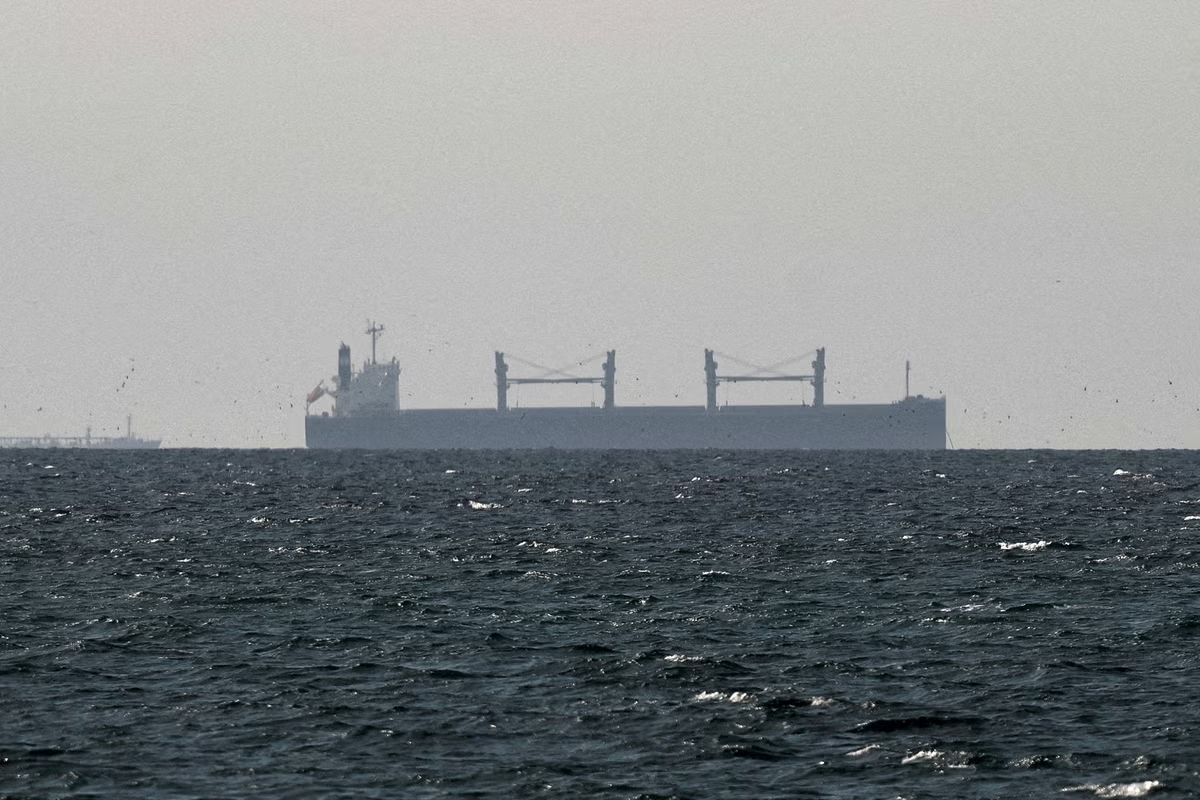
Iran has agreed to reopen the Strait of Hormuz to commercial shipping as part of a delicate two-week ceasefire agreement announced with the US.
Oil fell below $100 per barrel on Wednesday as a senior Iranian official said the vital waterway could be reopened in a limited and controlled way as soon as Thursday, ahead of a meeting with the US to discuss more enduring peace terms.
But Iran still wants to charge fees for ships to pass through the Strait, arguing the toll is necessary to cover the cost of damage inflicted by the war – a position opposed by the US and its allies in the Gulf but that could reportedly net the regime millions of dollars.
A regional official told the Associated Press that the two-week ceasefire plan includes allowing Iran to charge ships transiting the channel, while Donald Trump said that Washington and Tehran were “thinking of doing it as a joint venture”.
Shipping companies reacted to the ceasefire with caution, welcoming the pause in hostilities but warning that trade in the Gulf is unlikely to fully resume until the underlying tensions are clearly resolved.
The Strait, a strip of water only 21 miles wide between Iran and Oman, provides passage from the Gulf to the Indian Ocean and is the main route for about a fifth of world oil supplies and other vital goods, including fertilisers.
Will Iran charge a fee for safe passage?
Hours after the ceasefire was announced, the picture is still not clear.
A regional official who was directly involved in negotiations for the ceasefire agreement told the Associated Press that Iran and Oman would be allowed to charge fees on ships transiting the Strait as part of the ceasefire deal mediated by Pakistan.
Oman’s transport minister said the country had signed agreements that prohibit charging ships, however. Iran and Oman share territorial rights over the strategic waterway, although bordering states are not allowed to charge ships merely for passing through.
The regional official said that Iran plans to use the revenue for reconstruction of infrastructure destroyed in the six week conflict.
Trump told ABC News on Wednesday that the US may look for a “joint venture” with Iran to safeguard the Strait of Hormuz.
“We’re thinking of doing it as a joint venture. It’s a way of securing it — also securing it from lots of other people,” he said when asked whether he would allow Tehran to charge tolls for shipping. “It’s a beautiful thing.”
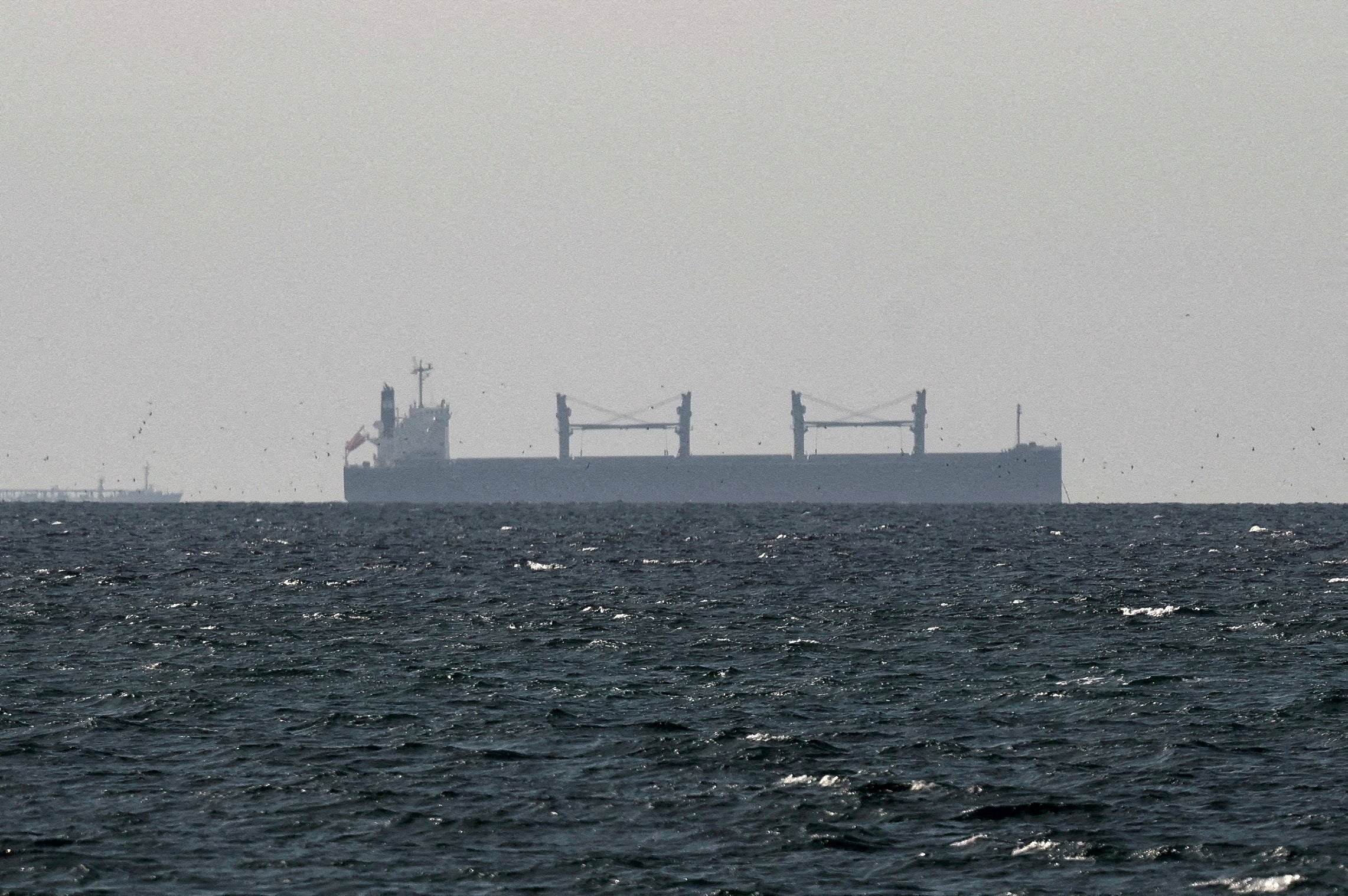
Iran has already made a number of bespoke agreements with third countries to guide ships through the channel, and recently sought to ratify a toll system in local law.
There have been unconfirmed reports of at least one payment of $2 million having been made for a vessel to traverse the Strait.
The Independent reported previously how countries were reportedly paying rates starting at $1 per barrel, as big tankers can carry around two million barrels. Operators have been negotiating terms to be paid in Chinese yuan or stablecoins.
Unnamed ceasefire mediators told the Wall Street Journal that the status quo is unlikely to change, despite Iran’s promise to allow ‘safe passage’ through the Strait.
Barbara Leaf, former US ambassador to the UAE, told CNBC she expected Iran to try assert control over the Strait as part of any eventual deal.
“It is clear that the regime sees it as a real money maker, and they are going to try very hard to assert some sort of management over the Strait. And I would certainly hope that the administration will not agree to that.”
Iran still wants any permanent peace deal in the war to allow Tehran to demand fees, a senior Iranian official told Reuters. The fee would vary depending on the type of ship, its cargo and unspecified other prevailing conditions, the official said, without elaborating.
What happens now?
Maritime shipping company Hapag-Lloyd voiced cautious optimism on the prospect of resuming shipping through the Strait of Hormuz, but said normal traffic would take at least six to eight weeks – far longer than the two week truce allows.
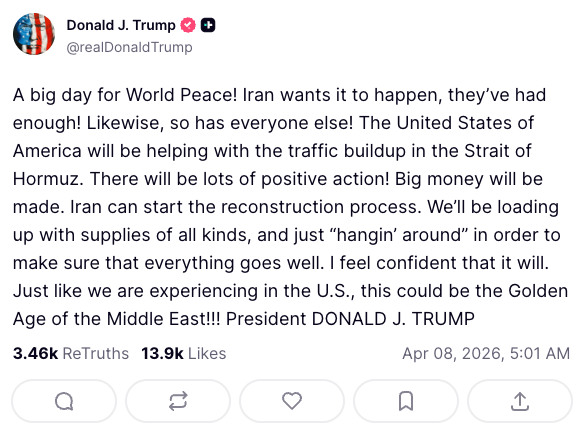
A backlog of ships trapped in the Gulf and a lack of clear security assurances are fuelling hesitation. The US president said on his Truth Social platform that the US would be helping with the traffic buildup in the Strait.
But Daejin Lee, global head of research at Fertmax FZCO, said that it would likely take more than two weeks just to clear the backlog of vessels trapped within the Gulf.
“A 14-day window is simply too short to restore the level of confidence needed to fully unwind the embedded uncertainty premium – particularly for Arabian Gulf loading routes,” he said.
Neil Roberts, Head of Marine and Aviation, Lloyd’s Market Association said that from an insurance point of view, news of the ceasefire was “of course welcome”, but that there are still issues to resolve before shipping returns to normal.
“Time will tell whether it is a pause or a peace but, in the meantime, it is highly unlikely that trade into the Gulf will simply resume. The region remains at heightened risk with none of the underlying tensions resolved.”
Jakob Larsen, chief safety and security officer at shipping association Bimco, said the industry was awaiting technical details from the US and Iran.
Iran’s deputy foreign minister Kazem Gharibabdi said last week that Tehran was drafting a protocol with Oman to require ships to obtain permits and licences to pass the Strait, saying this was intended to facilitate rather than restrict transit.
Would other countries accept Iran collecting fees?
Trump said on Monday that free traffic of oil through the Strait must be part of any peace deal with Iran.
“We have to have a deal that’s acceptable to me, and part of that deal is going to be, we want free traffic of oil,” he said. He also suggested he would rather the US charge tolls “than let them have them”, as the “winner” of the war.
The UNCLOS maritime convention governing international sea law says states bordering straits cannot demand payment simply for permission to pass through.
However, they can impose limited fees on ships for specific services such as piloting, tugging or port services, though these may not be levied more heavily on vessels from any particular countries.
Canals, which have been dug rather than occurring naturally, are treated differently to straits and can charge fees for transit.
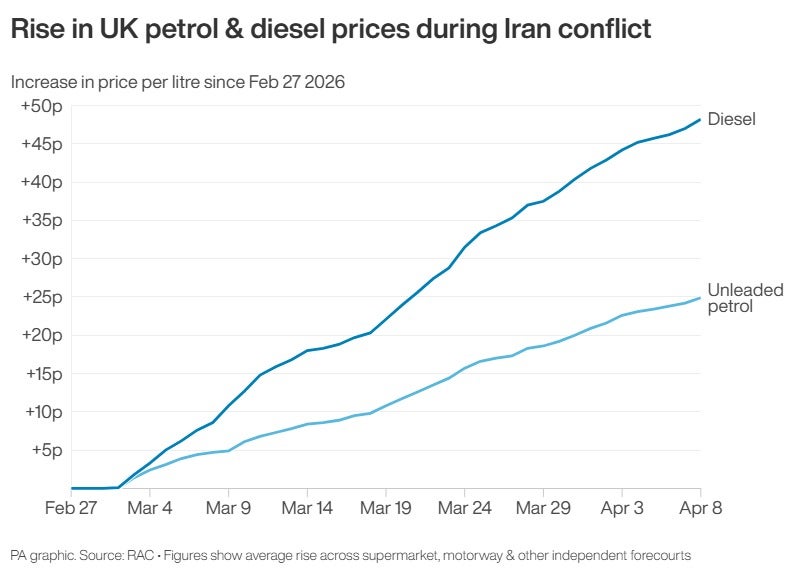
Gulf states relying on energy exports through the Strait are particularly concerned about the prospect of Iran enforcing a toll.
The United Arab Emirates said at the weekend the waterway “cannot be held hostage by any country” and free navigation must be part of any settlement of the war.
Qatar’s foreign ministry said all countries in the region have the right to use the Strait freely and any discussions about future financial mechanisms should wait until after it is reopened.
No such unilateral move to demand fees to traverse a strait has been made in modern history, shipping industry officials said.
About the Author