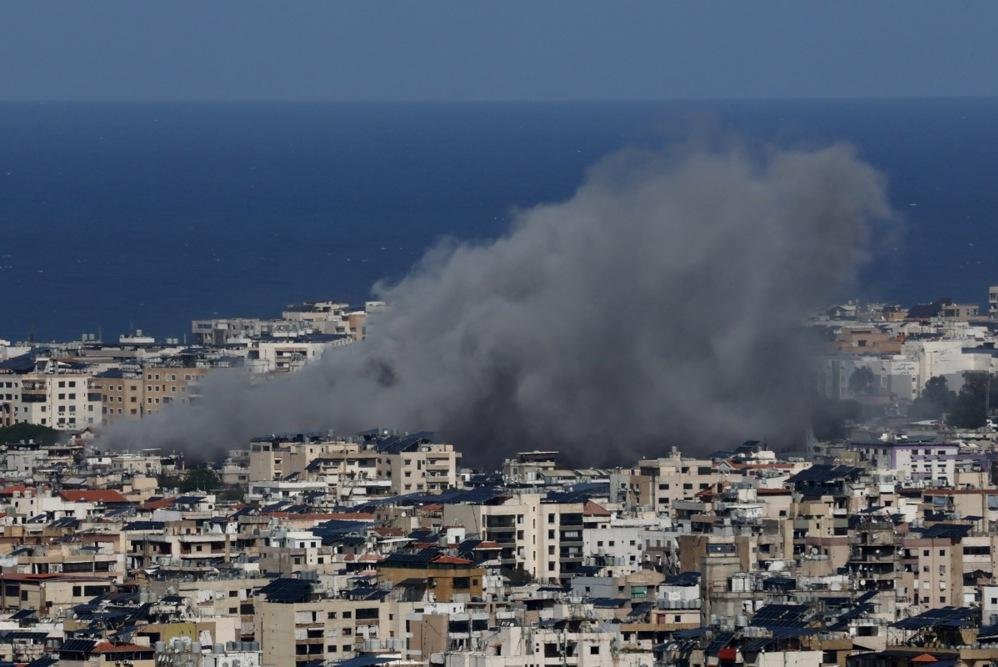
Smoke billows after Israeli airstrikes on Dahieh, in the southern suburbs of Beirut, Lebanon, on Monday. The Lebanese Ministry of Public Health said at least 1,238 people have been killed and more than 3,543 others injured in Israeli airstrikes across Beirut’s southern suburbs and villages in southern Lebanon since the start of renewed hostilities. Photo by Wael Hamzeh.EPA
BEIRUT, Lebanon, March 31 (UPI) — Lebanon has been stepping up efforts to break free from decades-long Iranian influence — largely wielded through its most powerful regional armed proxy, Hezbollah — amid a destructive U.S.-led war against Tehran and its regime.
The weakening of Hezbollah, including the killing of its top leaders and military commanders during the war the militant group launched against Israel in support of Gaza on Oct. 8, 2023, made such an approach possible.
With the election of a new president and new prime minister — Joseph Aoun and Nawaf Salam, respectively- – it became necessary to consolidate state authority and sovereignty, disarm Hezbollah and save crises-ridden, cash-strapped Lebanon from collapsing.
Since August, the Cabinet has pursued a series of bold, but calibrated, measures to contain Hezbollah, including partial disarmament in southern Lebanon and moves to designate its military and security activities as unlawful after the group joined the war on Iran on March 2.
It also turned against the Iranian Revolutionary Guard Corps, accusing it of commanding the battles against Israel from Lebanon, outlawing its activities within the country and instructing security services to arrest its operatives for deportation.
Several Revolutionary Guard members — eulogized by Tehran as diplomats in statements that showed them wearing military fatigues — were killed in Israeli strikes targeting them in hotels or apartments in Beirut.
Lebanon has succeeded in part in controlling aspects of Iranian activity in the country. It suspended direct flights to and from Iran, reinstated visa requirements for Iranian nationals and stepped-up security checks at Rafik Hariri International Airport, including more rigorous inspections of arriving aircraft that carried diplomatic suitcases.
Moreover, it strengthened border controls to curb the smuggling of Iranian weapons and funds to Hezbollah.
However, that still fell short of preventing Iran and Hezbollah, which was discreetly reorganizing its ranks, from dragging Lebanon into another destructive war, this time supporting Tehran.
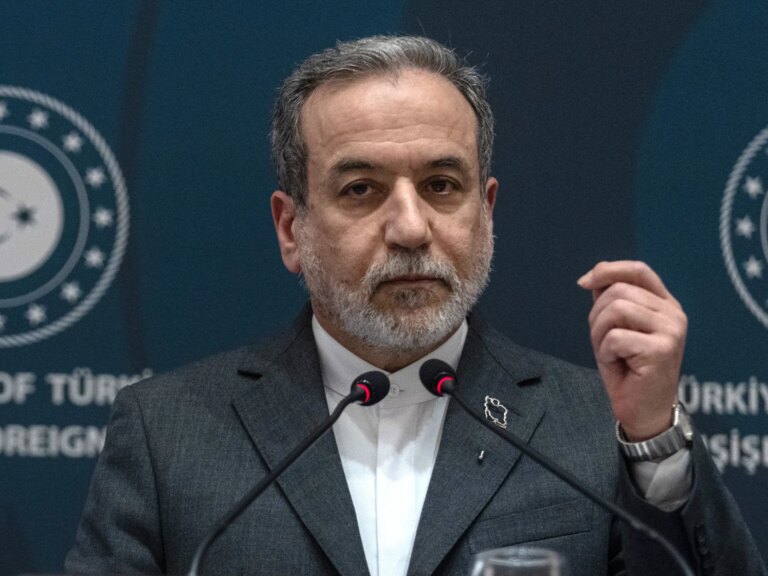
Tensions between the two sides took another turn last week when Lebanese Foreign Minister Youssef Raggi declared Iran’s ambassador-designate to Lebanon, Mohammad Reza Shibani — who had yet to present his credentials — persona non grata, giving him three days to leave the country.
Although the move was within diplomatic norms and in line with the 1961 Vienna Convention, it triggered an internal crisis, as it was swiftly rejected by Iran’s Shiite allies in Lebanon. Hezbollah and House Speaker Nabih Berri, who heads the Amal Movement, both reportedly asked the Iranian envoy to stay.
He did. Iranian Foreign Ministry spokesman Esmail Baghaei confirmed in defiance that Shibani “will continue his mission in Beirut.”
The question is how. One suggestion is that he would remain inside the embassy, as any movement outside it should prompt Lebanese security forces to escort him immediately to the airport for deportation — a risky step that would further complicate the situation.
Riad Tabbarah, Lebanon’s former ambassador in Washington, cautioned that, at the popular level, the rift had taken on a confessional dimension, roughly dividing Shiites from other confessional groups in society that are increasingly calling on the state to assert its authority.
Tabbarah said that if the Iranian ambassador’s statements were deemed “beyond acceptable limits” and warranted “this extreme action,” the government has historically allowed much wider leeway for statements by U.S. and Western diplomats, raising “a clear question of double standards.”
“The truth of the matter is that the tensions between Lebanon and Iran is at present at a high level due to complex and changing regional, international and national reasons, and the Iranian Ambassador got caught in the labyrinth at the wrong moment,” he told UPI, suggesting that a summoning or temporary recall of ambassadors would have sufficed.
However, the issue appears more complicated, with analysts suggesting it is not simply about diplomatic protocol, but also a test of strength and a political signal to Iran over its interference in Lebanon’s affairs and its role in pushing the country into the current war.
It is also about concerns that Iran is effectively negotiating on Lebanon’s behalf, reportedly telling intermediaries that any cease‑fire deal with the United States and Israel must include Lebanon and address Israeli strikes on Hezbollah — a stance seen as reinforcing Iranian influence in Lebanese affairs.
Such a condition is also rejected by Israel, which is determined to separate Lebanon from the war on Iran, continue its attacks on Hezbollah and establish a security zone in southern Lebanon with the goal of imposing the complete disarmament of the Iran-backed group.
A Beirut-based Arab diplomat said it is in Iran’s interest to push for Hezbollah, which entered this war because of Tehran, to be included in any such deal.
“But the Iranians saying so is one thing, and being able to enforce such an agreement — or veto it to keep Hezbollah as it used to be — is another,” the diplomat, who requested not to be named, told UPI. “No Arab or non-Arab would accept Hezbollah continuing to act as the state in Lebanon, in full control of everything.”
Hezbollah, he said, could remain as “a key political actor” but it cannot be “the decision-maker and decides on war and peace.”
Otherwise, the Gulf states, which are being hit hard by Iran as part of the ongoing war, will not give “a single penny” for Lebanon’s post-war reconstruction, according to the diplomat.
Israeli forces are advancing into southern Lebanon, destroying villages and flattening houses after displacing hundreds of thousands of inhabitants, who will be barred from returning as long as residents in northern Israel remain under threat from Hezbollah.
The big question, however, is whether the war between Lebanon, specifically Hezbollah, and Israel will continue after the end of the war between Iran and the U.S. and Israel.
Tabbarah said the fear arises from Israel’s “territorial ambitions” in Lebanon, while the United States does not.
“Israel wants at least a buffer zone, and at most a wider extension of Greater Israel,” he said, expressing doubts that Iran will consent to abandon its allies, especially since “the possibility of future conflict will probably remain irrespective of cease-fires or partial solutions that may be reached.”
Iran has been weakened by more than a month of intensive U.S.‑Israeli strikes, but has become more rigid, vowing not to surrender and continuing to launch retaliatory attacks, with Hezbollah in Lebanon one of its remaining strategic cards.
The Arab diplomat cautioned that if the war in Iran continues, it will be difficult to resolve the war in Lebanon.
“We need a package deal at the end, but we haven’t reached that level yet,” he said, noting that Israel is the one that wants to maintain the war against Iran for as long as it can.
Earlier this month, Lebanese President Joseph Aoun proposed direct negotiations with Israel to end the war, starting with a complete truce — an initiative that Israeli officials have ignored.
Tabbarah said Aoun has proposed “direct negotiations,” led by diplomatic teams, to move beyond military conflict toward full peace.
Although presented as a new initiative, he said similar direct talks were held during the 1996 “Grapes of Wrath” war between Hezbollah and Israel, consisting of 13 sessions that he led at the time as Lebanon’s ambassador to the United States. At that time, those talks did not lead to peace.
About the Author