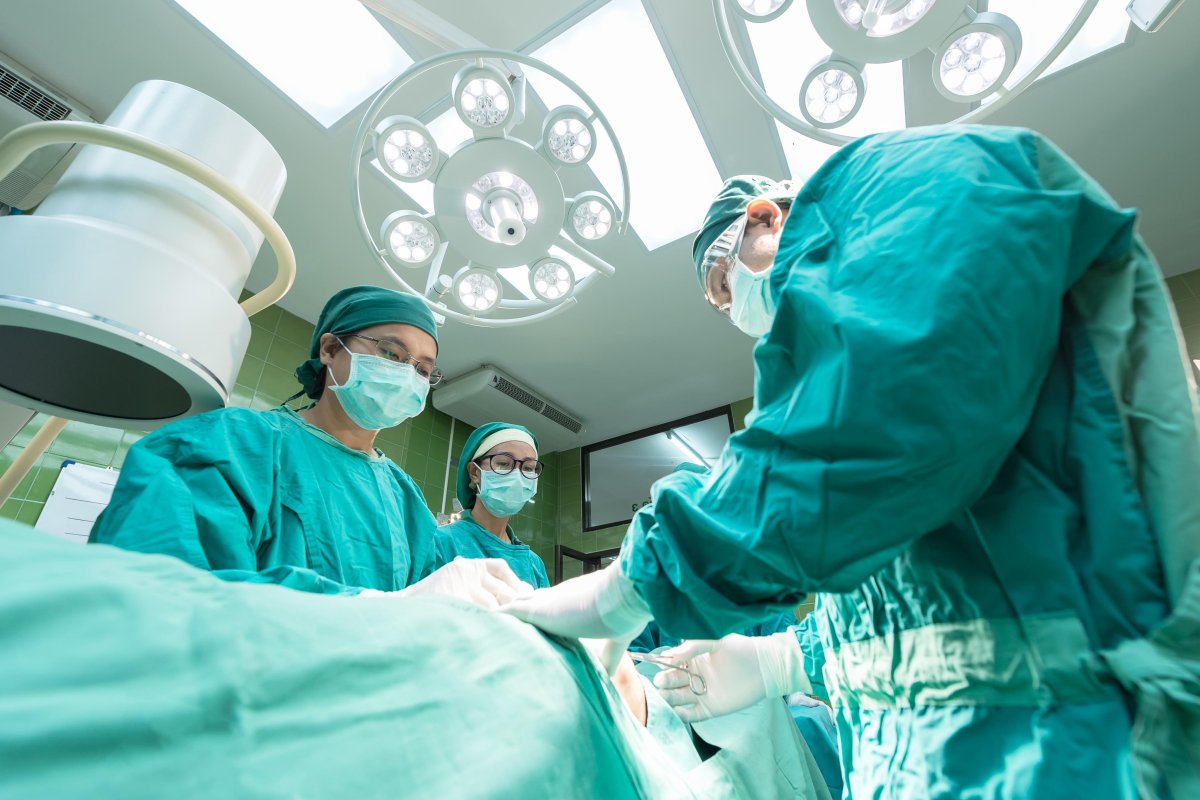
1 of 2 | Hundreds of U.S. doctors and nurses have moved to the Canadian province of British Columbia during the last year as part of a recruitment program aiming to leverage their unhappiness with the direction of healthcare under the Trump administration. File Photo by Sasint/Pixabay
ST. PAUL, Minn., March 27 (UPI) — Thousands of American frontline healthcare providers, as well as highly skilled researchers, are seeking and accepting jobs north of the border amid political tensions and funding cuts in the United States, Canadian officials say.
As U.S. doctors and nurses face cuts to public services under the Trump administration and voice concerns over new abortion restrictions and bans instituted in many states, the Canadian province of British Columbia says it is offering them an attractive alternative that has generated thousands of job inquiries via a targeted recruitment program.
Meanwhile, a social media-based volunteer organization that aims to make it easier for healthcare recruits to move has gone viral, with new chapters springing up in dozens of Canadian communities.
And in Toronto, leaders at the city’s biggest hospital are attracting young U.S.-trained medical researchers as scientists at American institutions voice dismay over the administration’s deep cuts to federal funding of research and political crackdowns on “woke ideologies” at universities.
“Targeted campaign”
Since the British Columbia Ministry of Health instituted its “targeted campaign” to recruit U.S.-trained health-care workers less than a year ago, more than 400 professionals have signed on to work in B.C. communities, officials announced this month.
Local providers such as Fraser Health and Interior Health have been inundated by more than 2,750 job applications from U.S. doctors, nurse practitioners, nurses and allied health professionals as a result of recruiting efforts.
The western province’s government streamlined its pathways for U.S. credential recognition last year, which it says has resulted in more than 1,300 nurses, nurse practitioners and doctors showing their interest by getting registered to practice in B.C. — the first step necessary in the process for taking Canadian positions.
The program is meant to address “critical labor shortages” in the Canadian healthcare system. Officials in Ottawa say that in 2024, about 5.7 million, or 17%, of Canadian adults and about 765,000, or 11%, of children and youths reported not having a regular primary healthcare provider.
B.C. Premier David Eby said U.S. applicants are being drawn by the province’s “evidence-based approach to public health,” support for reproductive rights and its free public health care system, as well as other factors.
Part of the reason for its success is a digital audio and video marketing campaign that reached an estimated 250,000 healthcare workers in the targeted U.S. states of Washington, Oregon and California.
Another element boosting its effectiveness is a grassroots, volunteer-driven project based in in Nanaimo, British Columbia called Canada’s Healthcare Infusions, co-founded by Tod Maffin, a former Canadian Broadcasting Corp. host, author and content creator, and his wife, Jocelyn.
Tod Maffin describes Healthcare Infusions as a nationwide social media-based movement that aims to connect doctors, nurses and other healthcare professionals “with the Canadian communities that need them most.”
“Basically, when it all started, I had a very modest social media presence, just like normal people,” he told UPI. “And when Trump started his tariffs against Canada and his threats against our sovereignty, I was making some videos that I thought just a few Canadians would be interested in, such as how to buy more Canadian products and buy fewer American products.
“That got some traction — and especially, a whole lot of traction in the U.S., which I wasn’t expecting.”
Maffin said he made a TikTok video last year aimed at his American viewers, telling them, “Hey, if you guys really support Canada’s economy, why don’t you come up here to [an event in] Nanaimo, where I live on Vancouver Island, to visit.
“Shop in our stores, eat in our restaurants, stay in our campgrounds. … See what Vancouver Island and British Columbia would be like” in the event that they need to leave America.
Some 350 people showed up for the event, including “a lot of healthcare workers,” he said. “And of those who were visiting last year, some of them have moved here and are working here, or have moved their families and are working in our emergency rooms and our hospitals and our clinics.”
Healthcare Infusions has since gone viral, with volunteers using templates designed by the Maffins to establish chapters at least 38 cities and towns across Canada where local healthcare workforces are stretched thin.
Online resources feature Discord group chats in which U.S. workers interested in relocating can ask questions and get advice from Canadians about all aspects of their proposed moves.
“What I heard from them is that in the U.S., they do not feel respected anymore,” Maffin added. “Science has taken a back seat among the administration. There’s a move away from evidence-based care.
“And I think people just want to be treated like professionals with the education that they have and the knowledge that they have and their skills, and not be put on an assembly line.”
Medical researchers sought
Meanwhile, parallel moves are being made on the federal level and locally in Toronto.
Canadian Prime Minister Mark Carney in December proposed spending $1.7 billion on a suite of programs dubbed the Canada Global Impact + Research Talent Initiative, hoping to turn a long-standing Canadian “brain drain” into a “brain gain” by attracting American medical and scientific professionals.
Its aim is to support more than 1,000 leading international and expatriate researchers, targeting people “who are advancing world-leading research in critical fields that will deliver direct economic, societal and health benefits for Canadians.”
The initiative comes as some American researchers report no longer “feeling valued in Trump’s United States with its mass layoffs and the elimination of health programs and research positions,” according to the Canadian Medical Association.
At University Health Network in Toronto, the largest healthcare research organization in Canada, a separate, new effort is underway to recruit 100 early career scientists from around the world to its facilities, including some from the United States.
Called the Canada Leads 100 Challenge, the idea is to lure “the world’s most promising scientists in medical research” to drive health innovation and fuel economic growth in the country.
The health network had raised $30 million and attracted a total of 25 scientists from abroad as of October, including researchers from the United States, as well as from Europe, Japan, New Zealand and Canada, hospital officials told CTV News.
One of the U.S.-based scientists who moved to Toronto under the Canada Leads program is Dr. Christopher Noel, a head and neck surgical oncologist and microvascular surgeon now practicing at the University Health Network and Princess Margaret Cancer Center.
A native of Ottawa, he — like many of his peers — made a move to the United States early in his academic career because of the robust funding for research, booming medical technology sector, higher salaries and high quality of life found south of the border.
That historic “brain drain” dynamic lasted for many decades. From 1970 to 1990, about 200 Canadian medical school graduates headed south to practice every year, with the sharpest period coming between 1990 and 1995, when the total exceeded 250 graduates in some years, according to a 2017 study.
Noel, however, said he decided to move back under the Canada Leads initiative while studying under a fellowship at Ohio State University because he feels his country is making significant strides in upping its competitive game for medical researchers.
“I think both countries have their strengths,” he told UPI. “I enjoyed my time in the U.S. But it definitely feels like a moment for Canada right now.
“We have a new prime minister. We have a new commitment to research. And I think just, yeah, it’s kind of an exciting time to be a surgeon and scientist in Toronto.”
Noel said he had offers from “a very well-respected institution” to stay in the United States, “but I ultimately decided to come back to Canada, in part because of what I’d call the ‘feather in my cap’ of being with UHN,” and specifically, its leadership in neurology and the use of artificial intelligence in medicine.
Noel said he made his decision to return to Canada before the start of the second Trump administration, and so its controversial policies did not play a role in his move.
“At least for me, it wasn’t so much that the U.S. didn’t offer a lot — it certainly does,” he added. “It’s just I felt like for me and my interests in technology and medicine, the Canadian environment offered more.”
About the Author